Thursday, January 05, 2023

Le Guess Who 2022: Sunday

This is the final part of my account of the 2022 Le Guess Who festival. See part one here, part two here, and part three here

On Sunday morning we did in fact partake of our hotel's breakfast cava, but overall we adopted a more restrained approach to breakfast because we had signed up for Le Feast. This is a Le Guess Who thing that had been abeyance for Covid last year. It basically involves sees those who sign up for it going to some random Utrechter for brunch. We did it the first time we went to LGW and we were looking forward to doing Le Feast again, albeit with that mild trepidation that faces the socially anxious when they have to interact with new people.

This year our brunch host lived just south of the moat canal that envelopes Utrecht. The other guests were two Dutch women, one younger than us and one older. Our host's son also helped his mother serve us and made for entertaining company, as did her friendly cat (her other cat hid upstairs). The food was appealingly homely. Interestingly, none of the other brunchers had full LGW tickets (the event was sold out by the time they thought of buying ones), so they were just dipping their toes into the free daytime events (which we largely ignored because they were on in out of the way places or, let's face it, because they didn't appear in the LGW scheduling app and so were off our radar).

Anyway, Le Feast is great and I recommend it to all Le Guess Who attendees. You can't beat second breakfast. Marina Herlop and friends

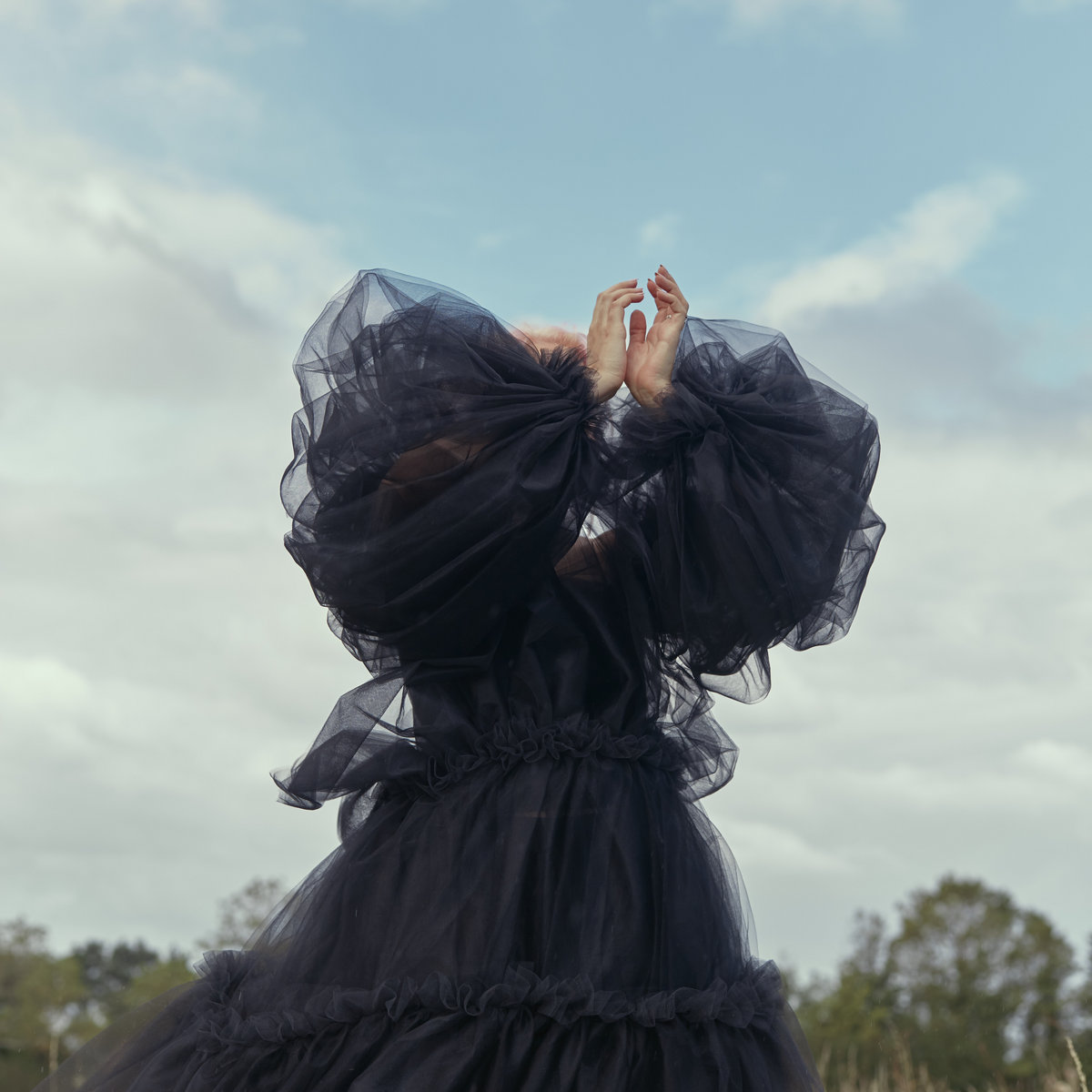
The first musical act we saw was Marina Herlop, a Catalan artist described in the programme as being inspired by Carnatic music from India. My first reaction when she came onstage was "Jesus Christ what is she wearing", showing how conservative I am with matters of attire. And I must admit I struggled with this set, mainly because I was by now incredibly tired (last day of a festival, etc.), spending most of it hovering between sleep and wakefulness. Herlop's set saw her doing electronic stuff and vocals accompanied by two backing singers and a drummer. I did not hear an obvious Indian influence, but then what would I know about Carnatic music? Overall though I was struck by how the set was simultaneously very avant-garde (in terms of its rejection of normal song structures etc.) but also clearly very composed and focussed. Whether I actually liked it was not something I could determine, at least partially thanks to my fatigue, but my beloved thought it was great.

We could at this stage have caught sets by Supersilent or Abdullah Ibrahim but then we realised that i) we had had no chips from Frietwinkel over the weekend and ii) friend Eamonn had NEVER been to Frietwinkel on any of his trips to Utrecht. So chips it was. Nom nom nom. Panda Bear and Sonic Boom

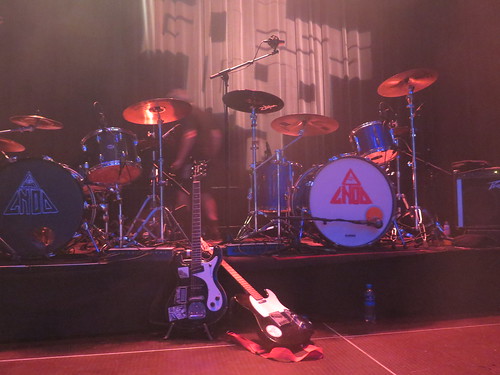
We did go to see Panda Bear & Sonic Boom playing electronic stuff with vocals in the Ronda. I liked the visuals but, unfortunately, the music was not really doing it for me, so we slipped off to the Pandora to see Gnod. Gnod, as you know, are a bunch of freak out types from Greater Manchester. Every time you see them they are different and have different people in the band. This time they had lost the singer and the quietly competent non-bloke member of the band but now have two drummers and a keyboardist as well as two guitarists and a bass player. They rocked hard in an interesting but impossible to photograph manner and were one of the highlights of the festival. GNOD have two drummers

And that was almost it. But not quite. After some post Gnod refreshments we popped in to see Mr The Bug who was playing in the Ronda. At least, we think he was playing there: the stage was so wreathed in dry ice that it might well be that someone had just plugged a Spotify playlist of Bug classics into the PA. There seemed to be MCs lurking behind the dry ice too and they kept importuning us to "Give it up for The Bug!" which had me thinking what it must be like to keep encouraging people to give it up for someone else. The music meanwhile was of the crunchy bassy variety. I even danced a bit, though truth be told I was kind of hoping it would finish so I could go to bed. The Bug

But it did eventually finish. Some tried to keep the party going but I opted for sleep.

The next day we flew home (don't tell Greta) on stinky Ryanair, where the passenger in front of me in the boarding queue had a distinct odour of having been to several Gnod concerts without an intervening shower. Soon after arriving home we booked tickets for next year (too late for the early bird) and booked ourselves into the same hotel.

In previous years, I found it difficult to move from one gig to the next at Le Guess Who, with it generally being necessary to head to a venue a half hour early to be sure of getting in. This year though it seems much easier to move from venue to venue, with the result that I saw more performances than I had expected to. That said, I was a bit lazy about going beyond the Tivoli venues. Apart from Noori And His Dorpa Band and Sote and Tarik Barri in the Staadsschouwburg, I saw nothing outside the environs of the Tivoli. And I completely ignored the daytime U programme, which typically features smaller scale local acts, though in my defence I cite the festival's not including U acts in the timetable app.

All in all the festival was a lot of fun and a great way to catch up with buds and see weirdo music that I wouldn't otherwise have come across. See you next year. Music Sounds Better With You

More of my pictures

Wednesday, January 04, 2023

Le Guess Who 2022: Saturday

My account of the amazing 2022 Le Guess Who festival enters its third day. See part one here and part two here.

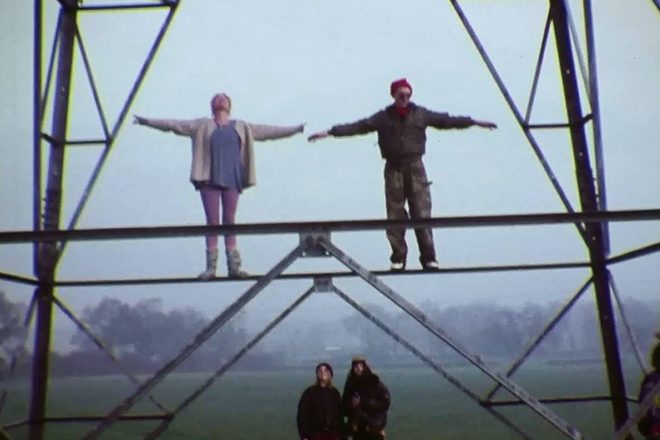
It was this morning that we registered that our hotel was offering unlimited quantities of cava with breakfast (in particular we noticed the Swedish rockers at a nearby table who were consuming unlimited quantities of cava with or instead of breakfast). However we decided to set a good example to the world and chose for now to abstain. What we did do after our post breakfast nap was head back to the Centraal Museum to catch a screening of Everybody in the Place: an Incomplete History of Britain 1984-1992. This is a documentary by artist Jeremy Deller, possibly best known for his re-enactment of the Battle of Orgreave from the 1984 Miners' Strike and We're Here Because We're Here, a commemoration of the 19,240 British soldiers killed on the first day of the Battle of the Somme. Everybody in the Place is a film about acid house and early rave culture in Britain, situated in the context of the social changes taking place in the country at the time. It features plenty of archival footage but its real stroke of genius is its framing device, which sees Deller delivering a lecture about acid house to a bunch of students in a London secondary school. Now, I understood from the introduction to the film by the museum's artistic director Bart Rutten that the school scenes were a reconstruction of an actual lecture to school kids that Deller had previously delivered: i.e. that what we were watching was essentially scripted even if it was in some sense based on real events. However, no one else I talked to appears to have taken that inference from the director, so maybe we were watching footage of a live event and the unscripted response of bemused kids to a cultural phenomenon long predating their birth.

Some of the film follows the usual trajectory followed by discussions of house music's history, with the music's origins in Detroit and Chicago receiving some interesting attention. One insight I hadn't heard before was that in the 1980s the local radio stations in Detroit were used to test audience reaction to a wider range of material than was generally the case in the USA, with the result that the locals had been exposed to a lot more weirdo European music than was the case elsewhere; he felt this factored into the mindsets of the people there who went on to make hard electronic music. It's also good on the influence Kraftwerk had on black American musicians, on the face of it one of the more bizarre features of historical cross-pollination.

When the narrative moves to the UK Deller positions acid house as a reaction to the Thatcherite crushing of working class power, as epitomised by the defeat of the miners' strike. There is also some interesting footage relating to new age travellers, where he deliberately confounds expectations by playing news footage of pensioners, who instead of saying "lock up the crusties!" are complaining about how Britain is becoming too authoritarian. Deller sees it as significant that they are of the generation that went through the Second World War, which ties into something I remember reading about the 2019 Brexit referendum: although pensioners generally voted for Brexit, the oldest pensioners (i.e. the ones who would have actually remembered the horrors of the mid 20th century) voted strongly against it.

When it came to acid house and rave itself, I was struck by how Deller underplayed the London-centric narrative that normally dominates here. Shoom and Spectrum were only mentioned in passing and he talked a good bit about how warehouse parties in the north of England had paved the way for mass acceptance of a new mode of musical enjoyment. But it does hop back to the south east when he gets into talking about the orbital raves. He is generally not hostile to the entrepreneurial types who took acid house from tiny clubs to huge rave sites, though he does pretty much state that Paul Staines (later the founder of the Guido Fawkes website) is a cunt from central casting. Sadly there was no mention of my own favourite of the rave-entrepreneurs, Tony Colston-Hayter, who went from professional gambler to rave promoter, to more recently serving stints in jail for a electronic fraud offences.

What I was struck by was how coy the film was about drugs. I'm not sure Ecstasy was even mentioned by name, even when we were being shown footage of obviously mashed ravers gurning away. I can see why Deller might have wanted to focus on the community aspects of rave culture, but it did seem like an odd lacuna to ignore the role played by MDMA in binding that community. In fact I think he only really mentioned drugs late in the day as fundamentally a bad thing, on the basis that they brought the attention of criminals and the cops onto the rave scene.

Anyway, at time of writing the film is available in full on YouTube. I recommend checking it out. If you want to get a taste, here is a trailer:

After a return visit to Double Act (see previous post) I think we may have sourced sustenance of some kind (perhaps a pizza) and then it was time for more music, in particular Colombian electronic music sensation Lucrecia Dalt, who was playing in the Ronda as a surprise late addition to the bill. Last year her set had been relatively austere but this time round we were treated to something a bit more all-singing and dancing, probably based on her recent album, on which she draws from the Colombian song-based music of her youth. As well as treating us to her singing she also had a bemulleted live drummer who really gave it socks. All pretty enjoyable but perhaps foolishly I left early to head to the Grote Zaal for another act. Cate Le Bon

Who was I going to see? Why none other than Cate Le Bon. When it comes to the popular Welsh singer I feel like I am suffering badly from the sunk cost fallacy, gripped by the idea that because she did one great album years ago I should keep listening to her in the hope that she will return to that kind of music. I've largely given up on her on record as she has moved away from what I liked about her, but I keep being drawn to her concerts in the hope that the old magic will return (sometimes it does). Anyway, with this concert I was struck by how full the Grote Zaal was: it's a big venue and I thought maybe her appeal was a bit selective so there would be just me and some rolling tumble-weed there, but no, there were loads of people. Moving away from the key Ian demographic has obviously paid dividends.And the set started well, with "Miami", the opener from 2019's Reward. After that though it all got a bit ploddy, with the unimaginative and overly high in the mix drumming causing me particular annoyance. Cate Le Bon's big strength is her voice but since Me Oh My she has continued to not give it free rein. This way to Pandora

Now, the big thing I wanted to see this evening was Goat, but there was a bit of time before they came on so to kill it we went up the mysterious Pandora venue to see Cheikha Rabia & Esraa Warda. These are two Algerian women, Rabia a veteran singer of the 200 cigarettes a day variety and Warda a younger dancer. Warda also was the one with enough English to talk to the crowd (no one ever addresses LGW audiences in Dutch), and they were joined by two musicians (an older guy on some kind of small drum and a young lad on keyboards). The show saw Rabia sing while Warda shook her stuff, all very impressive, but sadly we had to leave early for Goat.

Now you know the way at festivals when there is one act you really really want to see properly, you resolve to make sure to get in early enough to where they are playing so that you get a good spot? Well Goat were like this for me. They were basically the LGW act I most wanted to see over the weekend. And we did leave Cheikha Rabia & Esraa Warda in reasonably good time. But then we fell in with some of our buds, which necessitated some quick toilet breaks and then suddenly it seemed like a good idea to queue for drinks which then of course took ages to arrive, and with the hares and the hounds by the time we made our way into the Ronda it was only a few minutes before Goat were due to come on, plus the venue was completely rammed. A clever ruse saw us leap towards the front but way over on one side, and it was still unpleasantly crowded, but we had to make the best of our bad lot.

But who you may ask are Goat? Well, that is a good question. They appear to be from Sweden, though doubts have been raised on this front. What we can say for definite is that they play live wearing robes and masks. Their music is of a broadly psychedelic nature, with some suggesting that it incorporates "tribal" elements (with further people wondering if this makes them problematic). They have two singers, both of them apparently women, with these two also working as dancers and crowd molesters. As spectacle they are unbeatable. The music is pretty hot too.

I was struck by how the two singer-dancers were relatively uncoordinated with each other — while they were both wearing masks and crowns, they were not wearing matching masks and crowns, while the rest of their clothes shared an aesthetic without being in any way identical. They did not seem to have jointly coordinated dance moves either. Yet their dancing was not completely random. I noticed that a couple of times they exchanged places on the stage, swapping which microphone they were basing themselves at when resuming their vocals; and they managed to do this without bumping into each other or getting into scuffles over who was going to be using a mic. Fascinating.

So yeah, Goat deliver. They are GOAT. África Negra

And thence to the Grote Zaal, where África Negra were doing their thing. They are from Sao Tome and Príncipe, one of those countries Europeans dread coming up in Worldle. They played good time uptempo music drawing on various influences, and their frontman is known as The General and dresses accordingly (his precise military status has not been confirmed). I had originally planned to relax through their set, being a bit worn out by Goat, but even I ended up dancing away to them.

We then thought of sticking our heads into the Ronda then to see what Kokoko!, an electronic fellow from Kinshasa was up to, but everyone else had the same idea, so we decided that enough was enough. And so to bed.

The next post will conclude my account of the 2022 Le Guess Who festival.

images:

Typical ravers (Mixmag: "Jeremy Deller explores '80s UK rave culture in new documentary")

Jeremy Deller warns the kids to be wary of Paul Staines (Four Four: "Watch: Jeremy Deller's documentary on Acid House in 1980s Britain")

Kids making their own acid house music (Cast: "Jeremy Deller - Everybody in the Place")

Other images

Tuesday, January 03, 2023

Le Guess Who 2022: Friday

My account of the amazing 2022 Le Guess Who festival continues. See part one here.

On Friday we tried to go to a screening of a film about the Chelsea Hotel. Unfortunately so did everyone else, as this was one of very few festival events taking place during the day, and we were unable to squeeze into the small cinema auditorium. I hope the more organised people enjoyed themselves. So instead we trekked down to the Centraal Museum to catch a LGW-associated exhibition called Double Act, which combined video art stuff with paintings from the 17th century. Video art is a bit hit and miss and, truth be told even some of that 17th century stuff is not all that, so there was no guarantee that this was going to deliver the goods. It turned out however that there were some real corkers here. The video of the guy scooting around Puerto Rico on a moped with a trumpet attached to the exhaust pipe (there was parping) was amusing, even if I did not really buy it as a commentary on how imperialism is bad. I was also struck by how quite a few of the other video pieces just featured people walking purposefully.

The actual hit of the show for me though was Irish artist Richard Mosse's The Enclave, which presented footage shot in the east of the Democratic Republic of Congo during one of their wars there. This was shot on some kind of infrared sensitive film that renders green colours as pink, giving the landscape a strangely alien look. And the way the images were projected was deliberately disorienting, with this exhibit using six screens, four arranged in a rectangle and two diagonally outside. Sometimes the same images were projected on screens facing each other, and sometimes not, with the viewer always having the sense that they are missing something. The images themselves showed soldiers moving around, people in a small town or refugee camp, and sometimes the aftermath of violence (dead soldiers triggering the mild curiosity of their former comrades and/or non-combatants). But there was no narration or explanatory text, indeed no soundtrack of any kind, leaving the actions of the people in the footage (and indeed the choices of the filmmakers) largely inscrutable.

A key sequence for me was the long section inside some kind of village hall, where initially it seems like a large group of civilians have gathered for entertainment, until you realise that the event seems to be mainly taking place for the bunch of guys in military fatigues sitting at the front. First we have music and dancing, then kids jumping through flaming hoops of burning petrol, and then a woman with the most amazing presence strides in from the back of the hall and marches up to the stage, only before we get any sense of what she is about the lead army guy gets up and leaves, with the camera following him out. This to me embodied the whole baffling incomprehensibility of the piece and, by extension, the confusion that must come with living in a conflict zone. Playing the Klappermobile in the Speelklok Musuem

We also popped in to the Speelklok Museum, where they had some things available for LGW attendees. As you will recall, the Speelklok is a museum for mechanical musical instruments, and the big thing they had for us this year was the Klappermobile. This was like what you would get if John Carpenter's The Thing ate a load of bicycles and then turned them into a musical instrument. It required at least two people to operate: one person to wind a handle and keep the contraption going and then another to press keys that depressed baffles against spinning bicylce wheels designed to rotate at different speeds and so create noises of different pitches. My beloved was able to make it play something approximating to "Raglan Road".

The first musical performance I saw on the Friday was Noori and His Derpa Band, who were playing in Janskerk (which is a church). They had played previously in the Grote Zaal and I think that might have been a better place for them, as this was uptempo good time music (albeit with something of an edge, as Mr Noori is from Sudan's downtrodden Beja community). Alison Cotton

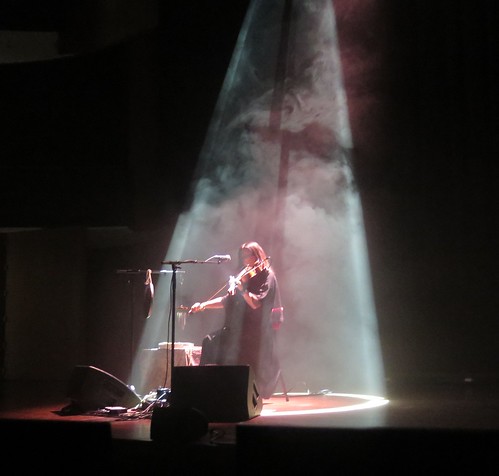
Back in the Tivoli's very comfortable Hertz venue we then saw Alison Cotton, a spooky folky gothy lady. She played violin, did stuff with electronics, and used her voice to create a distinctly eerie atmosphere, to the extent that friend Brian was afraid that she might accidentally summon something from another plane of existence. I was struck by how she covered Syd Barrett's "Golden Hair", but it was the tunes where her vocals were almost completely non-verbal that sent shivers down my spine.

We were then faced by a dilemma. Dry Cleaning were playing in the Ronda, and while I am unfamiliar with their work I have heard of them and was interested in checking out this big name band. Also my friend Mr B—'s repeated comments about how the Dry Cleaning singer is great while the rest of the band's music is rather plodding had me curious as to how bad it could really be, especially when you consider the eccentric nature of Mr B—'s tastes. But they were playing at the same time as Širom, whose programme description as weirdo avant folkies from Slovenia made them sound like a hard to resist option. And we could not resist, climbing up to Cloud Nine (and successfully accessing it) to see most of their set. A blurry picture of the amazing Širom

And basically Širom, gave good weirdo avant folk, with an added side order of drone. They played a variety of strange acoustic instruments while also providing us with some vocals, though whether these were of the Slovenian or non-verbal variety remains an unsolved mystery. They also had a carpet on stage and I understand from other reports that they might have thrown lentils at people. It all sounded a bit like those Finnish Fonal people (who may or may not still be going). And they appear to be from the Karfeit and Carso areas (possibly called something else in Slovenian), sites of the famous 11 battles of the Isonzo in the First World War. Clipping

But then we did go to the Ronda to see Clipping (who may actually call themselves "clipping." but it's not my fault if they don't understand punctuation and capitalisation). You have heard of this trio: two blokes on productiony stuff and one on rappy vocals. The music is pretty glitchy and the overall effect is a bit like if you had someone rapping over a record by Squarepusher. I think a lot of the appeal here comes from Daveed Diggs's rapping, with his quickfire vocals carrying the music along. Great as it was though, I did find myself wondering if this might be hip hop for white people (though as a white person myself maybe this is not a problem). Nancy Mounir

And thence to Hertz to see Nancy Mounir's Nozhet El Nofous. She is an Egyptian musician and like Nadah El Shazly her work involves a certain interrogation of the musical past of her country. As a performance, Nozhet El Nofous was an odd beast. Mounir herself played both violin and theremin, but she was joined by a gang of local classical musicians. And she had a man and a woman projecting photographs of Egyptian singers of yore (less famous ones than Um Kalthoum) and explanatory text. The musical also combined samples of the old singers with the music being played live, to create a sound that might be described as hauntological. It was all rather fascinating and strange, with the frequency with which the olde singers seem to have played against gender roles being an intriguing aspect of their biographies. I found myself thinking that this could do with being released as a nicely packaged CD set with an accompanying book containing all the details of the singers, as there was too much to otherwise remember. Nancy Mounir's Nozhet El Nofous

As with the first night I was by now too tired to go on to BASIS so I made my way instead to BED.

Images from Richard Mosse's The Enclave (National Gallery of Victoria)

More terrible Le Guess Who photos

More Le Guess Who action real soon.

Monday, January 02, 2023

Le Guess Who 2022: Thursday

You know the drill. Le Guess Who is that festival of Wire-reader music that takes place each November in the picturesque Dutch town of Utrecht, with most concerts taking place in the Tivoli Vredenburg complex but many also happening in various satellite locations. I previously attended in 2021 and 2018. This year for crazy person reasons my beloved and I decided that rather than fly over we would travel by a combination of boat and train, so you'll have to put up with some yap about our travel arrangements before reaching the music festival chat.

The ferry and train journey to London were uneventful, notwithstanding the intermittent industrial action that had been taking place on the trains. Rather than risking a missed connection. we broke our journey in London. The check-in queue for the Eurostar in the morning seemed a bit more chaotic than I remembered but moved quickly enough, and soon we were on our way. The Eurostar itself is a weird combination of VERY EXCITING ("OMG we are going under the ocean!") and pretty mundane (it is just a train). I was nevertheless struck by how big and full it was. I've very little sense of how much human traffic there is between England and the near continent, but being able to zip in to the centre of a continental city makes this a far more attractive means of travel than flying. I was irked though by the fact that the catering car seemed to shut for an age before and after a staff changeover at Brussels, which was basically prime time for when you would want to be sourcing wine to drink at your seat like some kind of debauched plutocrat. By the time the bar was open again we were so close to our destination that it didn't seem worth it. Rotterdam Centraal Station

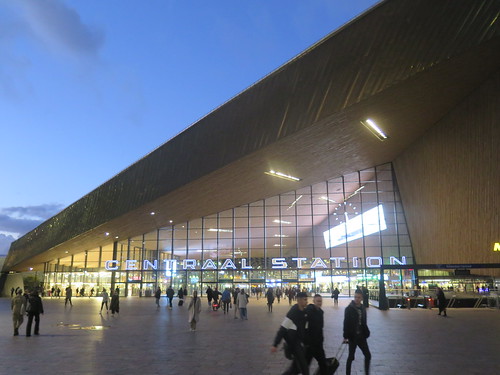
We left the Eurostar in Rotterdam rather than Amsterdam, as we thought it might be interesting to have a quick snoop through that famous town. It did not quite conform to expectations. Firstly, there was no gabba blaring non-stop over the loudspeakers in the station, with no loud voices shouting "FUUUUCK YOUUUUUUUU" to be heard either. Also the city centre had far less of the completely rebuilt after being bombed to shit look than I was expecting (the city was heavily bombed by both sides in the Second World War but they seemed to have missed a surprisingly large number of old buildings). However it did feel a good bit less shi-shi or dinky than Amsterdam and Utrecht, and the walk down to the river (a mouth of the Rhine, I think) gave good nautical feels. The hour or two we spent there might be enough, but I'm sure if circumstances brought you back (say for their film or jazz festivals, or the < href="https://www.erasmuscon.nl">2024 Eurocon) you would find things to amuse yourself. Utrecht Centraal Station

From Rotterdam it was a short journey on a double-decker train to Utrecht, where we checked into our hotel (conveniently located right beside the station with a view of the platforms, while also being five minutes away from the Tivoli), ate our dinner in a branch of the famous Dutch restaurant Wagamama (where I saw a couple that I then kept seeing again and again over the weekend) and repaired to bed. Sote & Tarik Barri presenting Majestic Noise

The festival started the next day, which was a Thursday. Following the crowd I found myself catching the very first performance of the festival, Sote and Tarik Barri performing together not in one of the Tivoli Vredenburg spaces but in the Stadsschouburg, a theatre space I had not previously made it to. Sote is an Iranian electronic musician while Barri is a Dutch visual artist. For this Barri was doing visuals live in response to Sote's plinky music, which made for a wonderfully immersive introduction to the festival. The Master Musicians of Jajouka

After a quick beer and burger break we made our way to the Tivoli's Grote Zaal for a performance by the Master Musicians of Jajouka led by Bachir Attar (who split from the Master Musicians of Joujouka in the 1990s, for reasons). Hailing from Morocco, their music draws from Sufi traditions and would probably have originally been played at events where people were going into trances and getting close to the divine and stuff, as opposed to music festivals for whitey. Quite a few of their tunes began with long piercing blasts from their wind instruments, before the percussion instruments came in and a bit of to-and-fro ensued. I did find myself thinking that maybe the percussion instruments were a bit quieter than they should be, but that might be because the master musicians kept moving away from their microphones. My beloved meanwhile was amused by how the various master musicians were like a bunch of crotchety auld lads who seemed to spend their time grumbling about stuff. "This one is for Mimi"

In previous years it has been hard to move from gig to gig at Le Guess Who, with venues filling up to the extent that you needed to get to them half an hour or more before an act was scheduled to start in them. But I was nevertheless able to go straight from the Master Musicians to the Ronda (second largest Tivoli venue), where Divide and Dissolve were playing. They had played support to Low earlier this year but I arrived too late to see them on their Dublin date, so this was my first time catching them. They are a two-woman outfit, one on drums (Olivia, filling in for the usual drummer) and the other playing sax, guitars, and keyboards (Takiaya Reed). There were no vocals, though Reed did a lot of between song chat. Some of the chat was about the late Mimi Parker of Low, who Reed reported being very supportive of Divide and Dissolve's work. Colonialism, imperialism, racism, patriarchy, etc. were also discussed (the band are broadly against all of these things). The music meanwhile was quite in-your-face and in some ways contrasted considerably with Reed's vocal style, which was quite soft spoken and almost like what you might get from someone fronting an indie band. I liked her and sympathised with her struggle, but after not too long I felt like I had got the idea with D&D and did not really need to hear too much more of their music.

Leaving the Ronda I decided to make my way up to Cloud Nine to see OKI. The venue was pretty crowded, but I made my way up to the balcony and had a pretty good view of proceedings from there. But who or what is OKI? It turns out that he is this guy called Oki Kano and he is a member of the Ainu community (an indigenous people hailing from the north of Japan). He was playing with his wife and son as well as some other guy on bass. Kano and his family wore what looked like some kind of traditional garb, while the drummer was less traditionally attired. The instruments meanwhile hovered between tradition and modernity: as well as the bassist, there was Kano's son on a standard Western drum-kit, while Mr & Mrs Kano played the tonkori, the five-stringed harp of the Ainu, which they played almost like a guitar.

From reading about Oki Kano, I gather he is all about preserving the embattled culture of the Ainu, yet he is also surprisingly un-precious about it. His band's performance was not like some kind of stuck in amber reconstruction of a true well of Ainu music of yore but instead pulled in influences from all over the place, with dub and western pop being obvious points of reference (I read that he has also collaborated with Ireland's Kila, but then hasn't everyone). All in all this was a big pile of fun and one of the most enjoyable sets of the festival.

I made arrangements to rendezvous with my beloved in the Grote Zaal where she was planning to catch Alabaster DePlume but I arrived early and the previous ensemble of Mr Sarathy Korwar was still playing, joined by special guest star… Mr Alabaster DePlume! Confused? Not as much as I was when they all went offstage and I thought that the Alabaster DePlume concert was over before it had started.

But it was not too long before Mr DePlume returned with his band. Basically he is a jazz saxophonist but when he isn't playing his sax he treated us to either his wise sayings about the world (generally of the upbeat positivity variety) or else his beat poetry. It's the kind of thing that should be terrible but it all somehow worked. I particularly liked his "I Was Gonna Fight Fascism" poem, which was all about how he was going to fight fascism but for a variety of reasons he was unable to do so (he was a bit tired, he had a lot on, he got a bit annoyed with the other people fighting fascism, etc.); and then it was too late. We've all been there.

And that was that for me. Some of my buds went on to BASIS, Le Guess Who's late night club venue, but you don't want to wreck yourself on the first night of a festival.

More terrible Le Guess Who photos

More Le Guess Who action real soon.

Sunday, December 11, 2022

Octocon 2022: two months on

Octocon is the Irish national science fiction convention, which takes place each year in October. After an interlude as an online con, Octocon resumed as an in-person event this year, with fans of science fiction and related genres gathering in a Croke Park conference facility. Others joined us online, as this was a hybrid convention. I have already written about some of the programme items that I unfortunately missed, so now it is time to look back at some things that I was lucky enough to witness or even in some cases take part in.

After a brief stint on the Octocon information desk (where I fear that every piece of information I gave out was incorrect), I found myself moderating a panel entitled Crafting Non-Human Worlds and Societies, with the panelists all being people who had created non-human societies in their own works. This was my first time moderating an in-person panel, so obviously there was the fear that angry attendees would take a dislike to the way in which discussion progressed, blame me for their disappointment, and then chase me from the venue with threats of violence. Fortunately the panelists (Máire Brophy, Michael Carroll, Peadar Ó Guilín, and Jo Zebedee) were all dream programme participants: the kind of people who could talk knowledgeably on the subject, illustrating points both from their own works and those of other writers (including Jack Vance, Piers Anthony, R. Scott Bakker, Adrian Tchaikovsky, & Ted Chiang (in particular for "Story of Your Life", which was adapted into the film Arrival). Discussion of animals that a writer might usefully adapt into an alien civilisation naturally turned to cats but also to the octopus and rabbits (with Richard Adams' Watership Down receiving a favourable mention).

Subsequently I sat in the audience for Movie Monster Mash, which looked at cinematatic monsters. I liked the discussion of how some monsters go through cycles of being seen as irredeemably terrifying before shifts present them as either sympathetic or comical before they go back to being terrifying again, with vampires being an obvious example here. I also agreed with those panelists who argued that the 1992 Bram Stoker's Dracula is an absolutely terrible film. I was not sure what to make of the revelation that there is now a revival of interest in werewolves, those most rubbish of monsters.

I missed the start of Fictional Words to Live By, a panel on the way in which fictional works of science fiction and fantasy can contain philosophical nuggets that gestate in our brains. I was interested by the point that much of SFF has now become contemporary myths, with superhero comics & films and Trek Wars being specifically referenced here; given that all of these have gone on far too long and fallen into cosy self-plagiarism I'm not entirely convinced of the quality of myth we are bequeathing to future generations.

And then two readings, firstly by RB Kelly and Jonny Nexus. Kelly's was from the recently published On the Brink, in which the characters are on a Dutch space station. Science fiction usually imagines US or sometimes Chinese controlled space programmes, so it was nice to see some of the smaller nations getting their go (I feel like I should go away and cobble together a series in which some technological breakthrough leads to Ireland colonising the moons of Jupiter). Nexus's first reading also gave us the space programme of a small-ish nation, in this case the United Kingdom in an alternate history where it somehow managed to get an exciting space programme going much earlier than anyone else did in the real world. The setting reminded me of Ministry of Space (by Warren Ellis & Chris Weston), though it felt tonally different, as befits his description of the setting as Dan Dare meets James Bond. The excerpt had an appealing retro-future ambience. Nexus also read a snippet from a work about the Olympian gods playing a table top roleplaying game, which was every bit as bizarre as that sounds.

That took me to the end of Octocon's first day. There was a social event in the evening sponsored by the 2024 Glasgow Worldcon, but I couldn't face the prospect of trying to socialise while wearing a mask (unlike the rest of society, Octocon sees the Covid pandemic as very much still with us). Also I had a cat to feed. And I had to get up early in the morning, as I was appearing on a 10.00 A.M. online panel Monarchy and Nepotism in Fact and Fiction, looking at the fondness of SFF for narratives based around monarchy. Ably moderated by Cheryl Morgan, this saw Jean Bürlesk, Aliette de Bodard, Gillian Polack and myself grumbling that creators all too often misunderstand what they are bringing from the real world into their history, in this case tending to present absolute monarchies and never considering the kind of constitutional or constrained monarchy seen in Europe past and present (to say nothing of monarchies further afield). And while the panel generally felt that the absolute monarchies of SFF are generally not great, it didn't really turn into republics-are-best panel either, for all that I lean that way myself. Jean Bürlesk even went so far as to argue the case for constitutional monarchies, though maybe if I lived in the world's only grand duchy I might do similar. The History of Irish fandom
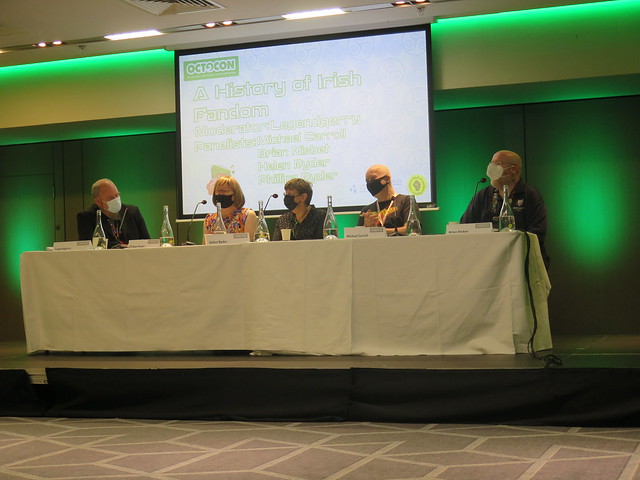
After that I made the relatively short journey from my home to Croke Park, and somehow managed to miss all programme items until a post-lunch panel entitled A History of Irish Fandom. This to some extent turned into a history of Irish SFF cons, with zines and the like receiving relatively short shrift. There was a bit of talk about the now moribund Irish Science Fiction Association and how it performed a useful role, with Philippa Ryder suggesting that it would be great if someone were to revive it. Having an organisation for science fiction fans sounds amazing — I am imagining membership books, badges, secret codes, possibly uniforms — but I didn't really get much sense from the panel of what ISFA actually did. I should perhaps have a look at FANAC and see if there are any scans of ISFA publications there.

It was fun hearing about the cons of yore though, with the mention of the 1992 Trincon being a particular highlight for me as that was my first (and for a long time only) experience of organised science fiction fandom. One thing I don't think the panelists really touched on is that there was a definite arrogant Trinity student aspect to Trincon, which might have jarred with the wider SF community. It's been a long time but I remember there being panels at Trincon that you would never get at Octocon today (I can't imagine Octocon ever running panels on how Star Trek is stupid or how film science fiction is mostly just a facile dumbed down version of what appears in print). But the Trinity students got their comeuppance in 1997 with Trincon 2, which attracted so few attendees that there was one guest of honour for every five paying punter.

I arrived slightly late to Comics Is Literature, discovering subsequently that the cavalier approach to subject-verb agreement in the panel's title references an internet controversy. This explored the recurring SFF question: "why don't the squares in the literary establishment take our genre stuff seriously?" One thing I did like was the mention of how comics have always been a somewhat disposable medium, with the transition from print to online distribution not necessarily changing this: previously people bought monthly comics that had a tendency to fall apart, now they often view them on a website that might well disappear in the morning. There was also discussion of how comics have long been seen as primarily a medium for children, which undermines their acceptance as something adults can unproblematically enjoy or take seriously. Subject verb agreement

I was struck though by how the comics panel only really talked about comics in the anglophone world, as my understanding has long been that on the European continent and in Japan it is far less the case that comics are seen as things exclusively for the kids. It would be interesting to look at why there might be that divergence. Also, given that the kids' comic market has now largely disappeared (apart from The Beano), the idea that the problem with comics is their association with children might be something that will no longer hold in the future.

One other point made by the panelists interested me, the idea that comics are a form, not a genre. That is obviously true, with comics covering a range of subject matters, even if ones about guys in funny costumes punching each other are still rather dominant. But I think there is still an extent to which people who like comics and people who create them do kind of see them as effectively a genre. Even the fact that you can have a comics is literature panel without panelists saying "I've nothing in common with you guys because I write romance comics while you are writing crime comics" suggests a certain collective appreciation. There is something a bit circular here of course: regardless of genre, comics are sold in comics shops or in the comics section of bookshops, which reinforces the idea that they are a thing apart from true literary works like the latest Andy McNab tome.

For me though a gap in the comics panel was any discussion of what constitutes literature. Is literature anything with written text? Or is literature a qualitative term (something only becomes literature if it is… literary)? If you take the first approach then any comics that have text are literature, but there is a certain so-what quality to this as the same would be true of a shopping list. If you go down the second road then it becomes possible to argue that some comics are literary enough to be classed as literature, but this also implies that there will be some comics that will not make the grade.

The panel also has me thinking that it is really time I got back into buying monthly comics. It further reminded me that I should be checking out IrishComics.ie on a more regular basis.

I then took a break from panels to attend Half a Man in a Trenchcoat: Network Theory and Storytelling. This was a talk by Harun Šiljak, who took ways of modelling real-life human interaction and then applied them to works of fiction. He began with such mythic works as Beowulf and the Táin Bó Cúailgne, noting that the networks between the characters are statistically similar to those observed in real life networks, once the main characters are excluded (this had me wondering if real life social networks might look a bit unrealistic if mapped from one person's point of view). He then went on to the core of his talk, applying network theory to the first season of Twin Peaks. There was a lot to unpack here — the change in the way the character interactions work once Dale Cooper appears in the first episode (which in turn sees about half of the main characters appearing before and after Cooper first hits the screen), and then the way Cooper and Sherif Truman frequently appearing together skews the network in a way that can be resolved by treating them as one person. The thing I found myself wondering was whether in a show with a whodunnit element like Twin Peaks do the character networks provide clues to the killer's identity.

And then the closing ceremony saw the announcement that Sakura is stepping down as chair, with the new occupant of the hot seat being Paul Carroll. Onward and upward. Things I bought at Octocon I should also mention the trade hall at this year's Octocon, which was perhaps in a smaller space than the last in-person con but which felt like it was completely jam-packed with product. I came home with a pile of stuff. And I should note that I missed the non-appearance of the Golden Blasters and the Vault of Horror. The Golden Blasters was a short film competition and festival that always featured some amazing stuff, while the Vault of Horror saw John Vaughan playing clips from terrible films while drawing attention to their awfulness (this was way more entertaining than I am making it sound). Good things cannot last forever.

One great thing that was back at Octocon was the Lally Wall. This a wall featuring hand-drawn posters by Dave Lally outlining ways people can travel to other conventions happening in Britain and Ireland (and sometimes further afield). No online con has ever managed to replicate these successfully. How to go from Ireland to Glasgow

So that was that. It was great being back at an in-person science fiction con. Croke Park felt like the nicest venue I've experienced Octocon in (the right size, useful layout, convenient location), with the one caveat about the pretty terrible catering options (for vegetarians: the options were cakes of various kind (all of which ran out by Sunday afternoon), chocolate bars, crisps, manky pre-made sandwiches, and potato wedges (which rapidly ran out); I don't think the meat people did much better.

If you've got this far you might have noticed another thing about Octocon: everyone was wearing masks. This was mandated by the conrunners as an anti-Covid measure, to protect vulnerable attendees. That it was enforced for programme participants was non-ideal for attendees with hearing impairments. The mask requirement seemed a bit strange to me, as by the time Octocon took place almost nothing else in society was enforcing a mask mandate. Was Octocon being excessively cautious, or is the rest of society insanely reckless? I'm not sure how we could answer this question.

For another view of Octocon, check out this report on File 770 by James Bacon: Octocon 2022

More of my Octocon pictures (inessential)

Saturday, October 29, 2022

Octocon: things I did not go to

Some things stopped during the Covid pandemic, but not Octocon, Ireland's national science fiction convention. It just went online for a couple of years, but earlier this month it made its triumphant return as a live in-person event in Croke Park. Or rather, a hybrid event, for as well as the programme items taking place in Croke Park there were ones taking place online, and some of the in-person events were also streamed for the benefit of the folks at home.

I was there in Croke Park and I attended programme items, even taking part in one or two. But I'm not going to start with those. Instead join me as I look at some of the programme items whose descriptions intrigued me but which I had to miss for one reason or another.

Abandoned Landscapes: As a secret goth I thought this panel sounded fascinating, whether it would be looking at ruined castles or crew-less spaceships orbiting dead planets. But alas, I was serving a stint on the Octocon information desk.

Colonialism in Science Fiction: In science fiction the idea of humanity expanding into space and establishing itself on other worlds is such a staple that it is hard to step back and wonder whether this kind of interstellar settler colonialism is perhaps a bit problematic. I'm not sure if the panel was actually going to look at this kind of issue (the programme notes suggested that it was more likely to be an emo panel in which people pondered their own place in the sinister history of terrestrial colonialism); it would nevertheless have been interesting to see what roads the panelists went down. Sadly this online panel also occurred while I was on the information desk (and while it was recorded and is available to watch online, I'm a great believer in never going back).

Unreliable Narrators and Other Tricks: Unreliable narrators are one of the great tricks of modernist literature (for all that they go back long before the 20th century), though I'm not sure they have been used that much in science fiction, so it would have been interesting to hear how the panelists talked about how this kind of device might be used in our genre fiction. But I was moderating another panel and so missed this.

The Storytelling Legacy of Science Fiction and Fantasy Television: There is something heroically ambitious about attempting to cover the entire 84 year corpus of TV science fiction in one 60 minute panel, for all that I suspect in practice it probably featured a lot of yap about Star Trek and Doctor Who. I was lunching while it was on.

Glasgow 2024 Book Club — Walking On Glass: I would have gone to this if I had read the book. I probably should read some of Iain Banks' non-Culture books sometime.

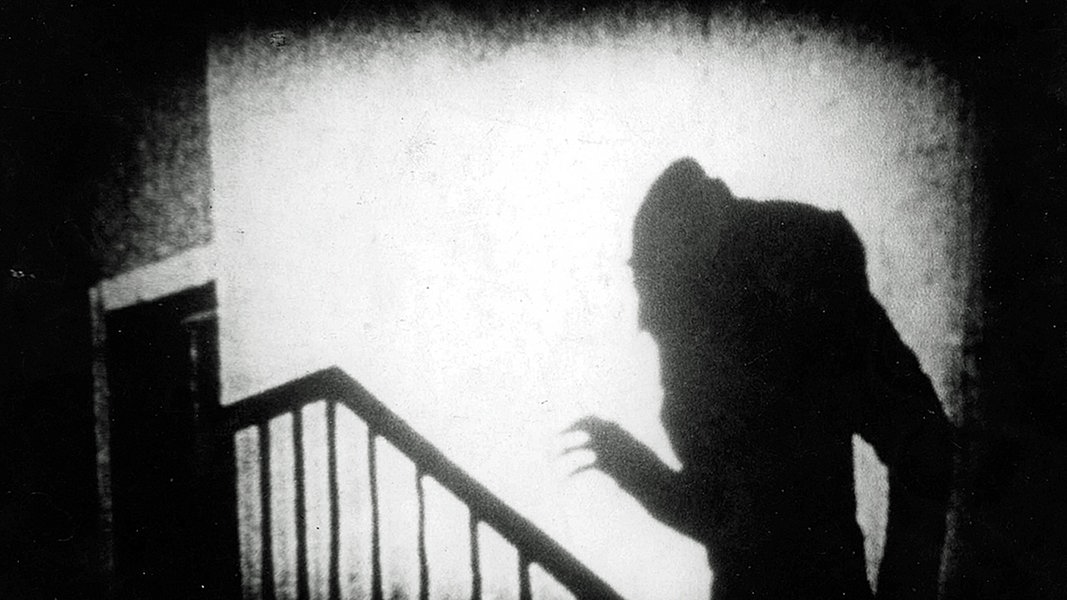
Nosferatu Watch Party & Zoom Social: I love Nosferatu, F. W. Murnau's brilliant but unauthorised 1922 adaptation of Dracula, the first film to bring a version of the popular count to the screen. In fact Nosferatu may even be the film I have seen the most as I rarely turn down an opportunity to view it. But I was a bit *tired* when it was being streamed and I had a sneaking suspicion that the Zoom social aspect of the screening might feature a lot of people chortling at the 1920s visual effects. Irish Horror Films: This panel sounded like it was right up my alley and I understand they did talk about Sea Fever (very good) and You Are Not My Mother (initially very good) as well as various other films. They probably didn't mention The Eliminator (very very good). I missed this in-person panel because it was on too soon after an online panel I appeared on from the comfort of my home.

Reading: Gareth Ryder-Hanrahan: I am fascinated by Gareth Ryder-Hanrahan's work on Cthulhu City and The Dracula Dossier, two next-level roleplaying game supplements, but I was lured away by the cheap thrills of a panel on the history of Irish fandom. I was nevertheless sorry to miss this and all the others I failed to attend, as readings are always one of the best things at SF cons.

Dead dog: This was basically people who had been at Octocon going to the pub on the day after the con finished, presumably taking off their mandatory masks and coughing in the face of Octocon's strict Covid rules. But I was doing an Irish class that afternoon and somehow convinced myself that the event would be over by the time my class finished.

Join me real soon for an account of some programme items I managed to actually attend.

images:

In the zone (Guardian: "The powerful resonances of Andrei Tarkovsky's Stalker")

1938 BBC production of Karel Čapek’s R.U.R.: Rossum’s Universal Robots (Den of Geek: "The Legacy of Rossum’s Universal Robots")

A symphony of shadows (NDR: "Nosferatu - das Original")

Saturday, September 17, 2022

They also make music in Ireland: three Irish records reviewed

Michael McHale Moonlight (2022)

This release on the Ergodos label sees pianist McHale tackling Beethoven's Appassionata and Moonlight sonatas, interspersed with shorter pieces by Linda Buckley and Áine Mallon. Despite my interest in contemporary music, I mainly bought it so that I could have a copy of the Moonlight Sonata to listen to. McHale's performance of this feels a bit non-standard, with the playing seeming to be a bit more delicate than other versions I have heard. I am not familiar enough with the Appassionata to judge this rendition, but the playing seems a good bit more in your face than on the Moonlight Sonata. The two short contemporary pieces meanwhile function effectively as introductions to the Beethoven sonatas, with Buckley's piece played with the diffidence of the Moonlight Sonata, while Mallon's "Raindrop Prelude" has the more aggressive playing of the Appassionata; it could also be said to have notes invoking falling rain.

Overall an enjoyable listen but I think I would need to listen more closely to a standard performance of the Moonlight Sonata to appreciate the deviation here. You can check it out yourself on Bandcamp: https://ergodos.bandcamp.com/album/moonlight

Cormorant Tree Oh Cormorant Tree Oh [2018]

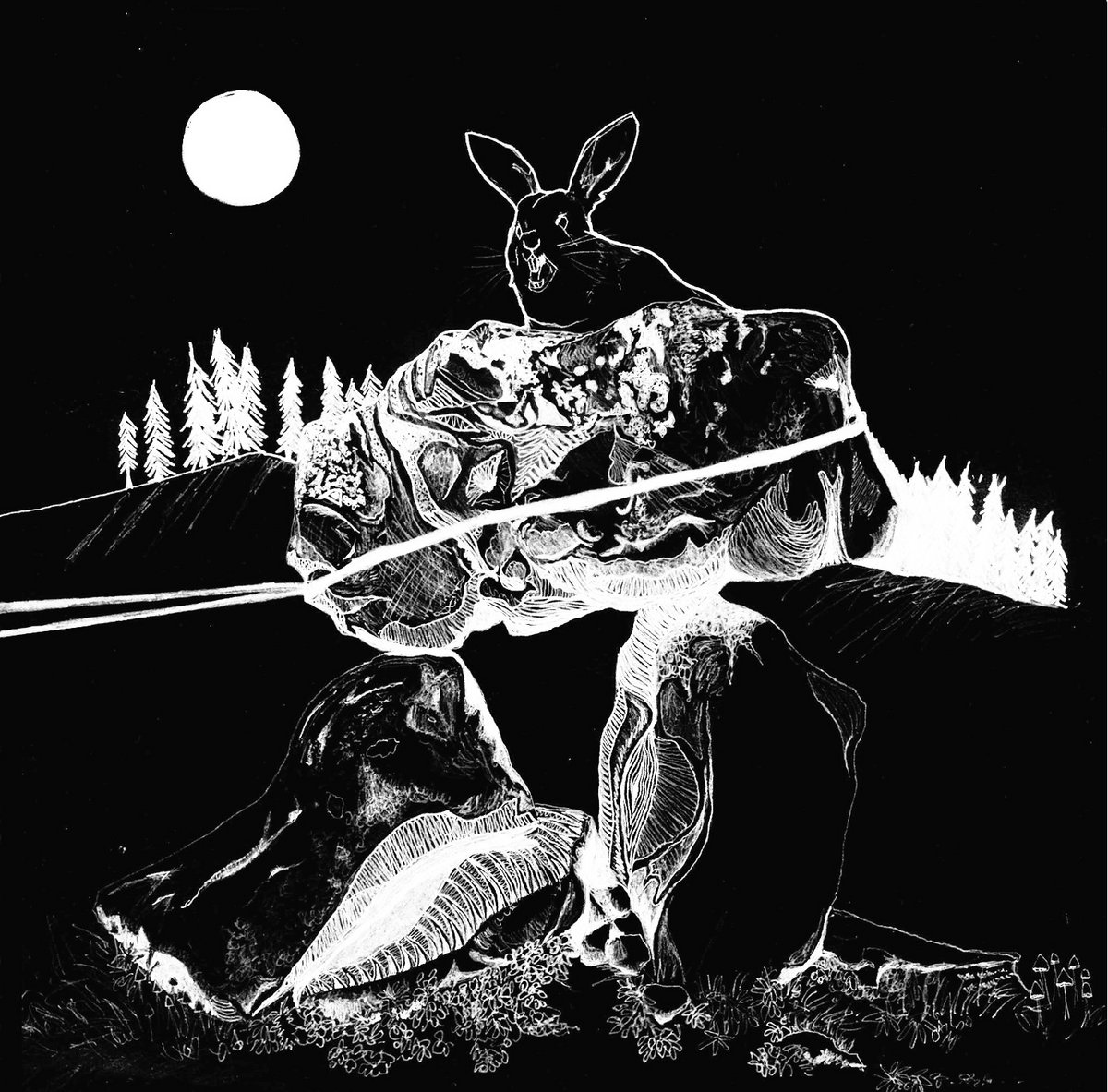
You will recall how impressed I was by Ms Cormorant Tree Oh, the mysterious balalaika playing lady who played support to local gothgazers A Ritual Sea. It turns out that Cormorant Tree Oh is actually a stage name, and her real name is Mary Keane. On stage she came across as a bit of an outsider artist weirdo, albeit one with clear musical talent and application, but here we have a record that is much more form the world of spooky weirdo folk, with songs about werewolves and stone circles, while the music is a mix of electronic and acoustic instruments. There is not much in the way of credits on her Bandcamp page, but I suspect this is something she knocked up herself, and extremely impressive it is too. Its eerie, ritualistic sounds have been on repeat here in my brane and I suspect they would be in yours too if you give this a listen. I see she is releasing another album in September… which may mean that she will do another live show. Exciting. Check out her stuff on Bandcamp: https://cormorant-tree-oh.bandcamp.com/music

Fears Oíche (2021)

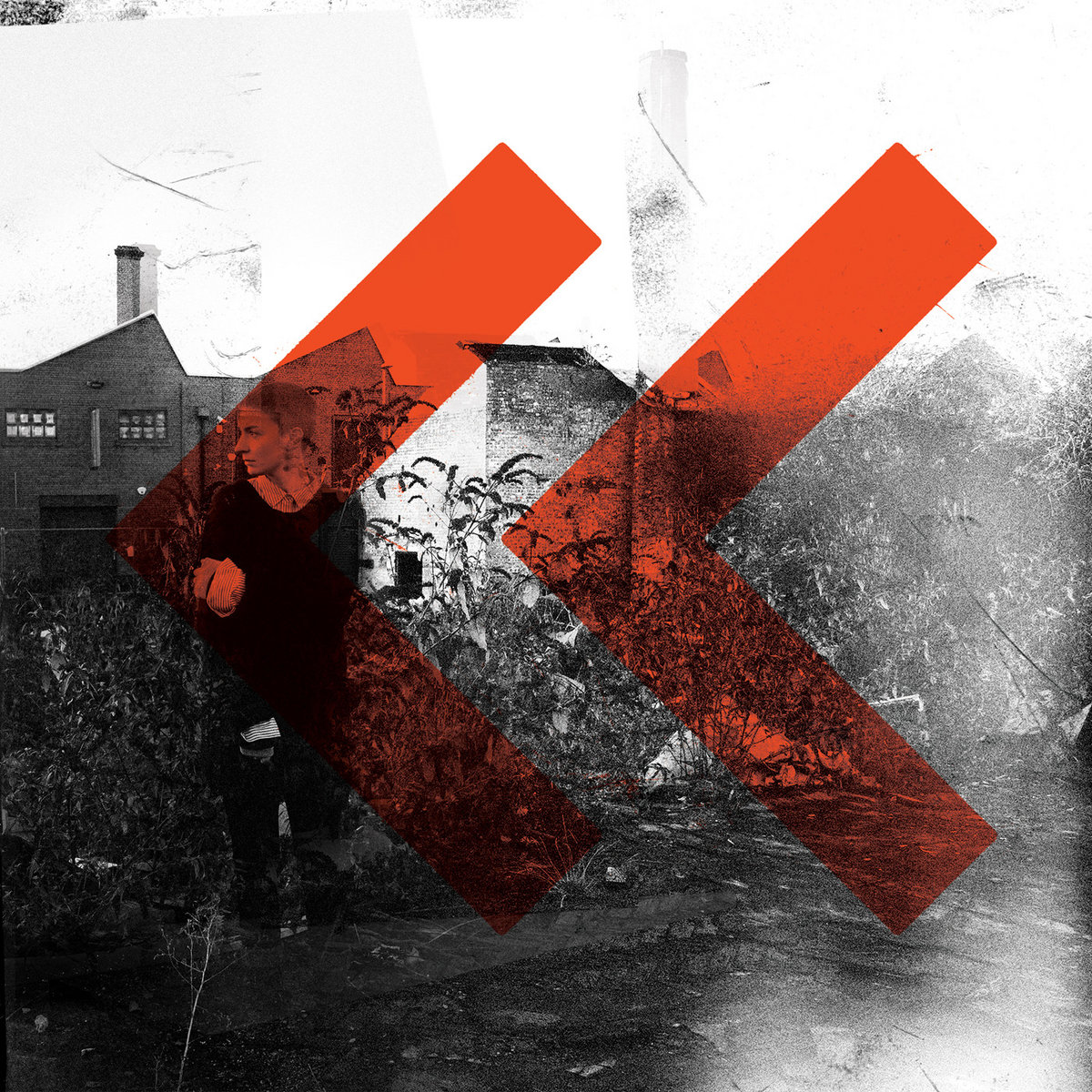
Fears is the recording name of Constance Keane. I bought this after liking a track on a friend's compilation of their favourite tunes of 2021. This album, whose title must surely be unpronounceable to anyone who has not been through the Irish education system, is a collection of downbeat electronic sounds over which we get Keane's delicate vocals. The lyrics touch on Keane's mental health issues, which on occasion saw her in psychiatric institutions, but just letting the beautiful music wash over you stops this being a harrowing trudge. You can listen to it yourself on Bandcamp: https://fearsrecords.bandcamp.com/album/o-che-2 images:

Moonlight (Bandcamp)

Cormorant Tree Oh (Bandcamp)

Oíche (Bandcamp)

Friday, September 16, 2022

Quick ones: some short record reviews

v/a Stax Gold - The Hits 1968-1974 (1991)

So this is a collection of Stax classics from Ace Records. It's a great selection of southern soul sizzlers, but you probably know that already.

LoneLady Nerve Up (2010) & Hinterland (2015)

You will recall that I went to see Ms LoneLady earlier this year, at what was basically my first proper gig after the menace of Covid was vanished from the world. I picked these up at the concert. If you've listened to the LoneLady track I included on my 2021 compilation you'll get the basic idea: nervy vocals over a somewhat retro accompaniment of electronics and edgy guitar lines. LoneLady's Julie Campbell plays almost all the instruments on both records. Nerve Up is a bit more guitar-oriented than the later record but they are both broadly of a piece. There are Tim Burgess listening parties for both of these (Nerve Up & Hinterland), which I keep meaning to play back while listening to the record. Probably should have done that before writing this.

You can buy these and other records by LoneLady in record shops or from Bandcamp: https://lonelady.bandcamp.com

The Anchoress [2022 covers]

In an effort to rake in the $$$s, the Anchoress has been posting cover versions on Bandcamp for short time periods. I keep downloading them. The first one here is a cover of "The Tradition" by Halsey. I have no idea who Halsey is so the song has no prior residence for me. It's nice enough. The second one is "These Days", originally from Nico's debut album Chelsea Girl. I have a troubled relationship with that album: while it is certainly pleasant enough, I feel like it is basically False Nico, in that she is singing a selection of nice songs written for her by other people. It is also from before she acquired her harmonium and started writing her own songs of subterranean doom. "These Days" was written by Jackson Browne, reportedly when he was about 16. While it was not written for Nico, she appears to have been the first person to record it commercially. The Anchoress croons her way through it; divorced of my difficulties with Chelsea Girl it's hard not to listen to it here and conclude that this is in fact a beautiful song with appealingly wistful lyrics about loss and regret.

And then a cover of Depeche Mode's "Enjoy the Silence", the electropop banger slowed down. It's fine but not revelatory. Continuing the trawl through goth-adjacent tunes of yore, the next one is The Cure's "Friday I'm In Love". I've never liked this song and the switch from the uptempo poppiness of the original to the slower and sparser version her does not change my opinion that this is one of those fundamentally bad songs that everyone in the world bar me loves.

The last track is "Pennyroyal Tea", originally be Nirvana and released by the Anchoress after the US Supreme Court's revocation of the Roe v. Wade judgement (pennyroyal has history as a herbal abortificant of variable efficacy). The cover is fine but again, not revelatory.

In fact I think all of these covers are inessential, with the exception of "These Days"; none of them leap out at me like her 2020 covers of "Wicked Game" or "Martha's Harbour" did. But I'll probably keep chasing the buzz by downloading whatever covers she releases next. You can do the same by keeping an eye on her Bandcamp page: https://iamtheanchoress.bandcamp.com

Confidence Man Tilt (2022)

I feel like I bought a Roisín Murphy album by mistake. This is fine as far as it goes and the songs would probably be great live if you had Janet Planet and Sugar Bones dancing in front of you, but there aren't enough lyrics about how Ms Planet is amazing and everyone else is a loser. Some of the tunes also sound a bit over-reminiscent of other tunes by other artists. Howard Blake "The Moon Stallion" (1978)

This is the theme from this now quite obscure TV series that is now completely unavailable on home media and has never been released on English-language DVD. Its unavailability is a shame, as anyone who remembers seeing it will recall it as a classic of spooky 1970s kids' television. Its use of the Uffington White Horse and Wayland's Smithy interspersed with a plot mixing up Arthurian myth and Graeco-Roman paganism would make it highly relevant to our current revived interest in all that folk horror stuff. If you've seen it you'll remember its late-Victorian setting and its spooky plot based around the mysterious white horse of the title, with anyone who catches sight of it being doomed to die in the near future (conveniently the story's heroine, played by Sarah Sutton, is blind).

The theme, downloaded from YouTube, is of short duration, but in its 50 seconds it manages to evoke the stallion's untamed gallop while hinting at the esoteric content of the programme. The theme isn't even on YouTube (the "Moon Stallion" hits you find there are for a completely different programme), but it can be listened to here. Give it a go, but don't blame me if next thing you find yourself meeting a spooky white horse and then dying in an unfortunate accident.

images:

Stax Gold (Ace Records)

Hinterland (Bandcamp)

Diana (Sarah Sutton) and the Moon Stallion (Bradley's Basement: "The Moon Stallion")

Thursday, September 15, 2022

Recordings of weird folk music from Britain and France

v/a Lammas Night Laments Vol.1

I saw a copy of this and later volumes in the series while we were out in Kimmage visiting a cat whose owners were away. As a series of CD-Rs compiling weirdo folk tunes they looked very much like my kind of thing, and it was all I could do not to gently slide the discs into my bag and claim ignorance regarding their existence. But they don't call me Honest Ian for nothing, so I left the discs where they lay.

Nevertheless, I did search online for the series to find more information about them, and discovered that information is easily found. The discs seem originally to have been put together from 2005 by some guy called Mark Coyle for a now vanished website called The Unbroken Circle. Since then the series has become much prized by those who take an interest in esoteric folk music. I also discovered that some cursory googling serves up sites from where the collections can be downloaded. Resisting the urge to scoff the lot, I stuck with just the first volume, which I found in what claimed to be a remastered format (implying that previous uploads of the collections have been characterised by poor sound quality).

And it's beautiful stuff. Some old friends (Vashti Bunyan, Dr Strangely Strange, Magnet, & Anne Briggs) and a pile of tunes from people I had at most heard of. Stone Angel's "The Bells of Dunwich" boasts a beautifully clear female vocal,C.O.B.'s "Spirit of Love" is like something from one of those Welsh Rare Beat compilations, for all that it is in English, while Dulcimer's "Caravan" sounds like they lured in Richard Burton to help out with narration.

I will eventually move on to later volumes in the series, but this one makes a great start.

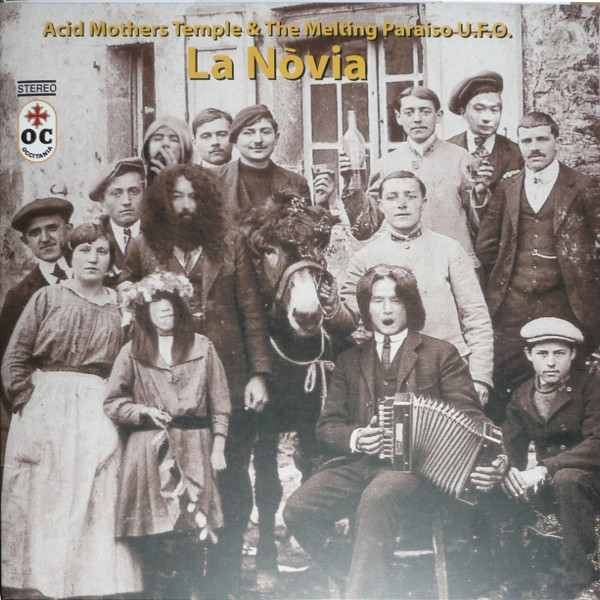
Acid Mothers Temple & the Melting Paraiso U. F. O. La Nòvia (2000), Vox Bigerri "La Nòvia" (2013)

My beloved and I had the great idea of learning "La Nòvia" for an Unthanks singing weekend: not the full on Acid Mothers Temple throat singing guitar rock freakout version but something closer to its Occitan folk origins. That got me thinking about how I'd like to have versions of this popular tune on my iPod so I could listen to them and stuff. These are both rips from YouTube (I already own a vinyl copy of Acid Mothers Temple's La Nòvia, but it seems to be impossible to legally acquire either a CD or MP3 version of it).

Just in case you do not already know all about this, "La Nòvia" is a folk song from the south of France, sung in the Occitan dialect. I think it may originally have been a children's song or even a lullaby, and it definitely has that kind of repetitive progression children love. The title translates into English as "The Bride" and the lyrics describe her ornamentation, with first verse being thus:

La nòvia qu'a nau brilhants suu cap

La nòvia qu'a nau brilhants suu cap

Nau brilhants suu cap,

L'anèth au dit

Which translates more or less as:

The bride has nine diamonds on her brow

The bride has nine diamonds on her brow

Nine diamonds on her brow

A ring on her finger

Subsequent verses are the same except the number of diamonds reduces by one in each verse until the impoverished bride is left with just one diamond.

If you've ever seen Acid Mothers Temple live you'll know their version, which features throat singing and electric guitar soloing of a type not commonly seen in the mediaeval Languedoc. It also goes on for ages, starting a capella and then bringing in the instruments before looping backwards and forwards between accompanied singing, a capella singing, and pure instrumentation. The Vox Bigerri version is short and unaccompanied, apart from a church bell at the start; on YouTube you see them singing as they walk around a deserted town that may or may not be in the south of France. Their harmonies are pretty full on, but I think they are a vocal folk group so that's not too surprising. The Vox Bigerri version is an impressive showcase of their talents. I would pick up one of their albums if it had a recording of it on it; sadly it does not appear on any of their albums' tracklistings. The Acid Mothers Temple version is however the one I heard first and it will always be my favourite. The original record sleeve contains material on the Cathars, a religious community who lived in the Languedoc until they were exterminated in a thirteenth century crusade; the last two hundred of them were burned at the stake after the conclusion of the siege of Montségur. In the hands and mouths of the Japanese freak rockers the simple children's tune becomes an elegy to the Cathars, whose extermination is symbolic of northern France's subjugation of the Languedoc. With the passage of time it is also en elegiac evocation of a now-vanished phase of Acid Mothers Temple's own history, when their line-up was large and had room for weirdos like Cotton Casino.

images:

Lammas Night Laments (Its lost its found: "VARIOUS ARTISTS - LAMMAS NIGHT LAMENTS VOLUME 01")

La Nòvia (Discogs)

Wednesday, September 14, 2022

Some short gig reviews

I'm a busy man so I don't have time to review every concert I go to in great depth, but maybe if I throw together several unsatisfying short reviews (with pictures I took myself) they will add up to one semi-satisfying big thing.

Sparks (Vicar Street)

I took no pictures of the popular Mael Brothers, whose concert I was only able to see because Covid struck down successive owners of a ticket. "So May We Start" from Annette makes for a great opener, while the best songs of the night were either "The Number One Song in Heaven" or "This Town Ain't Big Enough For The Both Of Us", the latter very much gaining form having a full band performing it (last time I saw Sparks it was just Ronald and Russell).

Nick Mason's Saucerful of Secrets (Convention Centre Dublin)

It was great being back for the first time since Worldcon. This saw early Pink Floyd tunes played by Nick Mason (as you know, drummer and founding member of Pink Floyd) and some of his musical buds (Guy Pratt, Gary Kemp, Lee Harris, and Dom Beken). The setlist featured songs from early singles and1967's Piper at the Gates of Dawn up to 1972's Obscured by Clouds. Like proper oldarse musicians they took a break in the middle of the concert, with things really ramping up in the second half as they opened with the double whammy of "Interstellar Overdrive" and "Astronomy Domine". The light show etc. was all amazing. The tunes were great too. I have a considerable fondness for Pink Floyd, but I maybe go in different directions than other people, tacking considerably towards the early stuff (Wish You Were Here is the latest I go, and I've never really warmed to Dark Side of the Moon), so the selections here were right up my alley. It is worth noting however that the music of Pink Floyd seems to have a negative effect on men's hair. And I was unfit to operate heavy machinery for a long time after the concert concluded.

Luzmira Zerpa (Cafe Oto)

She came from Venezuela to play music in Cafe Oto, which I saw with my bud Colin while I was over for that Nigel Kneale centenary thing. Everyone loved the Latin grooves of Ms Zerpa and her band, which reminded me of music I heard in Cuba for all that Venezuela is a completely different country with its own musical traditions.

Low (Vicar Street)

A date with the new crunchy music iteration of Low. Top notch stuff. I did hear the outlandish claim advanced that the bassist on this tour is one of their sons, but cursory research revealed that the bassist is in fact one Liz Draper. She acquitted herself well, though I do wonder about how many former Low bassists there now are.

More concert photos