This is a 2025 release recorded in Surakarta in Indonesia and featuring John Jacobs and Ginevra House from the gamelan retreat in Poolewe I attended last September. The music is a fusion of fusion. When the Portuguese first arrived in 16th century Java their musical instruments (violins, flutes, mandolins, proto-guitars, cellos etc.) were incorporated into Javanese music, creating a hybrid form called keroncong. This record merges keroncong with modal jazz. I think maybe I would need more familiarity with keroncong to evaluate this properly as I'm not in a position to say how this record differs from a recording of more straight down the line keroncong (if there is such a thing). I might also need a better understanding of the difference between modal jazz and… jazz. As is, the record is a lively collection of tunes featuring vocals, trumpet, guitar, bass, cello, ukuleles, and violin. One of the tunes is a non-gamelan arrangement of popular gamelan tune while another incorporates elements of classical piece "Ave Maria".
He is a man, she is a woman, and they are not together (or so they say). I saw them playing tunes at the Stoneybatter festival and found them appealing so I have downloaded this from Bandcamp, where it is completely free (you can't pay for it even if you want to). She sings, he doesn't, and while you might not necessarily see this as the greatest music ever made there is a nice groove to the tunes on this short record and an appealing mix of styles from jazz-adjacent to folk-adjacent. I liked her voice and the playing that accompanied it. I particularly liked the recording of folk classic "Silver Dagger" (Roud 711), which my beloved reminds me was the basis of Saint Etienne's "Like a Motorway". Hear it for yourself on Bandcamp.
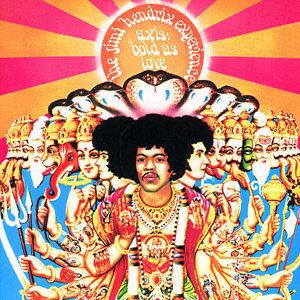
The Jimi Hendrix ExperienceAxis: Bold as Love (1967)
The second album from the Experience lacks the standout hits of their first or third albums but it's a solid all-killer no-filler record that shows off the band's chops. Listening to it makes me feel like I am turning into Lyric FM's Bernard Clarke. Oh yeah. A welcome Christmas present. (image from Wikipedia)
Hilary WoodsNight CRIÚ (2025)
I recall being initially underwhelmed by her 2020 record Birthmarks, but it has grown on me with time. This I like a lot more from the off. It's more atmospheric semi-electronic stuff but it seems to hit my buttons straight off. Worth fainting at a concert for. And it's on Bandcamp.
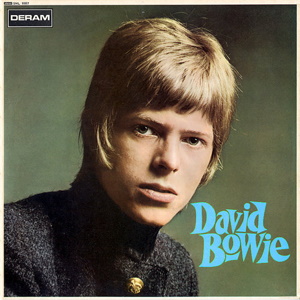
I've had the great idea of listening to and then writing about every David Bowie album in turn. This is the first one, a 1967 album with the unimaginative title of David Bowie. Or maybe it has no title, seeing as the cover features the artist's name and no title. Or maybe the title is Deram. Either way it's not an album I had heard anything about previously. Combined with the generic late 1960s cover this had me thinking that the record was almost certainly not very good: a collection of sub-Laughing Gnome novelty song bollocks mixed in with some unimaginative swinging London tunes. But I was wrong. The album is actually pretty good and it might well be that the only reason why people don't talk about it that much is that Bowie made so many other records. Also it perhaps lacks the kind of extreme musical elements that Bowie picked up from his later collaborators. The lyrics though are signs of things to come, with words hopping from slice of life Englishness to darker themes more like what we might expect from the artist.
Looking at the Wikipedia page, I'm not clear how much control Bowie had on the recording process, so I might roll with the idea that the record label decided how the album was going to be produced, even if Bowie was the one writing the songs. I might be wrong here.
I might quickly run through the songs, as this could be useful for readers as unfamiliar with the record as I was.
"Uncle Arthur" is a great opener: a jaunty up tempo tune about the eponymous character who is living an infantilised life in his 1930s, still reading comics and living with his mother who does all his cooking. And then we get a bit where he breaks free of the maternal embrace and runs off to get married, except he doesn't like the wife's cooking so he skips out and comes back to mummy. So you might think Uncle Arthur (whose uncle excactly?) is a sad bastard but the song pictures him feeling like he is living his best life. I suppose his domestic bliss is not really sustainable in the long run, but what is?
"Sell Me a Coat" has a more poignant tune. To me the lyrics are a bit more oblique. Perhaps this is about being sad as you get older and remember being young, something that would have been a big part of 20 year old David Bowie's life.
"Rubber Band" was released as a single. It wasn't a hit. Like "Sell Me a Coat" it has a brass accompaniment, but also an almost militaristic drum line. Even without listening to the lyrics you can tell there is something angsty going on here, and in this case the song tells the story of a guy who is sad because he went off to fight in the First World War and then came home to find that his girl had married the leader of a marching band. 'I hope you break your baton' he ruefully concludes.
"Love You Till Tuesday" is an uptempo love song that sounds a bit like the 1960s pastiche bits in Spinal Tap. It's very much in the stalker-love tradition as Bowie sings about loitering outside his loved one's domicile, the kind of thing that is often presented as romantic in songs and stories when it is anything but in real life. And yet the fact that the song title is "Love You Till Tuesday", lines that recur through the song, suggest a knowing awareness of the passing nature of infatuation. The way the vocal phrasing fits to the tune is very impressive, the words seeming to jump along like pebbles bouncing off water. This was also released as a single and also flopped.
"There Is a Happy Land" apparently takes both its title and theme from a hymn of the same name written by Andrew Young. The lyrics are of the childhood nostalgia variety, evoking the world of make-belief that children fall into and adults can't enter even if they want to. Wikipedia describes it as psychedelic-influenced but the music for me does not really have much in the way of psych-signifiers. The pace is slow and bass heavy, with occasional bursts of wind instrument. The vocal tone is sad, perhaps evoking the sense of loss that features in so much literary treatments of childhood and growing up.
"We Are the Hungry Men" starts off with a man in a funny voice giving a news report about an overpopulated world. Then the song proper begins, and the lyrics put us in classic David Bowie territory as Bowie sings of a dystopian future and its messianic leader. But its all very jaunty and uptempo, until you get the middle eight where someone with a comedy German accent comes in and then Bowie sings to a slower tempo about a programme of mass abortion and delivers the lovely line "We will turn a blind eye to infanticide". And then back to the jaunty tune. I like to imagine someone listening to this without paying attention to the words and then having that line hit them like a punch when the tempo drops, before the return to jauntiness leaves them with a feeling of "Did I really hear that?"
"When I Live My Dream" sounds like the kind of tune someone like pre-weirdo Scott Walker might sing on a TV variety show, looking a bit sad as he sings his lovely song with soaring strings about imagining a world in which his lover didn't dump him.
"Come and Buy My Toys" is a bit folk-adjacent. It is another one of those magical-world-of-childhood evokers, but there are also lyrical evocations of rustic England. And maybe there is an undercurrent here, like this is being sung by one of the Goblins in Christina Rossetti's "The Goblin Market", having moved on from selling fruit to toys?
"Join the Gang" describes a group of cool young people, the boys playing in bands and the girl a model. It's another jaunty uptempo tune, but there is a bit of an edge to it, with references to drug use that make it sound like they are not entirely fun drugs. The drummer really earns his pay on his one.
"She's Got Medals" is another one where the uptempo tune masks the oddball nature of the lyrics, which seem to be about a woman who adopted a man's identity to fight in a war before going back to being a woman, albeit after a time picking up girls. It might have made a good single, except the lyrics would probably block it from getting any radio play.
"Maid of Bond Street" has a swinging London tune and presents little portraits of different people (mostly women, one man) and their different lives, some happy, some sad.
"Please Mr Gravedigger" begins with an ominous bell ring, then Bowie's voice comes in singing to an accompaniment that is mostly comprised of sound effects rather than music. The lyrics seem to be slice of life stuff about a gravedigger going about his work, but then what's that about the singer confessing to the gravedigger that he's a child murderer?
And then it's over. I see from Wikipedia that the version I downloaded from iTunes is missing two tracks: "Little Bombardier" and "Silly Boy Blue". The former apparently deals with a war veteran who is run out of town after being suspected of kiddy fiddling while "Silly Boy Blue" seems to have been a musically ambitious piece that returned to Bowie's live sets in later years.
One thing I am really struck by with these tunes is how short they are. I'm a fairly fast typist but I couldn't write a short paragraph about any of the songs in the time it took to play them.
So my final verdict: this record does not deserve its obscurity and is worth more listens. For me the key tracks are "Uncle Arthur", the opener that immediately had me thinking 'Oh wait maybe this isn't all rubbish?' and "We Are Hungry Men", with its juxtaposition of dark lyrics and jaunty tune.
Next up we have David Bowie's second album, from 1969, which is also either untitled or called David Bowie. It's the one with "Space Oddity" on it.
image:album cover (Wikipedia)
David Bowie c. 1967 (Rolling Stone: "Remembering the Debut Album David Bowie tried to forget")
Last September I spent a week in north west Scotland, attending a gamelan retreat with other aficionados of the popular Indonesian music. And in April I returned there. The local gamelan group were playing a concert but needed some extra players to fill out their line-up. Ginevra House, the Poolewe gamelan organiser, put out a call for ringers and when it became apparent that I would be able to get a lift from Glasgow with some members of that city's Gamelan Naga Mas ensemble I arranged to fly over and travel up with them.
My journey to Glasgow proved eventful. The initial plan was that I would fly over in late morning, pooter around central Glasgow, and then meet my gamelan buds at their rehearsal in the psychiatric hospital that is their set's home. In the airport I had to board a bus that would take me to the aeroplane, but when I did so the bus sat there for a bit and then it was announced that there was a problem with the plane and that it wouldn't be going anywhere for at least half an hour, so we had to get off the bus. And then we were told that the flight was cancelled and we had to pick up our checked baggage and await further instructions.
Eventually I was rebooked on a flight to London and then another to Glasgow, which meant that I wouldn't arrive until the early evening but my bag would at least be checked through all the way. But then when I landed in Glasgow, there was no sign of my bag. The baggage handling lady (reeling from an encounter with an irate flyer who seemed to think that the baggage handling lady was personally responsible for their lost luggage) took Ginevra's details and said they would send on my bag. I had naive hopes that the bag would arrive in Wester Ross around the same time that I did, but I should have taken her "So you'll be there until Monday?" question as a warning.
I had no time to explore central Glasgow and instead had to race out west to wander around the map-free hospital campus in an increasingly confused search for the gamelan's location. Once there I got to play a little bit on the Glasgow gamelan set. Then it was off to stay over in the nearby house where gamelan friend Thessa was cat-sitting (the cat did not take to me), which was near where we would meet the others in the morning.
There were five of us in the car. By an odd coincidence it turned out that three of my fellow travellers were former or current drummers and it was interesting listening to their percussion chat, particularly as they were all women while drumming is a stereotypically male endeavour. Our journey was a long one and we made a number of stops along the way: in Dunkeld (for lunch and a stroll), in a shopping centre outside Inverness (so we could pick up provisions and so that I could buy some clothes), and at Loch Maree where we saw a beautiful rainbow. While we were there some passing French tourists asked us to take their picture and then returned the favour.
We dropped our stuff in Ginevra's and then went over to Poolewe for a quick rehearsal and a reacquaintance with the Poolewe gamelan people (and a meeting with some we hadn't encountered on the September trip). This also involved working out the running order for the pieces we would be performing and who would be playing what. I was also reacquainting myself with the Poolewe gamelan set. Gamelan sets have names, and the Poolewe set is unusual in that it has a female name, Madam Hot Chilli. She is a venerable lady, and I understand some of the instruments to be over a 100 years old. Ginevra reminded us that some of them are a bit fragile and should not be hit too enthusiastically.
And then it was back to Ginevra's for dinner, chit-chat and bed. Ginevra lives with her father and had another family member visiting so I did find myself flashing back to how a much younger version of myself would behave when staying with friends and started worrying that I would commit some kind of terrible faux pas in front of the grown-ups. I had not got the memo about when we were meant to be getting up and was in a room on my own, so in the morning I lay in bed fearing that getting up would mean I would find myself having to talk to a grown-up on my own. Then it turned out that everyone was about to go to a morning rehearsal so I had to jump up and get ready very quickly.
After a last rehearsal we moved the instruments over to the village hall where afternoon concert was to take place. Gamelan instruments are bulky and heavy, and moving them from where they are stored to where concerts will be performed is always the least fun part of the gamelan experience and in this case involved multiple car trips and walking over some of the bulkier bits of kit. Once everything was there we set it all up (full disclosure, I slacked off a bit on this). We had a bit of a gap then and amusingly bumped into the French people we had met at Loch Maree, who were leaving their car by the village hall before going off for a stroll. We invited them to come to our concert (which involved a somewhat confusing explanation of what exactly gamelan music was, given their limited English and our limited French).
People actually showed up for the concert (including the French people), which was nice. Here is a quick run through of the pieces we played:
Lancaran Baita Kandhas: This is a lancaran, one of the simpler kinds of gamelan piece. I was playing kempul (small hanging gongs) and the main gong on this, structural instruments that contribute little to the melody but are important for marking time. For these you play far less notes than the people on the balungan line that makes up the skeleton of the piece, but the notes must be played at the right time or people will start worrying that they have lost their place. So kempul and gong is actually quite stressful to play, and in this case made harder by the piece getting faster and faster as we went through it. I think I managed but the smaller gongs did start flapping around a bit, particularly later in the piece.
Ladrang Wilujeng: the most famous of all gamelan pieces. I think I was playing the kanongs on this, which are a set of upside down pots, but also I was playing the ketuk, which is another upside down pot but one that makes a deliberately dull sound. This was a bit non-standard for me, as in my Dublin group the kanong and ketuk are played by different people. Like the kempul, the kanong is a structural instrument, so you play less notes than the balungan players. The pattern on this piece was something like hitting the ketuk instead of the kanong every fourth time you hit something. You're also meant not to hit the ketuk just once but to give it follow-up taps creating a kind of bouncing ball sound. I never mastered that.
Ca' the Yowes: Margaret Smith of Glasgow's Gamelan Naga Mas had arranged this Robert Burns classic (as noted in my account of the September gamelan retreat) and now I was part of the singing group for this while others played the instruments. The gamelan arrangement is based on a beautifully simple descending and ascending line that then breaks into embellishments. We did have people joining in with the singing but I am never clear on whether this sounds as beautiful and moving to listeners as it does to us when we play it.
Ladrang Parawisata: I was singing with others on this one too. Parawisata is that rare example of a Javanese gamelan tune where I know the name of its creator, in this case Ki Nartosabdho, an important figure 20th century gamelan (both music and the puppetry that accompanies it). He is credited with helping to push forward the form and ensure its continued popularity. With Parawisata I think he put the words to a pre-existing tune, and the lyrics are about going on holidays in the Indonesian archipelago. In the first part the singing is fast and lively, evoking the excitement of going on holiday; then in the section half the singing is slower, perhaps evoking the tiredness you might feel at the end of a day's holiday fun as you return to where you are staying.
Lancaran Baita Kandhas workshop: after an interval Ginevra invited the audience to have a go at playing Baita Kandhas themselves. So a randomer played the kempul and gong part while I supervised, saying "you've fucked it up again" every time she hit a wrong note.
Improv: in my Dublin group we never improvise but it seems to be much more of a thing in Scotland. For this we started off playing a traditional piece and then slid into improv. Like all improv it may have been more fun for the performers than the audience.
Ladrang Mugirahayu: I was singing on this one as well, with Ginevra and local gamelaner Chloe. Gamelan has no concept of harmony so it's like no one ever thought "why not have a woman sing the high parts and a bloke sing the law ones?" and instead gamelan pieces often expect the singer to have an unlikely and impractical range. The vocal on this starts at a pitch I found almost completely unmanageably high but then dropped at times to chthonic depths that would pose difficulties most lady singers. There is an element of technique to this and it's a technique I haven't mastered, but it was fun giving this a go.
Lancaran Bendrong: a straightforward piece to finish off with.
And then we were done. After bringing the instruments back to the gamelan cottage we repaired to Chateau Ginevra to party like only gamelaners can party. While we were chopping vegetables for dinner I mentioned the Beach Boys song "Vegetables" and was a bit surprised that only Ginevra was familiar with it. After dinner we drank various things, notably a whisky from Dublin (for which one of my Dublin gamelan buds was the master distiller until Diageo made her redundant) and some mead courtesy of Ginevra's nephew, which was tasty and interesting.
There were some interesting conversations. One thing I came to realise is that we have it pretty handy in Dublin with our gamelan set that lives in the National Concert Hall. In the UK recent years have seen a gamelan retrenchment, with many institutions getting rid of their sets or locking them up in storage and forgetting about them. Gamelan sets are big and if you've ever seen one you might think that the key barrier to making gamelan music more widely known in the west is the expense involved in acquiring the instruments. But actually acquiring a set is the easy bit. At one point the Indonesian embassy was giving away sets to anyone who talked a good game, while the National Concert Hall set was acquired for nuppence on foot of a well-crafted begging letter to the sultan of Yogyakarta. But once you have the set you need somewhere to store it and you need someone who knows what they are about to run gamelan groups, both of which consume resources, resources many UK institutions have decided they are no longer willing to provide. Ginevra thought this was a product of the same insular mindset that gave rise to Brexit, with institutions deciding that it wasn't worth their while funding funny music from the other side of the world. I wondered if it might also be a general post-austerity thing, with gamelan a niche music that resource-depleted institutions find it easy to give up on.
I was also talking to Ginevra about the history of gamelan notation. Gamelan used to be an entirely oral tradition, with people just remembering the tunes (people were cleverer in the past). The first attempts at notation came from western musicologists who thought the music was in danger of dying out and should be recorded for posterity first (which reminded of the way folk song collectors in the West thought they were saving a dying tradition for posterity). These early attempts failed because the musicologists approached gamelan like western compositions and tried to notate all the parts, only to be thrown by how different ensembles would play pieces very differently, with pieces even coming out differently when played again by the same ensemble. The modern gamelan notation was developed more collaboratively by gamelan musicians and musicologists. This reflected the fact that much of how a piece is played is based on subjective interpretation. This isn't improvisation as such, more a decision by groups as to how they will approach a piece and what choices they will make about how to play it. Gamelan notation only explicitly states the notes played by the balungan players who provide the skeleton to a piece, with other musicians working out their part from that in a process called garap. Ginevra did however refer to some guy who has extensively studied gamelan and reached the conclusion that actually you only really need to notate what is played on the rebab, a stringed instrument, with everyone else being able to garap their part from that; that would be like a score for a western symphony only covering the lead violin and telling everyone else to work it out for themselves.
And I was recommended two books, one about gamelan and one which wasn't. One is Gamelan: Cultural Interaction and Musical Development in Central Java by Sumarsam, which Ginevra reckoned would be the kind of book I would like if I was interested in reading more about the history of the gamelan tradition of central Java. The other was A World Appears: a Journey into Consciousness by Michael Pollan, which is one of those books that explores the mysterious world of consciousness. I find consciousness interesting as a topic. It feels important to me that I am conscious, yet there seems always to be at least the possibility that consciousness is the illusory by-product of mechanistic processes. I'm hoping the book will make it into paperback at some point.
Another fun thing we did in Poolewe was go for a walk in the woods. A friend and neighbour of Ginevra's guided us on our perambulations and while there wasn't much musical content to all this it was very enjoyable.
On our way back we took the scenic route, which meant we saw a convoy of boy racers fly by in their Porsches. But also were able to gaze upon Gruinard, better known (to me) as Anthrax Island. This was where the British ran biological warfare experiments in the Second World War, dropping anthrax bombs on the island to observe the effects on the sheep who lived there. The tide of the Second World War ended before the RAF was able to use anthrax bombs against Germany, but Gruinard remained contaminated. Spores would periodically blow over to the mainland, killing livestock; generous pay-outs and liberal use of D-Notices suppressed discussion of Gruinard's taint. Decontamination work finally began in the 1980s and the island was declared free of anthrax in 1990, but I would not set foot on it or eat anything grown there.
And so back to Glasgow and then on to the airport, where I was reunited with my bag (which perhaps unsurprisingly had not made the journey to Gairloch) and made my way home. There I received a message from one of my carmates saying that when she got home she had hopped in the shower only to find a tick stuck to her leg. I checked and sure enough I had a tick too, which Iremoved with tweezers like you are meant to and then got a precautionary course of antibiotics from the croaker. I don't seem to have come down with Lyme disease yet but I do find I now have an insatiable thirst for human blood. I've also become obsessed with the idea of arranging 2 Unlimited's "No Limits" for gamelan but I'm not sure if these things are related.
 Sono Seni Ensemble Keroncwrong (2025)
 We're Not Together We're Not Together (2023)
 The Jimi Hendrix Experience Axis: Bold as Love (1967)
 Hilary Woods Night CRIÚ (2025)