Showing posts with label Films. Show all posts

Wednesday, March 11, 2026

Controversial John Carpenter film recommendations

John Carpenter has made many films. I have seen some of them. Of the ones I have seen, which ones would I recommend? I think my most whole-hearted recommendation would be for Assault on Precinct 13 (1976), which sees a small disparate group (a cop, a prison officer, some secretaries, and a death-row prisoner, all played brilliantly by relative unknowns) trapped in a decommissioned Los Angeles police station and besieged by a heavily armed gang of implacable homicidal hoodlums. I think it was inspired by both Night of the Living Dead and Westerns like Rio Bravo, while also reminding me of Zulu. It is engagingly relentless and features one of the greatest theme tunes ever (written and played by Carpenter himself).

The other Carpenter film I would most unreservedly recommend is Prince of Darkness (1987), in which ancient evil bubbles up on the streets of Los Angeles, partly in the form of Alice Cooper. It manages to evoke an air of terrible and unnameable dread. And it also features a great Carpenter soundtrack.

I'm more ambivalent about other Carpenter films I've seen: many of them have a good basic setup but are let down by failings in plot or other elements. The Thing (1982) is well-regarded by many and has a lot going for it, but it fails one of my horror constraints: for horror to work, the non-horror elements have to be credible, but in The Thing we have the credibility-straining setup of a purely scientific base in the Antarctic that seems to be awash with firearms. They Live (1988) has a great build-up but then runs out of plot ideas once we reach the point where the hero puts on the sunglasses and sees the world as it really is (I think this might be one reason why the film has this interminable and largely pointless fight scene between two guys arguing over whether one of them is going to put on the glasses or not: Carpenter had to fill up the film's length somehow and had no other ideas). Escape from New York and Escape from LA are enjoyable schlock but I'm not sure they're actually good in any real sense, particularly the latter. That might be all the ones I've seen, though I suspect Dark Star (not seen by me) is also worth your time.

Of the other John Carpenter films, what ones would you recommend? And am I wrong about the ones I have seen?
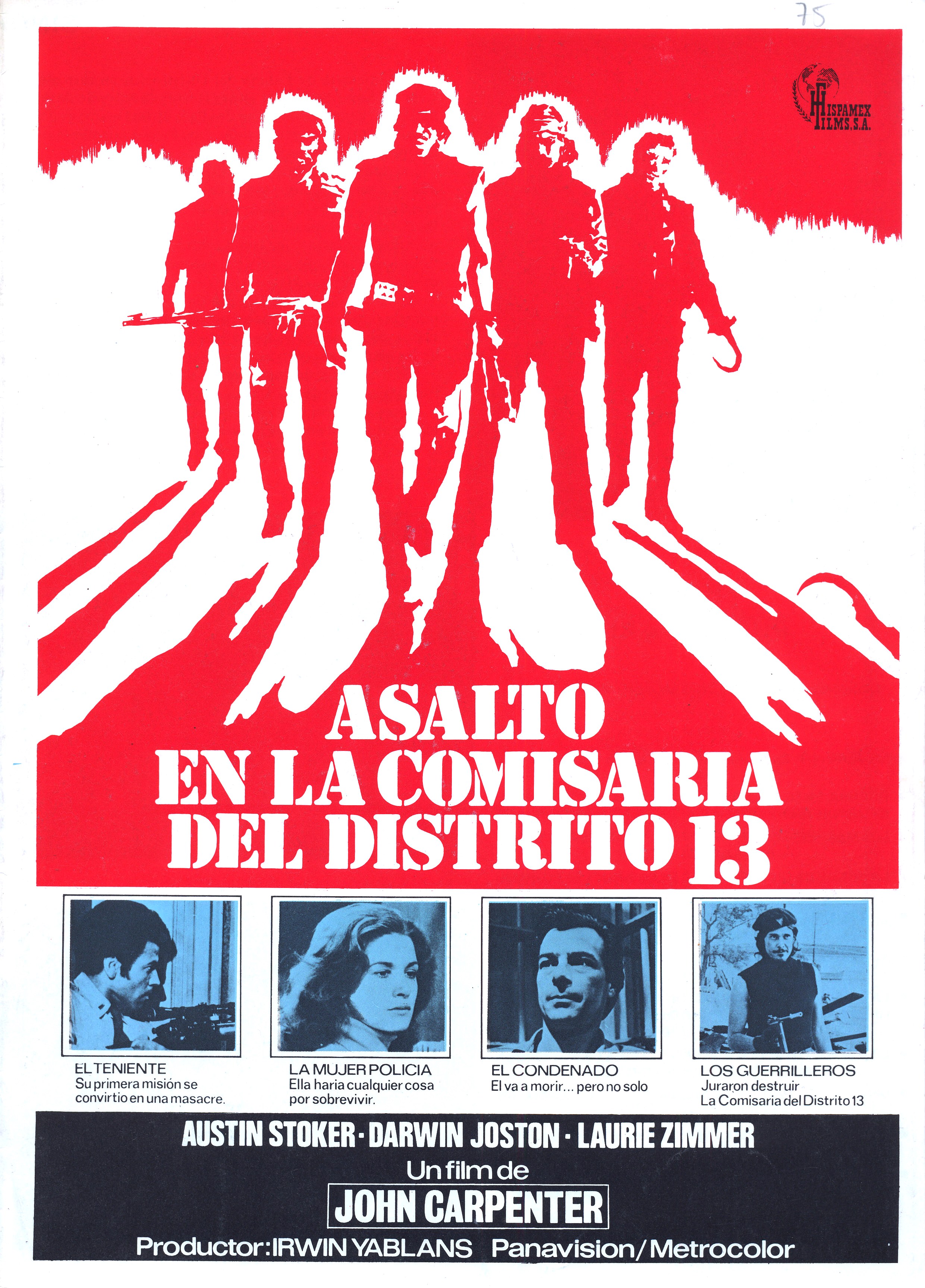
image source:

Spanish Assault on Precinct 13 poster (VHS Revival: "Racial Equality & Blood Brotherhood: John Carpenter's Assault on Precinct 13")

Monday, March 09, 2026

Music in Film 05: Since Yesterday: the Untold Story of Scottish Girl Bands (2024)

I was posting about some music-related films I had seen in 2024 and somehow distrcaction meant I never got round to posting about this music documentary from Carla Easton and Blair Young about Scottish bands formed of women and girls. The Scottish music tradition is focussed on bands that are all or mostly men. When women appear in bands they are either the singer or one of a minority of female musicians in the line-up. Bands entirely composed of women are far less common, to the extent that once you've thought of Strawberry Switchblade it is a bit difficult to think of any other Scottish all-women bands (don't @ me if you know loads of Scottish all-women bands). This documentary attempts to correct that picture by looking at the secret history of Scottish girl bands. The filmmakers argue that drawing attention to their existence is important as a way of encouraging girls to pick up instruments and form bands themselves, on the grounds that people can't visualise themselves doing something if they don't have examples of people like them doing it already.

It felt to me that the heart of the film was the postpunk-DIY scene that emerged in Scotland in the late 1970s and early 1980s. That appears to have seen an explosion of bands, some of which were had no men in them and so make ideal subjects for the film. That is the scene from which Strawberry Switchblade emerged, but it also produced many other bands that all seemed somewhat interesting, even if most of them are now largely forgotten because they were never that successful. The film does go back further in time to talk about The McKinlay Sisters (or The McKinlays), a pop duo from the early 60s who seemed to have enjoyed some short-lived success, and it goes later to talk about riot grrl and The Hedrons, a band from the mid 2000s (who seem to have been pretty successful without my ever being aware of their existence), but the postpunk stuff is what the film seems to be happiest engaging with, possibly because there is such a cornucopia of acts from the era.

This very much is the kind of music I like: relatively lo-fi, guitarry, drummy, female vocals, etc. But I'm not too surprised that the scene did not produce many girl bands who went on to all conquering success. It is minority interest music and not really the kind of thing that is ever going to trouble the charts too much. It is striking that the one really successful band from this milieu (Strawberry Switchblade, whose global hit gives the film its title) did so after having their vocals married to a synthpop backing (something they were a bit uncomfortable with, but they appreciated that the record company needed to make a return on their investment). And Strawberry Switchblade then folded, partly for their own internal reasons and partly because when it came down to it they didn't really like being pop stars after all. The one other almost-contender from the early 1980s scene were Sophisticated Boom Boom, who recorded some Peel sessions before changing their name (primarily because they had mislaid their lead singer but perhaps also to avoid confusion with a new wave Swiss girl band that had the same name). As His Latest Flame they signed to a major and released an album that received some push but never shifted too many units before the record company lost interest and terminated the contract.

Most bands are unsuccessful. Maybe Strawberry Switchblade being the only truly successful one from that scene isn't too surprising: it may not be an indication that the odds are stacked against girl bands once they have formed as they are successful at about the same rate as bands with boys in them (not sure how you would test this assertion); the real question is why do so few girl bands form in the first place.

And yet, I did find myself thinking that there is a gender-specific structural barrier girl bands face that does not seem to trouble boy bands. There is a bit in the film where the Hedrons are talking about how record labels were wary of signing them because they are a band of young women at an age where women start having babies: the record companies were afraid that pregnancy and children would derail the band's career and cause the company's investment to be wasted. In the film that is presented as indication that the men from these unnamed record companies are all sexist dinosaurs, but the film itself seems to say that part of the previous failure of Sophisticated Boom Boom / His Latest Flame stemmed from band members becoming pregnant and either dropping out or being pushed out by the rest of the band. So it felt to me like there is a structural problem separate to record company types being sexist dickheads.

I don't know how you can get around this. People should be able to have children if they want without it killing their career, but there's no maternity leave set up for musicians and I am not sure how there could be, given that they are not salaried employees. Nevertheless it is an indictment of social structures and people's behaviours that you never seem to hear of men dropping out of bands because they have become a father.

Towards the end of the film maybe it lost a bit of focus when it started going on about non-white non-cis musicians: I thought sticking to girl bands would have been better. I was also a bit disappointed that it didn't mention Girls Rock School Edinburgh, a laudable initiative to teach interested women and girls how to play musical instruments (something I only know about because I've met one of the organisers on Unthanks singing weekends). There is also something a bit nostalgic about the film's focus on bands playing with traditional rock instrumentation, as it feels at times like the day of the band is over or coming to an end (the subsequent rise of Wet Leg and the Last Dinner Party might prove me wrong here).

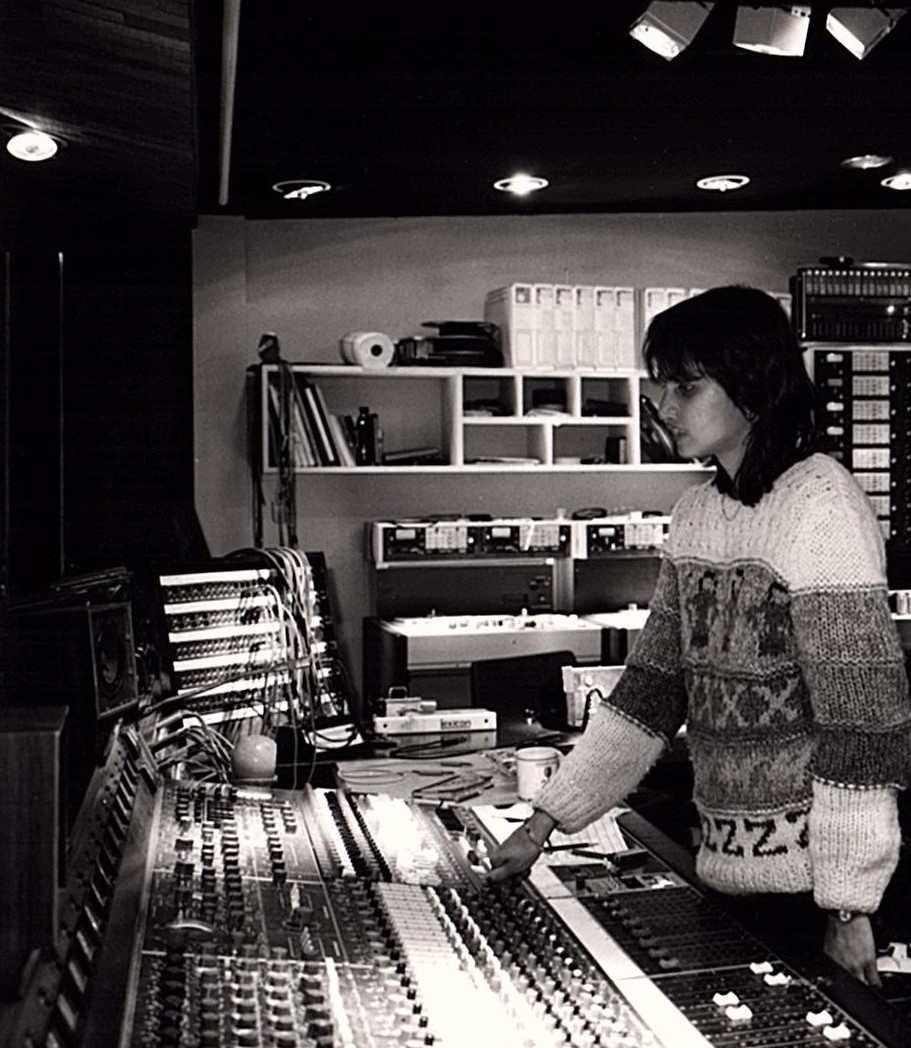
Afterwards my beloved and I were talking about why there are so few women working as sound engineers and producers in music. I was reminded of an interview with Anjali Dutt I read a while back. Dutt is not a household name but she engineered and/or produced a load of records in the 1980s and 1990s, with credits on records as varied as My Bloody Valentine's Loveless, Oasis' Definitely Maybe, and Spacemen 3's Recurring. She says that her engineering career ended because she started having kids and there was no way to combine the demands of parenthood and the demands of the music business. And by the time her kids were old enough to need less looking after the music business had moved on and found other people to hire for engineering jobs (again, this seems not to be the kind of salaried work you can go away on maternity leave for). You can read the interview for yourself here.

I don't know how you get around these problems. It might help if looking after children stopped being seen as something that is exclusively a woman's thing, but I suspect the problem is more structural than attitudinal.

You can listen to a playlist of music from bands mentioned in the film on Spotify and Mixcloud.

The whole film appears to be on YouTube at the moment here.

You can see my previous posts about music in films I saw in 2024 here, here, here, and here.

images:

Since Yesterday (Screen Scotland / Sgrín Alba: "Since Yesterday: The Untold Story of Scotland's Girl Bands")

Anjali Dutt (Reverb: "The Engineer Who Helped Save MBV's Loveless & Oasis' Debut")

Saturday, March 07, 2026

Snow Is Falling All Around Us: Unusual Christmas-Adjacent Films

Ho ho ho! It is now March, but that will not stop me from looking back on a season of Christmas films they showed in the Light House in December. First up we have Comfort & Joy, Bill Forsyth's 1984 film. Now, some background here. This was Forsyth's third feature, following Gregory's Girl and Local Hero. Local Hero is a bit of an obsession in my beloved's family so I found myself heading off to see this with her and her sister. Despite the title, it's not really a Christmas film, or at least only in the sense that it is set around Christmastime without actually being about Christmas. It takes its inspiration from Glasgow's ice cream wars of the 1980s, when criminal gangs were selling heroin from ice cream vans and laying into any of their rivals who encroached on their turf. However, instead of being a film about drug gangs the film imagines a strange alternative history in which the ice cream wars are instead between rival producers of ice cream. The main character plays a radio DJ who somehow finds himself mediating between the battling gelato merchants after going through a bad break up.

I liked this film a lot. For all its whimsy, the plot seemed more coherent than the better regarded Local Hero. The humour is appealingly gentle and the Mark Knopfler soundtrack so effective that I started wondering if I might have reached the age where engaging with Dire Straits becomes a good idea. But I think a really big part of what appealed about this to me was all the Glasgow locations. Some of the city looked very familiar while some of it was very different: there is a scene on the banks of the Clyde with the Finnieston Crane in the background, something I saw lot of in my 2024 Worldcon related trips to Glasgow, except that instead of being surrounded by hotels and conference centres it is out in the middle of a semi-derelict port site. I also found it highly amusing that the protagonist seemed to be living around the corner from one of my gamelan friends, with whom I was staying on a November gamelan trip to GIOFest.

You can see a trailer for the film here.

The Holdovers is more directly a Christmas film. It's about some rich kids who have to spend the Christmas holidays in their posh boarding school because their families can't or won't take them, and also the cook and grumpy teacher who have to stay with them. In premise it sounds like heartwarming glurge but it is actually pretty affecting and has strong performances from all three of the principals: Paul Giamatti as the teacher, Da'Vine Joy Randolph as the cook, and Dominic Sessa as the main held over student. Sessa's performance, his film debut, is particularly impressive. I think this is the kind of film that will deservedly get shown every year around Christmas so you will get a chance to see it and should take that opportunity. I did overhear some young people talking about how they found it much more moving on the big screen.

The Muppet Christmas Carol is the best and most faithful adaptation of the Charles Dickens classic, both funny and deeply moving. I suspect I will be going to the cinema for this every year until I die. The Light House audience was a bit boisterous but I decided it was best to lean into this.

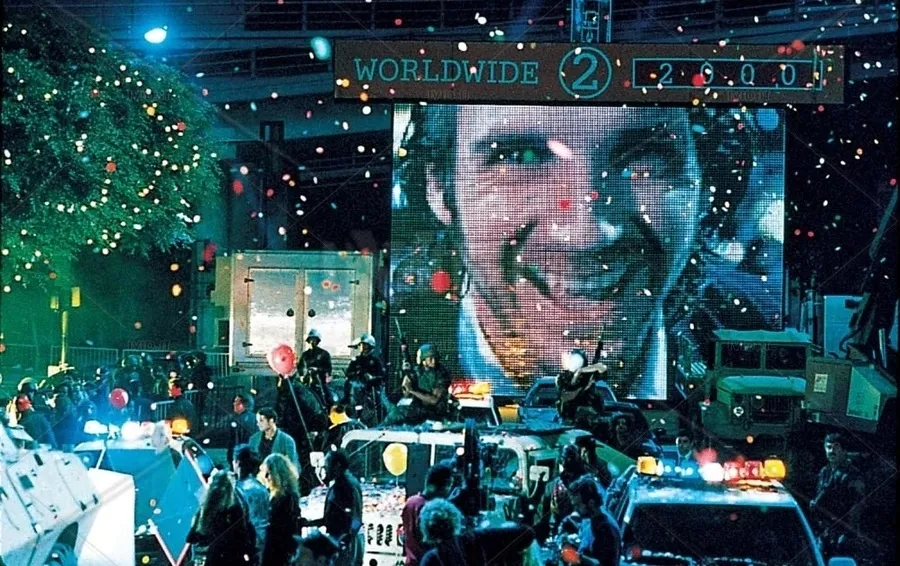
Strange Days is Kathryn Bigelow's 1995 SF film set in the last days and hours before the start of the 21st century. It's not a Christmas film as such, but it does feature a guy dressed as Santa Claus being chased by some angry hookers. The setup revolves around this dodgy tech that allows people to record their physical sensations for playback by themselves or other people, with Ralph Fiennes playing a shifty vendor of these recordings. The plot is multi-layered, with one angle covering a rampage by murderous cops seeking to recover an incriminating recording but another key theme is the importance of letting the past go (something Fiennes' character takes a while to realise, as he spends a lot of the film playing back experiences from before his girlfriend left him). The central performances from Fiennes and Angela Bassett as his kickarse limo driving friend are very impressive and overall I like this film as much as I did when I first saw it. My beloved did however think it went on a bit, and given its 145 minute runtime I can see where she is coming from. It's also not always an easy watch, with one particularly intense scene inspired by Michael Powell's Peeping Tom making for extremely uncomfortable viewing.

images:

Bill Paterson in Comfort and Joy (Film-authority.com: "Comfort and Joy 1984 ****")

Strange Days (Dust on the VCR: "Renewed Access and Relevance in Strange Days (1995), a Film That Predicted Too Much of the Future")

Thursday, March 05, 2026

Zut alors! J'ai vu les films français!

Are French films screened here less frequently than they used to be, attracting less attention when they do make it to our screens? Perhaps so, but I still managed to recently see some interesting offering from the French film industry.

Dossier 137 is a 2025 film from Dominick Moll. It was shown in a French film festival, which I suspect means it is not going to get a wider release, which is a shame as it features strong performances and deals with important subjects in a sensitive and nuanced manner. Léa Drucker plays a police investigator of malpractice by other cops, with the film set around the time of the Gilets Jaunes protests. A youth attending the demonstrations with his mother is severely injured by a policeman, and the investigator is trying to find out who is responsible and whether they acted inappropriately. Discovering that the youth comes from the same small town as herself, she pursues the case a bit more doggedly than she might otherwise have done. The film is good on the way cops close ranks to protect their own and the human cost of being on the receiving end of state violence, while also giving a sense of how stressful it is to police riots and how easy it is to slip into making bad decisions in such an environment. Drucker's own performance is particularly impressive. It deserves a wider audience.

Alpha (another 2025 film, this time from Julia Ducournau) was screened more widely, although it proved somewhat divisive, with many seeing it as a confused load of old bollocks, for all that it did have its supporters (notably Irish Times film guy Donald Clarke). It is an odd one, with the basic premise that there is this blood-born disease going around that turns people into statues. The film mostly follows Alpha, a 13 year old girl, who unwisely gets an A tattooed on her arm at a party, leading to her mother fearing that she has been tainted by the virus. There's also a split time thing going on, for as well as the present-day Alpha storyline there is a separate storyline in the past involving her mother as a doctor treating patients in the early days of the virus. And there is also stuff about how Alpha and her family are of Berber origin, and about her recovering heroin addict uncle.

I can see why people didn't like this. I found the split time sequence a bit confusing, which irked me as missing the cues made me feel like I was too stupid for the film, which made me hate it for insulting me. But also the relationship between the two time sequences is a bit strange and contradictory, which made it unclear as to what was real and what was imaginary and who was doing the imagining. But it still felt like the film had something. The principals' performances are all very impressive and the film also makes great use of music, most notably Portishead's "Roads" at the disorienting party sequence at the start of the film. So: worth seeing even if you might not like it.

L'Atalante is an old French film from 1934, directed by Jean Vigo, who died in the same year it was released at the age of 29. It's one of those Sight & Sound top ten films and is about the eponymous barge and the people who sail on her: Jean (the cap'n), Juliette (his newly married wife), Père Jules (the salty sea dog), and the young lad (who doesn't have a name). It's mostly about Jean and Juliette and their romantic travails. It's entertaining enough and it looks very nice but I did wonder if I was missing something as it all felt a bit inconsequential and unworthy if its one-of-the-best-films-ever status. But I am wary of being too down on it as it reminded me somewhat of F.W. Murnau's Sunrise, a film I disliked greatly on first viewing and have since grown to love.

There are cats.

images:

Dossier 137 interview (Critikat: "Dossier 137")

Mélissa Boros in Alpha (Independent: "Alpha may have inspired walkouts at Cannes – but they were out of boredom rather than disgust")

Tuesday, March 03, 2026

Three Key 2025 films: "One Battle After Another", "Sorry, Baby", "Palestine 36"

I've become a bit wary of that Paul Thomas Anderson guy. Some of his films I like a lot (Boogie Nights, Magnolia, Hard Eight, Punch-Drunk Love) but some of them I found both over-long and disappointing (Licorice Pizza, The Master). One Battle After Another I initially decided to skip as it is long and didn't look too appealing in the trailer. However my interest was piqued by stories about how it had done very well with critics while being largely shunned by audiences. Also, one or two of my buds who had seen it spoke very highly of it. So fuck it, I gave it a go.

And… it's OK. It does maybe go on a bit and the bit of the film that comes before the "16 years later" jump is a bit formless for its admirable kinetic qualities, but the whole storyline of the former urban guerrilla (Leonardo DiCaprio) and his daughter (Chase Infiniti) on the run from a crazy Fed is pretty engaging. People like to go on about DiCaprio's girlfriend age event horizon, but such talk obscures what a compelling actor he is, and he's not the only one giving strong performances here. And it uses music well and all flows along. But I can't but feel that there are better films to be made about urban guerrillas, for all this one improves as it goes along.

If you went into Eva Victor's Sorry, Baby knowing nothing about it bar what you had seen in the trailer then you might think it is a quirky comedy-drama about a neurodivergent hottie and her fun-packed oddball adventures with friends, a neighbour and a cat. It's only the bit in the trailer where she says "Something bad happened to me" that might give you pause. Of course this is actually a film about recovery from sexual assault, a difficult subject that initially had me deciding to avoid it until a late change of mind brought me to the cinema. And it's an odd fish, dealing sensitively with the sexual assault (offscreen but described afterwards) and having moments of emotional intensity while also being at times rather funny. That Eva Victor also plays Agnes, the main character, and has reported that the film is based on her own experiences adds further heft to it. I really liked it and a I encourage everyone to see it. I also hope that Victor makes and appears in more films, not necessarily at the same time.

Some random Sorry, Baby things:

  • When Agnes goes round to a male neighbour's to borrow some propellant so that she can set fire to her assaulter's office, she waits outside while he goes to get it, and I could totally see how someone in her situation would be loth to go into the home of a man.
  • The way Agnes is coded as neurodivergent but so is Natasha, a fellow PhD student and her enemy. Maybe only neurodivergent people take postgraduate courses in American liberal arts colleges.
  • Agnes rescues a kitten and goes into a shop to buy food for it while hiding it unconvincingly under her jacket; this is funny and relatable.
  • When Agnes has sex with the neighbour (who is nice), this is presented as the kind of intimate fumbly sex real people have and not the kind of amazing Hollywood sex people have in films (don't @ me if you have amazing Hollywood sex all the time).
  • Agnes has a nice friend called Lydia who appears to be the token non-neurodivergent postgrad student in her college. She is played well by Naomi Ackie who I thought was some kind of up and coming person to watch out for but actually she has been in loads of stuff.

Annemarie Jacir's Palestine 36 is a film about the Palestinian revolt against British rule that erupted in 1936. Aside from wanting to be free and not have the Brits bossing them around, the Palestinian rebels are also trying to prevent their country being taken over by Zionist settlers. The film follows different Palestinian characters, mostly from the same village, and also some British officials, including the High Commissioner, a well-meaning but ineffectual civil servant, and the oddball counter-insurgency army officer Orde Wingate (more famous for leading the Chindits in the Second World War). It generally looks great (although I had reservations about some use of what appeared to be colourised newsreel footage) and was very evocative of the period. I don't think it resolved very well, however. That might be a consequence of the history it is based on (the revolt failed and its defeat paved the way for the disaster that befell the Palestinians in the late 1940s) but I still felt that some kind of more satisfying narrative conclusion should have been possible, even if the revolt is shown as a failure.

I also thought it was unfortunate that the film has no Jewish characters. The Zionist settlers are an offstage presence, having arms imported, shooting at the Palestinian villagers from their fortified settlement, paying newspaper editors to run favourable copy, etc. but we never see them as actual people and we never get a sense of why they are coming to Palestine and how they see things there. In a film where British antagonists share screen time with the Palestinians (in a manner reminiscent of The Battle of Algiers), the absence of the Zionists is a curious omission, particularly given that Wingate's real-life suppression of the Palestinian revolt partly revolved around recruiting, arming and training a Jewish militia.

Despite those reservations I enjoyed this film greatly and I recommend it to anyone curious about how the Middle East got into its current crazy state.

image:

Eva Victor and friend in Sorry, Baby (The Travers Take: "Sorry Baby")

Tuesday, January 20, 2026

Music in Film 04: Last Night (1998)

I had been writing about films I saw in 2024 that featured a strong musical element but somehow became sidetracked. Now I return to this important endeavour. You can see previous posts in this series here (The Zone of Interest, Perfect Days, etc.), here (All You Need Is Death, Eno, The Colour of Pomegranates, Portishead, Lone Star), and here (Star Wars, The Long Goodbye, Soundtrack to a Coup d’Etat).

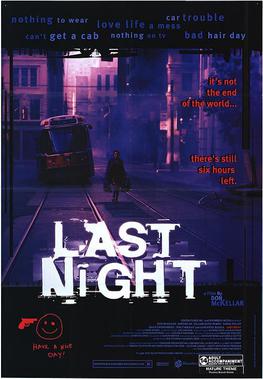
Now I turn to Last Night, Don McKellar's film about Toronto people getting ready for the world to end at midnight. It follows a number of different people as they prepare in various different ways, but it focuses on Patrick, played by McKellar himself, who has decided to spend his last hours alone, to the consternation of his family. The film manages to be both sad and quirkily humorous, sometimes at the same time.

But what of music? Well there is plenty of it. Every so often we hear the voice of this radio DJ who is counting down through the greatest songs of all time ("as chosen by me"), all of which are soft rock classics. Then there is this guy who is frantically trying to have as much sex as possible with as many different people as possible before the world ends, and each time he is about to get down to it he puts on this sexy funk tune (which investigation suggests might be Parliament's "I've Been Watching You (Move Your Sexy Body)"). At another point there is a news report on people who are spending their last hours taking part in the world's largest ever guitar jam (which looks totally awesome). And then there is a piano concert being put on by this dorky guy the main character went to school with. As he plays his music we see the audience in the concert hall, some of them people we have seen previously, and the music (by Howard Shore) is indescribably beautiful and definitely the kind of thing I would want to listen to as the world comes to an end (except there are a million other things I would want to listen to and do in those last moments).

It was definitely great seeing this film again some 26 years after I last saw it. It still delivers and it is something that I think should be seen as a real classic of the niche "world coming to an unavoidable end" genre of films. I also had the poignant moment of looking up biographies of some of the less famous people in the film and discovering that McKellar's own life had sadly repeated aspects of his film character's prehistory, fortunately without the world then ending.

I should perhaps mention that the screening in the IFI was preceded by an introduction by Dorian Lynskey, who was pimping his book Everything Must Go, about the end of the world in cinema (the book's title comes from an early onscreen image in McKellar's film). He made the bold claim that Last Night was the first film to show ordinary people doing fairly ordinary things as the world's end approached, and I had immediate "O RLY?" thoughts as I thought of the films On The Beach (1959) and The Day the Earth Caught Fire (1961), both screened previously in the IFI.

images:

Last Night poster (Wikipedia)

Everything Must Go (Picador)

Wednesday, January 07, 2026

2024: My Favourite Newly Discovered Old Films

I am looking back on my favourite cultural things of 2024. You can see my last post, about my favourite new films, here, and the whole series here. Join me now as I look at the best old films I saw for the first time in that year.

Murder by Contract (Irving Lenner, 1958)

Nice low budget noir about a highly efficient contract killer who finds to his dismay that his next target is a dame. The many scenes of the hitman and his contacts hanging out and yapping away feel like they might have been an influence on Tarantino.

The Informer (Arthur Robison, 1929)

The first of at least three screen adaptations of Liam O'Flaherty's novel (others include John Ford's 1935 film and Jules Dassin's 1968 Uptight (which moves the action from Dublin to Cleveland). This sees an IRA man grass up one of his buds to the Free-Staters for tawdry reasons before being hunted down by his former comrades. Despite being filmed in Elstree Studios, the film is surprisingly evocative of olde Dublin.

The Naked Lunch (David Cronenberg, 1991)

Adapted from a William S. Burroughs novel, this is very odd fare indeed. Some scenes are very evocative of the feeling of being completely mashed out of it but having to hold it together and convince people around you that you are not feeling in any way out of the ordinary. And if you've ever found yourself hanging out with giant talking insects the film will touch a nerve. I was however a bit uncomfortable with all the shooting-wife-in-the-head content.

All About Eve (Joseph L. Mankiewicz, 1950)

This sees Bette Davis playing an ageing actress who is being supplanted by Anne Baxter's Eve, who initially appears as an adoring fan before gradually revealing her true colours.

Another Man's Poison (Irving Rapper, 1951)

And in this one Bette Davis plays a rather louche crime writer who isn't averse to bumping off inconvenient men in her life. One of her British films.

Network (Sidney Lumet, 1976)

An ageing news anchor has an on-air meltdown after learning that his contract is not being renewed, which then proves such a hit with viewers that the broadcaster starts wheeling him out to gibber at the audience on live TV. Although it does feature a lot of old white guys shouting about things, the real star is Faye Dunaway as a terrifyingly ambitious studio executive. It's also surprisingly funny.

Archangel (Guy Maddin, 1990)

This oddball low budget picture from the Canadian roffler is set during the Allied intervention in Archangel during the Russian Civil War, with a main character suffering from amnesia that leads to events happening over and over again for reasons. They don't make them like this anymore and probably never did.

The Fountainhead (King Vidor, 1949)

This is based on a novel by Ayn Rand, who is bad, so the film must be bad, right? WRONG. This is in fact a highly enjoyable film about an egomaniacal architect played by Gary Cooper who won't let anyone tell him how to design buildings, not even his clients, with the result that he spends a lot of his time earning his living doing things other architecture. He also has woman-trouble and is being persecuted by an evil journalist who appears to be some kind of communist. Because Cooper is super-swoony he is able to get away with delivering an interminable Ayn Rand speech that wins everyone over, thereby letting him build his stupid buildings, which appear to combine Le Corbusier's worst nightmares with Mies van der Rohe sleekness.

On the Waterfront (Elia Kazan, 1954)

In this film about a corrupt union that is exploiting its members while being in league with the employers we have memorable lines such as "I could have been a contender" or memorable scenes such as Marlon Brando confessing to Eva Marie Saint that he unwittingly set up her brother to be killed as dockyard noises drown out his words. Or the film that teaches you why looking "like Eva Marie Saint in On the Waterfront" would be such a big deal. A superb film with strong performances from Brando, Saint, Karl Malden (as a priest) and the always reliable Lee Cobb as Johnny Friendly, the union boss.

In A Lonely Place (Nicholas Ray, 1950)

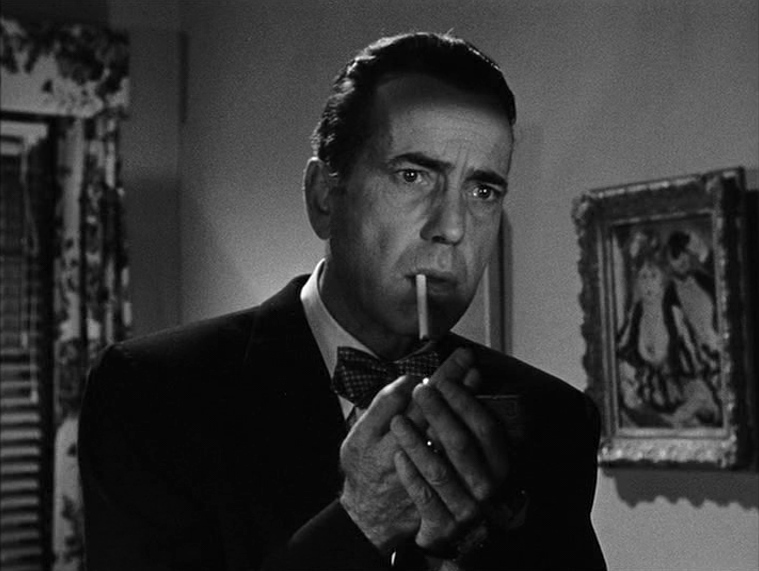
A dark, dark film in which Humphrey Bogart excels himself as a deeply damaged man (PTSD from the war is hinted at) who finds himself under suspicion for a murder we know he didn't commit. Whether he ends up taking the rap or being exonerated is almost an irrelevance, as he is clearly going to end up killing someone or being murdered himself, regardless of the situation when the film ends.

images:

Eva Marie Saint in On the Waterfront (Little White Lies: Why I love Eva Marie Saint’s performance in On the Waterfront)

Humphrey Bogart ([FILMGRAB]: In a Lonely Place)

Tuesday, January 06, 2026

2024: My Favourite New Films

I am finally getting round to posting about my favourite things of 2024. You can see the last post in this series here or all of them here. Now I turn to my favourite new films of the year before last.

Since Yesterday: the Untold Story of Scottish Girl Bands (Blair Young & Carla J. Easton)

An enjoyable film about Scottish all-women/girl bands, of which there were not too many.

Made in England: The Films of Powell and Pressburger (David Hinton)

Directed by David Hinton but it feels Martin Scorsese is the auteur here. Not only does he narrate this film about the British film-makers, he also talks about his own relationship to their films (and to Michael Powell personally) as well as their influence on his own film-making.

Devo (Chris Smith)

Useful documentary about the Akron band that never mentions their Subgenius links while nevertheless making them abundantly clear to anyone "in the know".

Sidonie au Japon (Élise Girard)

A rare non-depressing film starring Isabelle Huppert, in which she plays an author on a promotional tour of Japan who finds herself being haunted by her recently deceased husband except it's more about her coming to terms with her grief than a ghost story as such. Surprisingly funny.

City of Wind (Lkhagvadulam Purev-Ochir)

A teenage boy in Ullan Bator has to grapple with normal adolescent stuff while also being a shaman who helps people engage with the spirit world. The film leaves somewhat open whether all this shaman stuff is charlatanry, with the protagonist giving the impression he is none-too-sure either.

I Saw the TV Glow (Jane Schoenbrun)

Two misfits bond over love of a YA fantasy TV series that they start taking way too seriously. Schoenbrun's films are often seen as trans-allegories, and I get it, there is some gender-identity stuff going on here, but this felt more like it was about neurodivergence and obsessive fandom generally.

Crossing (Levan Akin)

A woman travels with a gormless young lad from Georgia (polyphonic singing, not banjos) to Istanbul in search of her trans niece who has moved there and disappeared.

Dune 2 (Denis Villeneuve)

They love that spice.

Soundtrack to a Coup d'Etat (Johann Grimonprez)

As previously discussed, this is that documentary about jazz in the cultural Cold War and the shameful overthrow and murder of Patrice Lumumba, the Congo's first prime minister.

About Dry Grasses (Nuri Bilge Ceylan)

Another long Ceylan film about people in the Anatolian sticks, in this case about a not-particularly likeable teacher who finds himself accused of inappropriate behaviour by a female student. Film should have people from the Turkish Tourist Board signing you up for holidays as you leave the cinema.

Perfect Days (Wim Wenders)

He cleans toilets, he listens to cassettes, he gets on with life, he is reminded of past unpleasantness. Previously reviewed.

The Zone of Interest (Jonathan Glazer)

The bad thing is already happening. You can't see it but you hear it in the distance.

The Zone of Interest image source (An Táin Arts Centre)

Thursday, January 01, 2026

Flashback: My 2025 Blogposts

My blogposts start life as things written for Frank's APA (the amateur press association for people who like music). I actually write quite a lot for that august journal, much of which fails to make it onto this blog for various reasons. Some of it is too conversational, making sense in the pages of the APA but not being something anyone would want to read online (although going by the stats on this blog's readership, what I post is also not in tune with the reading preferences of the online world). And some of it I never get round to revising and formatting for the blog because I am a procrastinating slackass. So as it turned out, I did not make too many blogposts last year, but here they all are again.

Music in Film 01: The Zone of Interest, Perfect Days, and others: I talk about some films I saw in 2024, focussing to some extent on their musical content. Some of the films are discussed very briefly.

Music in Film 02: All You Need Is Death, Eno, The Colour of Pomegranates, Portishead, Lone Star: More fairly short notes on films seen in 2024 that featured music.

Music in Film 03: Star Wars, The Long Goodbye, Soundtrack to a Coup d’Etat: More films with music (including the very music-focussed Soundtrack to a Coup d’Etat). Post features the celebrated Long Goodbye cat scene.

2024: My Favourite New Songs: I present a list of my favourite new tunes of 2024, with a link to a Spotify playlist that features some of them.

2024: My Favourite Newly Discovered Old Songs: A list of great old tunes I heard for the first time in 2024, also with a link to an almost complete Spotify playlist.

2024: My Favourite New Films: The new films I liked the most in 2024.

2024: My Favourite Newly Discovered Old Films: The old films I liked the best in 2024.

2024: My Favourite Theatrical Productions: Still looking back on 2024, here are the best theatrical productions I saw in that year (which I think might also be all the theatrical productions I saw).

2024: My Favourite Audio Dramas: BBC radio dramas old and new that I enjoyed in 2024.

What have I nominated for the 2025 Hugo Awards?: Things I nominated for the 2025 Hugo Awards, many of which failed to make the ballot due to biased political voting and an impartial application of the so-called "rules".

The films of David Lynch: a definitive ranking: I appeared on a David Lynch panel at Eastercon, which means I am officially an expert on the popular filmmaker. Here I objectively rank the great man's films. My ordering may surprise you.

Gamelan Corner: Accumulation: I wrote about an American gamelan piece I was trying to play in our Gamelan class.

Troubled Songs: Music of the Northern Ireland Conflict: I put together a compilation of songs dealing with the Northern Ireland Troubles and used them as a way of presenting a history of that unpleasant conflict. This post got a lot of traction thanks to a well-connected friend sharing a link to it, replies to which revealed that there are a lot of people out there who like The Cranberries.

A Scottish Gamelan Retreat: I travelled to a remote Scottish location to spend a week playing gamelan music. This was a key 2025 event for me and I am pleased with how this write-up of it came out.

Live: Gibby Haynes plays the hits of the Butthole Surfers (with The Scott Thunes Institute of Musical Excellence and Evicshen): Gibby Haynes is or was in popular Texan band The Butthole Surfers and this was my account of seeing him play their songs live with a bunch of kids as his backing band and a whip-wielding lady as his support act.

And that's it. I'll try to do more blog posts in 2026. Judgement

Saturday, July 05, 2025

The films of David Lynch: a definitive ranking

Earlier this year I found myself on panel at Eastercon looking back on the career of David Lynch. In preparation for this I rewatched some of his films and thought a lot about the others. Here is my attempt to rank the films from worst to best.

Inland Empire (2006)

Lynch's last film is one of the weird ones, but on a rewatch its weirdness is relatively straightforward: there is a film within a film and there are people re-enacting the same events perhaps as the real people on whom the film(s) are based. It's not without its moments (e.g. the dancing hookers, Laura Dern's Erich von Stroheim channelling butler, the rabbits, etc.) but it all added up to a big "So what?" for me. I think what particularly irked me was the way it looks: it comes from that strange time when it was considered acceptable to shoot feature films using low-quality digital video that makes everything look a bit shit. The whole look of the film served to remind me of how the cinematography in David Lynch films is usually so much better than it is here. Also the number of screen-filling close-ups of people's faces seemed a bit excessive. Plus it goes on a bit.

Wild at Heart (1990)

I remember loving this when it came out but on a re-watch it all seems a bit pointless and, worst of all, like a second rate Coen Brothers film. Some of the violence just seems gratuitous (which may reflect the source material) while the capricious introduction of plot points that are then forgotten is highly annoying. The film has a certain panache but it's not something I would encourage people to see, and it does not surprise me that it is generally ranked low in Lynch's filmography.

Dune (1984)

We're into films I actually like now. This film was a critical and commercial failure when originally released, but time has been kind to it. It looks great and it is fun seeing loads of David Lynch regulars in key roles. Plus it has the wonderful scenery chewing performance of Kenneth McMillan as the Baron Harkonnen (and yeah I get it, that portrayal is problematic in many ways). I was particularly stunned on a recent re-watch by an early scene in the Emperor's court, where his audience chamber is over-run by various officials, little dogs, and various functionaries, just like in a real imperial court. The film also gave us the key phrase "The spice must flow", which never occurs in the book.

Twin Peaks: Fire Walk With Me (1992)

In retrospect everyone loves the TV Twin Peaks but it's easy to forget how much the rambling and sub-par second series put people off the whole project. When this film came out people mostly reacted with a collective "not more Twin Peaks crap?"; critics sneered and audiences stayed away. But the film is dark and disturbing, one of the great horror films of the 1990s and it presages the surreal turn of Lynch's later pictures. I would probably rank this higher if it was a stand-alone work.

Eraserhead (1977)

Lynch's early low-budget classic starts as he means to go on with its industrial sound design and surreal touches. I would probably rank it higher if I could face ever seeing it again.

The Straight Story (1999)

I rewatched this recently after being disappointed by Inland Empire and Wild at Heart and was surprised by how much I liked its account of an old guy travelling hundreds of miles on a lawnmower to see his unwell estranged brother. It is genuinely moving but I think further contemplation is required on whether it is an aberration or a film that is thematically central to Lynch's oeuvre.

Lost Highway (1997)

This brought Lynch back to popular attention with its ambiguously linked stories of a jazz musician who starts receiving strange videos through the mail and whose wife might be having an affair, and a young mechanic having an affair with the wife of a terrifying mob boss. It's all very tense and unnerving, with the Mystery Man scene one of Lynch's greatest moments. The film also goes big on themes of sleazy voyeurism that are often a feature of Lynch's films, one that some might reasonably find problematic.

Mulholland Drive (2001)

It's another film with two ambiguously linked plots. And like Lost Highway and Inland Empire it moves proceedings from the older Lynch staple of small-town or rural America to Los Angeles. And it embraces the sleazy voyeurism (which not everyone would see as a good thing). While the relationship of the two plots is ambiguous (some might say otherwise), thematically the film progresses from its initial action-packed adventure to a world of increasingly oppressive darkness. One of the all-time great dark Hollywood films.

The Elephant Man (1980)

This will always have a special place in my heart as it was the last film I saw on the big screen before the cinemas closed for Covid. In some ways it is an outlier: like Dune it is not set in the United States, like The Straight Story it is based on real events. And while the David Lynch cliche is that his work is about showing the sinister darkness that lies underneath the shiny surface of happy life, this celebrates the human spirit and the goodness that people are capable of. But it still has its Lynchian elements. The voyeurism is here (the main character is after all someone people are invited to gawp at and in his first scene he is exhibited in the nip to medical students) but also the same kind of industrial sound design he has given us since Eraserhead. And while it never descends into outright surrealism it has its occasional strange flourishes. Overall though this is an astonishingly life-affirming film that would move even the most jaded of cynics.

Blue Velvet (1986)

You might call this entry-level David Lynch with its easily-understandable plot and neat exposition of his themes of voyeurism and the dark underbelly of everyday life, but it is the perfect summary of his work and obsessions. Also Heineken.

image sources:

David Lynch collage (The Movies that Made Me: "Remembering David Lynch")

Blue Velvet robin (Existentialism is a Film: "Blue Velvet (Lynch, 1986): society is a social construct, it’s all made of dreams, and we can’t stop the robin’s dancing") David Lynch memorial panel

Tuesday, January 14, 2025

Music in Film 03: Star Wars, The Long Goodbye, Soundtrack to a Coup d'Etat

I am writing about films I saw last year that had a strong musical element. Previous episodes can be seen here and here.

Star Wars (1977)

The IFI had this idea of showing films from series sequentially each Saturday morning in emulation of the cinema serials of yore (but sadly did not preceed each screening with an episode of Flash Gordon or King of the Rocket Men). I took the opportunity to see this one on the big screen, even though it was the CGI bullshit version rather than the now buried original release. It's still a fun film and watching does transport me back to when I saw it first. And it features many exciting musical moments, of which the greatest is probably the opening 20th Century Fox fanfare and the switch from that to John Williams' main theme, with the opening salvo an orchestral stab to rival the popular ORCH5 sample. Beyond that there are lot of Wagnerian leitmotivs but the most memorable musical bits are probably the jizz [sic] band in the Mos Eisley spaceport and then the bombastic medal ceremony music.

While I liked the film well enough I did not bother going to any of the sequels or prequels. Star Wars itself is by far the best and the endless attempts to milk the intellectual property have sucked much of the enjoyment from the other ones.

The Long Goodbye (1973)

This is the Robert Altman cat film in which Elliot Gould plays a guy who owns a cat who pisses the cat off by getting it the wrong cat food in a scene that will resonate to all cat owners.

The cat guy is also private detective Philip Marlowe and the film is an adaptation of a Raymond Chandler novel in which Marlowe is caught up in a complicated caper involving an old friend in trouble, gambling debts, murder, and so on. Only unlike the olde Humphrey Bogart films this is the 1970s and Marlowe is schlebbing through a world where everyone else has given up smoking and the dames are into space cake and yoga. It's also scripted by Leigh Brackett, previously the queen of space opera in the pulp era before moving successfully into screenwriting (she famously wrote the first draft of The Empire Strikes Back, following extensive discussions with George Lucas).

Brackett isn't the only link to Star Wars, as John Williams also did the music for this one. The older tune "Hooray for Hollywood" also features but mostly we get endless re-arrangements of the title track (by Williams and Johnny Mercer): initially sung over the opening credits, then as muzak in the supermarket, then being sung by some guy rehearsing in a bar Marlowe uses as an office, later being played by a Mexican marching band, and so on. Apparently this was Altman's idea and it suggests a certain drift into surrealism but I wonder if it also was a way of saving money.

Arnold Schwarzenegger also features. He does not make any music but at one point he starts to take off his clothes.

Soundtrack to a Coup d'Etat (2024)

This is a documentary about the coup that overthrew Patrice Lumumba, the first prime minister of the Congo. But it's got a lot of jazz music in it, as it tries to link the move towards Congolese independence and its aftermath with progressive jazz currents in the United States and also with jazz musicians being used as foot soldiers in the cultural Cold War. It is an odd film in any number of ways. I am not entirely convinced that director Johan Grimonprez successfully knitted together the jazz and Congo strands of the film, but as they are both subjects I am broadly interested in this was not particularly a problem for me. It is also formally interesting in that instead of having a load of talking heads appearing on screen to explain stuff it instead almost entirely featured archive footage, with onscreen text explaining stuff where necessary, combined with voiceover narration from the memoirs of various players in the Congolese tragedy (including our own Conor Cruise O'Brien, from back when he wasn't a reactionary, with excerpts from his book about the Congo read by his son Patrick).

The films is also pretty long (150 minutes), which might put off some people. However the Congolese content is fascinating and I think something people ought to be more familiar with, while the jazz footage is amazing and worth a trip to the cinema on its own, and not just for how funny Dizzy Gillespie is.

For me the two most striking moments in the film were non-musical. Firstly we had Belgium's King Baudouin arriving in Kinshasa (then probably still called Leopoldville) to mark the Congo's independence. At a formal ceremony Baudouin delivers a tone deaf speech pitching Congolese independence as the culmination of the great work of his predecessor, King Leopold II, who took over the Congo and ran it as a giant gulag for his personal enrichment, instituting a regime of such brutality that I sometimes think its main purpose was to make British and French colonial regimes look good by comparison. Lumumba launched an impromptu rebuttal denouncing imperialism, leading Baudouin to mutter to an aide "Is he [i.e. the Congolese prime minister] meant to be speaking?". What makes this all the more fascinating is Baudouin's physical resemblance to Ireland's own Enoch Burke.

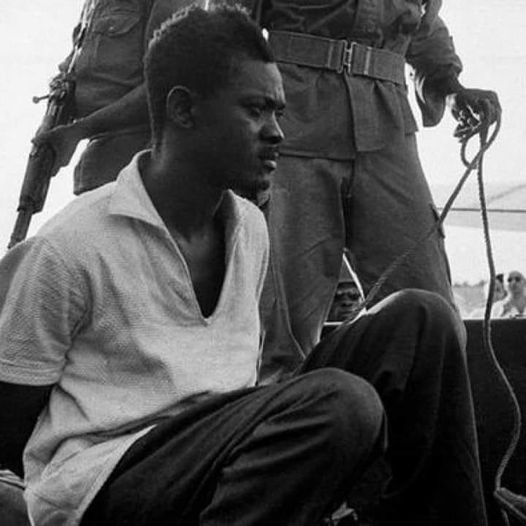
And then there is the last known footage of Patrice Lumumba. Lumumba was overthrown in a coup thanks to the machinations of the Belgians and the CIA, with the British security services and UN secretary general Dag Hammarskjold playing their evil parts too. The footage shows him just before he is about to be bundled onto a plane and flown from the capital to a region controlled by Belgian-backed faux separatist to be tortured and then executed by a firing squad commanded by Belgian officers. Lumumba was always a sharp dresser with great charisma, and even here, as he sits dejected in a white shirt while his guards stuff pages from one of his speeches into his mouth, he exudes a defiance that seems to diminish his enemies.

images:

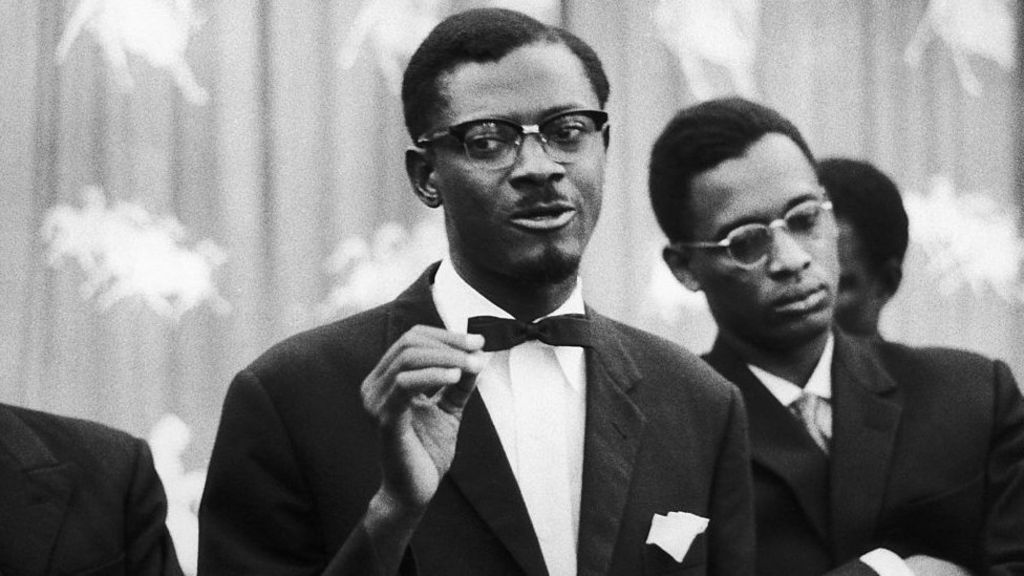
Patrice Lumumba with his future successor, Joseph Mobutu (BBC: Patrice Lumumba - Why Belgium is returning a Congolese hero's golden tooth)

King Baudouin (Wikipedia)

Patrice Lumumba bound (IPOB Ontario: Last letter from Patrice Lumumba, First Prime minister of Congo (born in 1925, assassinated by Belgium and its Western allies in 1961) to his wife)

Sunday, January 05, 2025

Music in Film 01: The Zone of Interest, Perfect Days, and others

Let's talk about some films I saw last year, but only where they have a significant musical content.

The Zone of interest (2023)

This is the Jonathan Glazer directed film about the guy who was in charge of Auschwitz, with almost all the action taking place in his house and its garden, which was located just outside the main camp. It features a stunning Mica Levi soundtrack of discordant noises that merges into the sound design, becoming at one with the strange and unnerving noises we hear continuously in the background (shouts, screams, clanking machinery, shots, etc.). The music contributes strongly to the sense of unease that permeates the film. I spent most of my time watching this on edge, waiting for something terrible to happen; then I realised that the something terrible was happening all the time. It does not surprise me that many people picked this as their film of the year, and the music and sound design combo is one reason why I pity people who did not see it in the cinema.

Perfect Days (2023)

Wim Wenders goes to Japan and makes a film about a guy named Hirayama, who cleans public toilets. initially it feels like is a film about the importance of just getting on with it and doing every day stuff as well as you can, with the film starting off by showing a typical day for Hirayama and then repeating that for a bit so you think "OK, this is not a plot film", but then there is a bit of a transition and gets a bit more plot-oriented.

Where does the music come in? Well Hirayama listens to music as he goes about his day. The music he listens to is from the 1960s and 1970s. Lou Reed's "Perfect Day" features (obv.) but also tracks by Nina Simone, the Kinks, Otis Redding and Patti Smith. And he listens to all his music on cassette, which I think is meant to suggest the extent to which he is aloof from contemporary trends. There is also a suggestion at one point that the music Hirayama listens to is somehow more real and engaging than the digital music of the young people, but that's a bit OK Boomer.

Some of the way cassettes are treated in the film seemed a bit fanciful. Like, people are always able to play particular songs from the start and never have to spend ages scrolling backwards and forwards to get to the right point. And at one point Hirayama's idiot co-worker brings him to a second-hand cassette shop, where it is established that second-hand cassettes are very expensive in Japan and that the various cassettes he owns could be sold for a pile of money. I had definite "O RLY?" thoughts at this point but it has long been established that any claim about Japan is somewhat credible.

Nearly all the music in the film is western, although I see from Wikipedia that there is a track by Sachiko Kanenobu; I don't remember when her track comes up in the film but reading about the album it is from on Wikipedia makes it sound like it might be worth investigating (influences of Pentangle, Donovan, and Joni Mitchell) and she so impressed Philip K. Dick that he later produced one of her singles (er wait, did I really read that?).

But there is one striking piece of Japanese-language music. At one point Hirayama listens to "House of the Rising Sun" by The Animals. And then later he is in one of those tiny Japanese bars you see in films and the patrons ask the manager to sing her song, and she sings a Japanese translation of the song, except the subtitles reveal that the Japanese lyrics are much more explicitly about prostitution and the song's narrator being trapped in that world (as compared to the English lyrics being so oblique that they make almost no sense when listened to closely).

Anyway, a good film and one I recommend to all cassette fans.

Poor Things (2023)

There is a bit in this Yorgos Lanthimos film where Emma Stone's character dances to music, yes? Overall though I wasn't really sure about this one. While never boring it felt like maybe it was a bit exploitative and wasn't really saying anything.

Dune 2 (2024)

The music was not as memorable as in part one. That might be because it was broadly the same, but also there was no Sardauker throat singing in this part.

Birdsong (2024)

A short-ish documentary by Kathleen Harris about Seán Ronayne, who is on a mission to record the singing of every bird in Ireland. That's nice, birds singing and stuff, except lots of the birds are becoming extinct due to climate change and habitat loss, so it's a bit sadface. I did find myself thinking that for all my sense that meaters are people with no moral compass there might be something to be said for eating wild and unfarmed deer, as they lack predators and are stripping the cover off the landscape that ground nesting birds need to hide in. There might also be something to be said for eating meaters. Or for reintroducing wolves to Ireland.

Devo (2024)

Not mentioned in this documentary is the bit in Watchmen where Laurie finds the night vision goggles Dan uses when he dresses up as Nite Owl and she says they remind her of Devo; then she has to explain to Dan what Devo are, as he is not really into new wave music. And a bit later Dan for some reason is wandering around in the nip but wearing the night vision goggles and he says "I guess I look pretty Devo, right?".

Tuesday, July 16, 2024

Kim Carnes "Bette Davis Eyes" (1981)

The IFI has been showing a season of Bette Davis films and it is indicative of how many great films she made that the programme didn't include loads of her films I think of as total classics. These include Marked Woman (based on real events, with Bette Davis playing a "nightclub hostess" (it's not a pre-Code film so use your imagination) whose evidence takes down a fictionalised Lucky Luciano; Humphrey Bogart also appears as an analogue of district attorney Thomas Dewey (of "DEWEY DEFEATS TRUMAN" fame), Juarez (in which Bette Davis plays Princess Carlotta, whose husband somehow becomes Emperor of Mexico), and The Nanny (a disturbing domestic drama made by Hammer before they went big on what we think of as Hammer Horror).

In the season I did see her play the titular lead in Jezebel (1938), which was given to her as a consolation prize for missing out on the lead role in Gone with the Wind as it provided her with an opportunity to play a Southern belle. I'm not sure it is a great film but it was striking how negatively the white Southerners are mostly portrayed (the men are honour-obsessed idiots who spend their time fighting duels and scoffing at anyone suggesting the South would lose in a civil war), while the various enslaved African Americans (all admittedly minor characters) come across as real people and not the "Lawdy massa" stereotypes seen in other films of the era. All About Eve (1950) meanwhile could be seen as Davis's Sunset Boulevard, with Davis playing an ageing actress (all of 40 years old) facing a young rival. All About Eve is something of a camp classic and might also represent the point where Davis herself pivoted to playing full-on older ladies, somehow making a successful career of this in a business that is not normally considered too welcoming of older women.

The final film I saw was Another Man's Poison (1951), a British made film in which Davis plays a successful crime writer who finds things getting a bit awkward when the criminal accomplice of her estranged husband shows up at her house looking for him. I felt that it maybe suffers from a moralistic ending (the same might be true of All About Eve) and if it weren't for that the film would be almost like Bette Davis appearing in a Patricia Highsmith adaptation. It also features Emlyn Williams in a supporting role, a man whose other claim to fame is writing the book that formed the basis of The Smiths' "Suffer Little Children". There were other appealing films in the season (notably Now, Voyager and Whatever Happened to Baby Jane?), but I skipped those as I had seen them relatively recently.

Being the age I am, the first I ever heard of Bette Davis was when Kim Carnes had a monster hit with the song "Bette Davis Eyes". Watching all these films had the tune going through my head all the time, so I've downloaded it and have been listening to it obsessively ever since. It's a great track, with Carnes' expressively raspy vocals combining with a very 80s backing to create an endearingly proto-goth sound. Carnes was herself a singer songwriter, but she did not write the tune. It first appeared as an album track on its co-author Jackie DeShannon's New Arrangement. It is worth giving the original a quick listen as it is so different from Carnes' version, sounding almost like something from a vaudeville show. It is a far less effective recording.

I became curious then about Kim Carnes. It is her performance and the production that makes her "Bette Davis Eyes" great, so could she perhaps have other hidden classics from that era lurking unheard by modern audiences? Sadly this does not appear to be the case, with the couple of other tracks I listened to from the album "Bette Davis Eyes" appears on not being that great: neither the songwriting, the production, nor Carnes' own performance is up to much on any of them. The one thing that did kind of impress me was a live rendition of the Rolling Stones' "Under My Thumb" I stumbled onto. As you know, that is a deeply problematic song with its lyrics about the kind of coercive control that is now recognised as a crime in many jurisdictions. On the live performance I saw, however, Carnes really gave it socks and there is definitely something interesting about a woman singing a song normally read as being about a man dominating a woman. It's not as good as "Bette Davis Eyes", but it's still worth a listen.

image:

Bette Davis in All About Eve (Wikipedia)

Tuesday, April 30, 2024

Journeys into Darkness Part 4: "Lies We Tell"

I have been writing about some horror things I have experienced over the last while, starting with The Exorcist, then some other films, and in my last post some horror audio dramas, including a BBC adaptation of Wilkie Collins' The Woman in White. Now we reach Lies We Tell, which is like The Woman in White in that it is a gothic shocker but not one featuring supernatural terror. In fact, it is an adaptation of Sheridan Le Fanu's novel Uncle Silas, another heiress-in-peril novel.

When Le Fanu originally pitched the book, he wanted to set it in his native Ireland. His publisher said that no one wanted to read Irish books, so Le Fanu moved the locale to Derbyshire. For this film, director Lisa Mulcahy and screenwriter Elisabeth Gooch have brought the story back to the Emerald Isle. Agnes O'Casey plays Maud Ruthyn, a recently orphaned heiress who is yet to come of age. The film begins with the executors of her father's will suggesting that she might want to contest being left in the care of her Uncle Silas, a man of bad reputation who is suspected of murder. Despite not knowing her uncle, Maud insists on following her father's wishes and points out that although her uncle was suspected of causing a man's death, the coroner reached a verdict of suicide.

Uncle Silas arrives in Maud's mansion with his rakish son, idiot daughter and a French governess, and takes Maud into his care. While initially amiable, it becomes apparent that he has designs on Maud's wealth and is not entirely interested in her welfare. The film becomes increasingly claustrophobic as Maud finds herself trapped in her home, unable to seek help outside it and forced to rely entirely on her own resources. This sense of the domestic environment as a trap is of course a recurring gothic trope.

I think the title change from the book is partly designed to draw the focus away from Silas to Maud. In conversation after the film, Mulcahy talked about how she and screenwriter Elisabeth Gooch to some extent wanted to subvert the novel and give Maud more agency. I found this somewhat curious; while I have not read the novel myself yet, my understanding is that Sheridan Le Fanu's Maud is more active and determined than some gothic heroines and that the book is a first person narrative that foregrounds Maud's thoughts, experiences, and actions, for all that it is named after her antagonist. Either way the film remains very focussed on Agnes O'Casey's Maud, who appears in pretty much every scene. David Wilmot's Silas nevertheless remains a formidable presence, affable, charming, and sinister, sometimes all at once. He is very much a villain in the Count Fosco mode.

One thing I was struck by was how unsympathetically Maud is presented, at least initially. This is despite the fact that we see everything from her point of view and never stop rooting for her to escape her peril. Yet at the start of her film we see her imperiously bossing around her servants and then curtly dismissing the concerns of her executors. She is also short with Silas's daughter Emily, someone who could otherwise have been recruited as an ally given the nastiness Silas displays towards her. I did find myself wondering if the servants' later lack of helpfulness is a reaction to their earlier treatment.

And I suppose another thing to mention is that while this is based on a gothic sensation novel, it is not even slightly camp. Once we gain a sense of the danger in which Maud finds herself we never lose sight that it is very real and potentially visceral. There is one particularly intense scene that in another film would have played very differently but here remains a horrible presentation of Maud's vulnerability. That scene in particular is not an easy watch and I could imagine it being particularly upsetting to some viewers. Lies We Tell is nevertheless a film I recommend highly, and I hope that we see more from both Agnes O'Casey and Lisa Mulcahy.

image:

Agnes O'Casey in Lies We Tell (Image: "Meet Agnes O’Casey, star of psychological thriller Lies We Tell")