Showing posts with label classical music. Show all posts

Saturday, September 17, 2022

They also make music in Ireland: three Irish records reviewed

Michael McHale Moonlight (2022)

This release on the Ergodos label sees pianist McHale tackling Beethoven's Appassionata and Moonlight sonatas, interspersed with shorter pieces by Linda Buckley and Áine Mallon. Despite my interest in contemporary music, I mainly bought it so that I could have a copy of the Moonlight Sonata to listen to. McHale's performance of this feels a bit non-standard, with the playing seeming to be a bit more delicate than other versions I have heard. I am not familiar enough with the Appassionata to judge this rendition, but the playing seems a good bit more in your face than on the Moonlight Sonata. The two short contemporary pieces meanwhile function effectively as introductions to the Beethoven sonatas, with Buckley's piece played with the diffidence of the Moonlight Sonata, while Mallon's "Raindrop Prelude" has the more aggressive playing of the Appassionata; it could also be said to have notes invoking falling rain.

Overall an enjoyable listen but I think I would need to listen more closely to a standard performance of the Moonlight Sonata to appreciate the deviation here. You can check it out yourself on Bandcamp: https://ergodos.bandcamp.com/album/moonlight
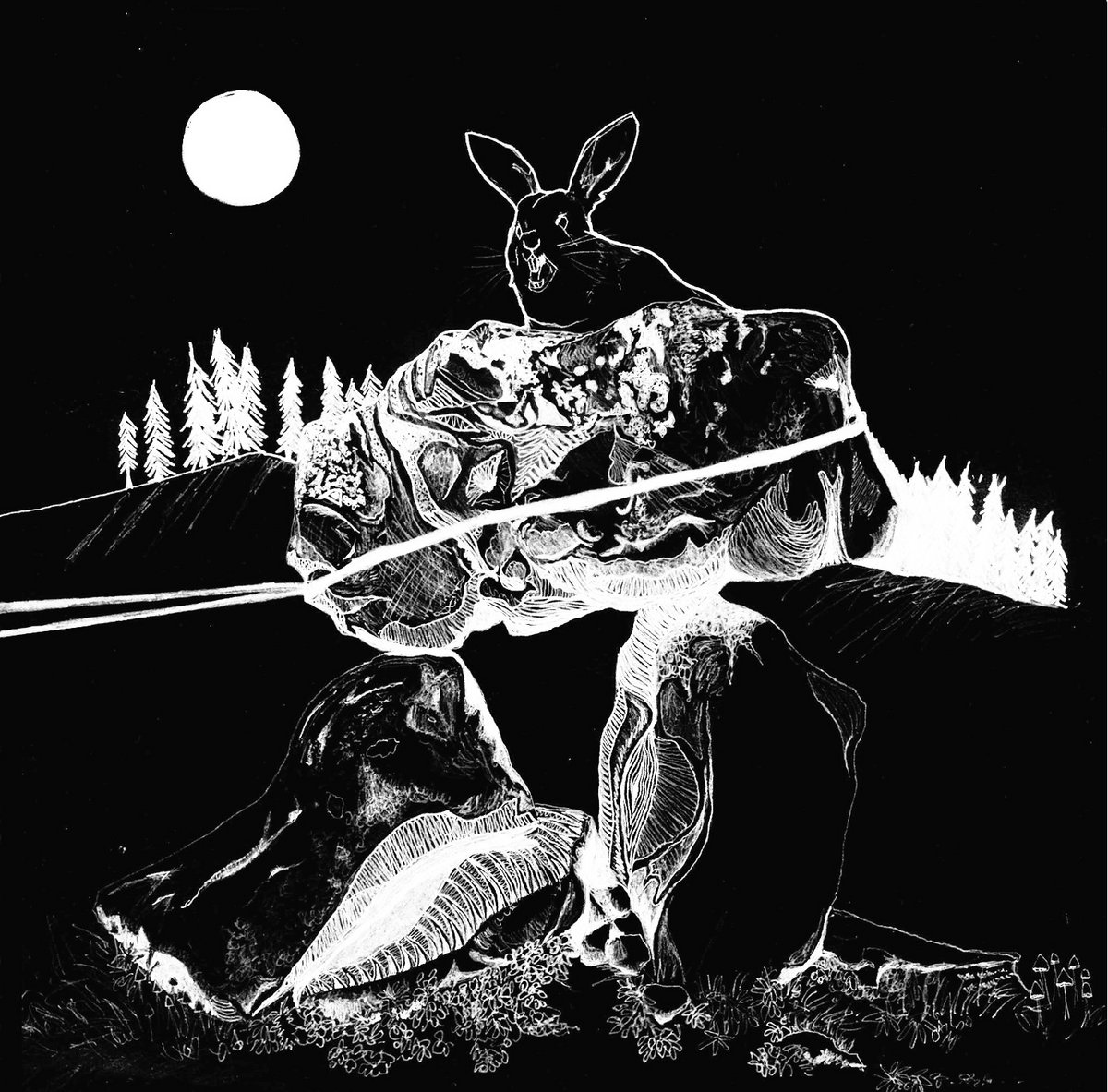
Cormorant Tree Oh Cormorant Tree Oh [2018]

You will recall how impressed I was by Ms Cormorant Tree Oh, the mysterious balalaika playing lady who played support to local gothgazers A Ritual Sea. It turns out that Cormorant Tree Oh is actually a stage name, and her real name is Mary Keane. On stage she came across as a bit of an outsider artist weirdo, albeit one with clear musical talent and application, but here we have a record that is much more form the world of spooky weirdo folk, with songs about werewolves and stone circles, while the music is a mix of electronic and acoustic instruments. There is not much in the way of credits on her Bandcamp page, but I suspect this is something she knocked up herself, and extremely impressive it is too. Its eerie, ritualistic sounds have been on repeat here in my brane and I suspect they would be in yours too if you give this a listen. I see she is releasing another album in September… which may mean that she will do another live show. Exciting. Check out her stuff on Bandcamp: https://cormorant-tree-oh.bandcamp.com/music
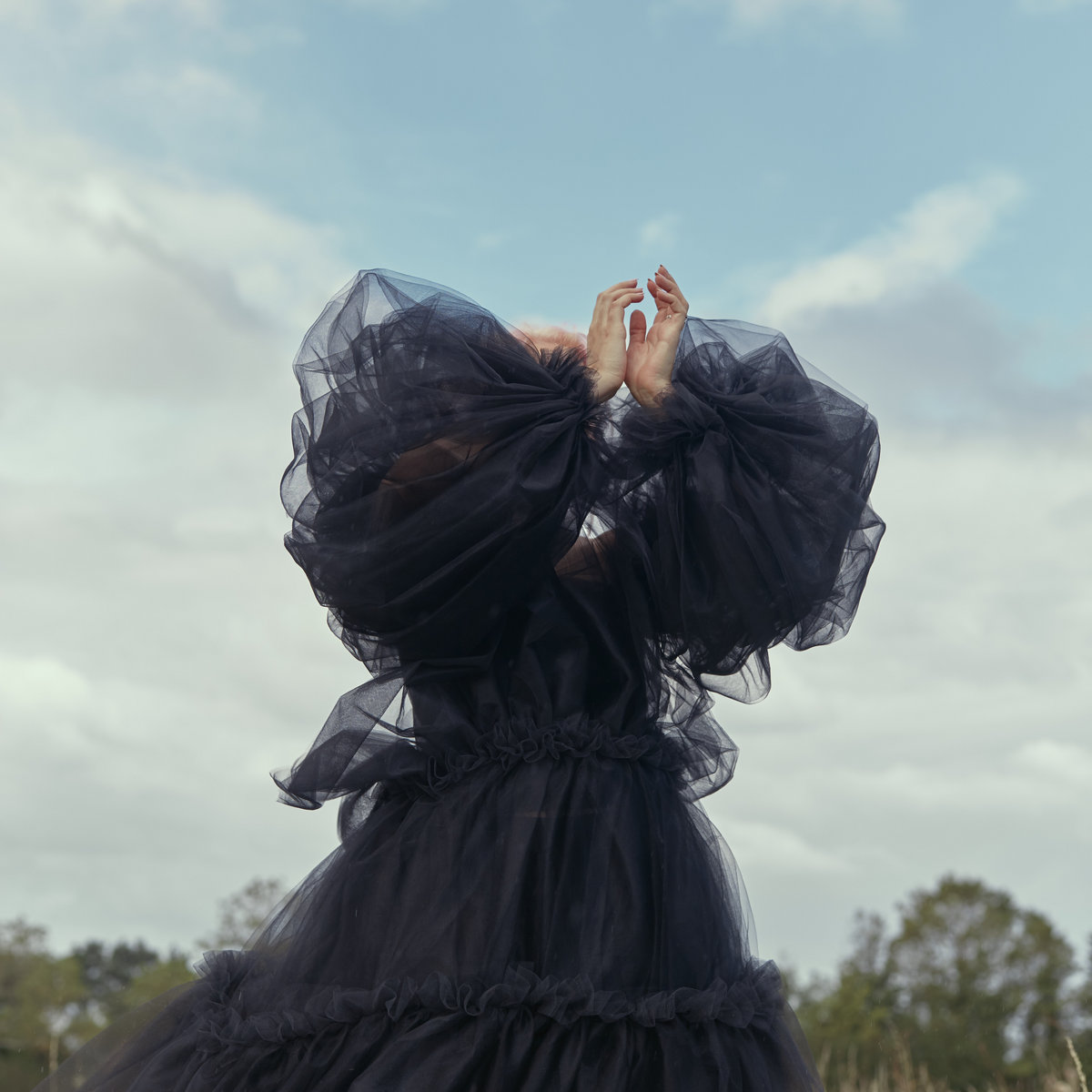
Fears Oíche (2021)

Fears is the recording name of Constance Keane. I bought this after liking a track on a friend's compilation of their favourite tunes of 2021. This album, whose title must surely be unpronounceable to anyone who has not been through the Irish education system, is a collection of downbeat electronic sounds over which we get Keane's delicate vocals. The lyrics touch on Keane's mental health issues, which on occasion saw her in psychiatric institutions, but just letting the beautiful music wash over you stops this being a harrowing trudge. You can listen to it yourself on Bandcamp: https://fearsrecords.bandcamp.com/album/o-che-2 images:

Moonlight (Bandcamp)

Cormorant Tree Oh (Bandcamp)

Oíche (Bandcamp)

Thursday, August 18, 2022

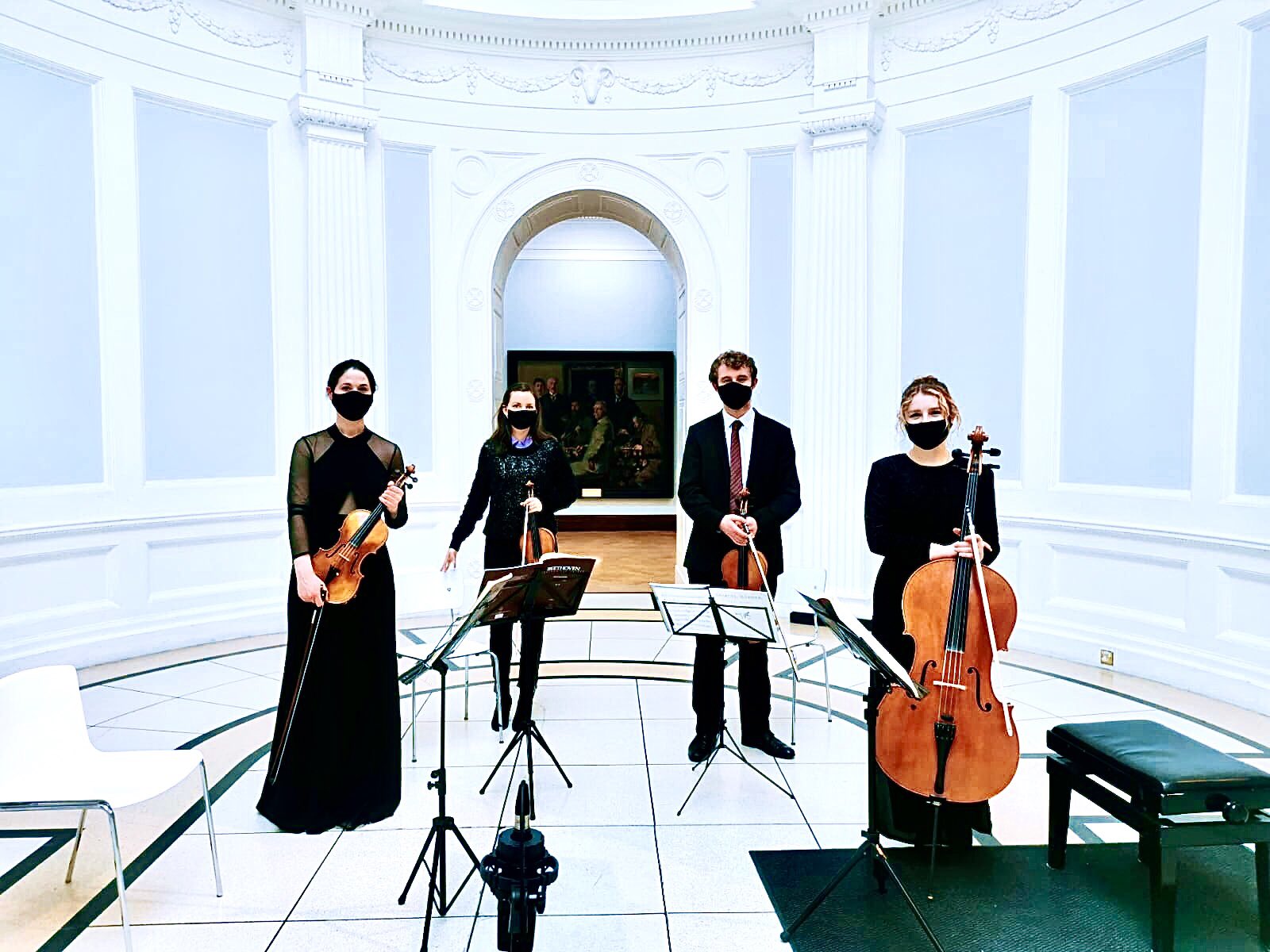
Two Hugh Lane Gallery concerts: William Butt and the Spero Quartet

These are concerts I went to back in January and February. They were on in the Hugh Lane Gallery and because Covid-19 was still a big deal then they involved both a degree of social distancing and mask wearing, which was a bit weird.

The first concert was by William Butt, who is a cellist. I had seen him previously at those greatly missed Santa Rita concerts that the Ergodos lads had put on. He is an impressive performer, with the physicality of his playing being particularly striking if you are able to see him close up. For this concert he was performing two pieces by Bach (Cello Suite no. 1 in G and Cello Suite no 4 in E flat). I don't really have much to say about this but that it was great, the perfect combination of musician and work. But sadly I was a little bit puppy tired and may have nodded off at one or two points.

And the concert can actually be watched on YouTube, should you want to see William Butt in action.

For the second concert I made sure to knock back an espresso beforehand to ensure there would be no embarrassing sleepy moments. This time the performers were the Spero Quartet. They are a string quartet made up of young people, three of whom are women. Like a rock band they were travelling around Ireland playing this show, with the Hugh Lane concert being the final date of the tour, which meant there were some hi-jinks. The programme was an adventurous one, with the initial Mozart Quartet in D major being the most conventional piece on offer, a genuinely beautiful piece that would have been worth the price of admission on its own.

Then there was Satellites, a three movement piece by composed by Garth Knox, who introduced the piece before the Spero people played it. The first part of this, "Geostationary" was based around the idea that a geostationary orbit is in constant motion while remaining fixed relative to a point on the Earth's surface, with the music attempting to reflect this. More easily recognisable was the second section, "Spectral Sunrise", which was inspired by how people on the International Space Staton experience some 16 sunrises a day, with the music evoking several of these from their first tinges to the full on appearance of the sun (and then because why not, an attempt to render in music some astronaut doing a space walk). The last section of Knox's piece, "Dimensions", was a musical exploration of multiple dimensions, but sadly only the three spatial dimensions. Part of this was done by having the players use their bows in non-standard ways, including as whips (on the air, not each other).

The last piece was Shostakovich's String Quartet no. 9 in E flat major, a late composition of his from 1964. Things were finally going well for the composer at that point. He was finally basking in some sustained official favour and no longer in danger of being sent to the Gulag for making music Stalin deemed tuneless. And also he was now happily married to his third wife, Irina Supinskaya. For all my love of Shostakovich, his string quartets are a bit of a blind spot for me, but it was interesting how there was a bit of an edge to this piece, with it not having the complacent feel one might expect from the work of a composer whose life was now one of relative contentment. The piece contrasts interestingly with the ones from Mozart and Knox: less avant-garde than the latter but edgier than the former, with its composer's characteristic refusal to just serve up beautiful music typifying his 20th century modernist approach.

This concert can also be re-watched on YouTube:

images:

William Butt, cellist

The Spero Quartet

Wednesday, April 01, 2009

NCH Action: Leos Janácek's "Glagolithic Mass" & Ludwig van Beethoven's "Eroica" Symphony

Our pal Leedy was singing in the Glagolithic Mass – not on her own, but as part of a choir. But what is a mass when it is being glagolithic? That I cannot tell you. Oh wait, no, the programme says it is derived from the Latin word for the Old Church Slavonic language in which Janácek decided to render the text of his mass, as a way of making it doubly incomprehensible. The programme helpfully gives translations (in English) of all the Old Church Slavonic stuff the choir are singing, so I now know that Bog seems to be the Old Church Slavonic for God, while Gospod is the word for Lord. But what does Sabaoth mean? It is helpfully translated here as… Sabaoth. Now, you might wonder why I am fixating on this one word, but it is one I have seen before – in the works of Howard Phillips Lovecraft. In his short novel The Case of Charles Dexter Ward, the villainous wretch who has, from his essentiale saltes, been resurrected at one point mutters "Per Adonai Sabaoth – " when trying to protect himself from being turned back into a pile of saltey nuggetes. Could it be that Janácek was himself a servant of dark forces, that his Glagolithic Mass is a sacrament not of Good, but of Evil?

Whatever about its possible status as a portal into our universe for obscene deities from outside time and space, the Glagolithic Mass is also interesting in how little mileage it gets from its lead vocalists. One of the lady singers barely sang anything at all, while the other leads did not really do that much, making the achievements of the main choir that bit more noticeable. The other fascinating feature of the piece was its wonderful false ending. I mean, it's a mass, so when they reach the The Mass is over, go in peace – amen bit you do rather think "Well that'll be that then", even if the Mass is being sung in Church Slavonic or Aklo or whatever they call it. What you do not expect is a crazy organ solo. I cannot but think this might prove the solution to the problem of falling church attendance. Eroica symphony of Beethoven, meanwhile, is a very famous piece of classical music, so famous that I was surprised not to recognise it from an ad or film score. Famously, it was originally meant to be dedicated to the French general Napoleon Bonaparte, seen at the time as a hero of the Enlightenment and a man who was sweeping away the dark forces of illiberalism that had been holding back Europe; but then, when Bonaparte declared himself Emperor Napoleon, Beethoven tore off the dedication from the score. The music is very impressive, though at first I was having some problems getting to grips with it. The last section, though, is astonishing. Beethoven seems to really know how to build to a finish, and the musical spectacle was well counterpointed visually by Andreas Delfs giving us loads of crazy conductor action.