Monday, July 30, 2007

The Sixth Doctor: "Mindwarp"

Sadly this does not see the Doctor squaring up against an excrement obsessed Hessian rocker. It does however feature companion Peri (played by lovely Nicola Bryant) marrying a character played by BRIAN BLESSED.

A top tip – do not undertake a Google image search for "Peri", unless you like images of peri-rectal abscesses.

The Sugarcubes 'Christmas'

The Cubes are joined by The Jesus & Mary Chain for a new version of a-side 'Birthday', featuring fuzzy guitar and feedback. It is nice but maybe a bit redundant. Oh no wait – Einar comes in after a bit. That was always what was wrong with 'Birthday', the lack of any Einar action.

Polski Filmi

My old friend and quaffing partner Mad King Ken is currently travelling across Eurasia. He reports that Polish film posters of the Communist era are truly fascinating. Check out an online gallery and see what you think. One thing I found interesting about them is how often they simply ignore the original Western posters of films and shun using photographic likenesses of film actors in favour of design-heavy original artworks.

Saturday, July 28, 2007

The Sixth Doctor: "The Mysterious Planet"

This was the first of the totally suckass Trial of a Timelord linked season of stories, in which every story would be periodically be interrupted by a cut back to a courtroom where the prosecution would tiresomely assert that whatever was happening was proof of the Doctor's badness. The rubbishness of the framing device largely overshadows the individual stories. This one may have featured a loveable rogue character called Savalon Glitz. This fellow was showing up as a guest character in stories around this time.

I was reading that nearly every episode in the Trial of a Timelord season ended with a cliffhanger close up of the Doctor's face, presumably while he was going "Noooooooo!" in a Crisis on Infinite Earths styleeeee.

"Thug: The True Story of India's Murderous Cult" by Mike Dash

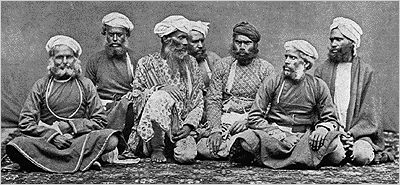
This book is about the practitioners of Thuggee, the practice of strangling unwary travellers and stealing all their possessions, with Thugs often going to elaborate lengths to hide the bodies of the victims. These unsavoury characters worked the roads of India until they were wiped out by the British East India Company. I have been fascinated by the Thugs since I read a brief article on them in The Unspeakable Oath, a journal dedicated to researches into the outré. That whetted my appetite for more, but I lamented the lack of a good book on the subject. Thankfully Mike Dash, author of Batavia's Graveyard has leapt into the breach and served up this book.

The great thing about the Thugs is that the main things everyone knows about them are not true. They were not a religious cult, murdering to appease Kali, goddess of death; rather they were economic murderers, killing to support their families. And they were not a closed hierarchical order either, but more a loose mass of killers who shared methods among their fellows, coming together to kill and then splitting up again into their own sub-groups. For all that, they are still terrifying, people capable of befriending travellers, passing time on the road with them, and then killing them in the most intimate manner.

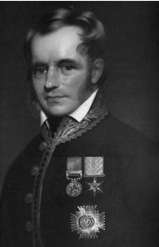
They met their match when the British East India Company became aware of their existence. The book describes how Thuggee was systematically wiped out by an expanding British presence unwilling to tolerate maniacs making the roads unsafe. The chapters on the anti-thug campaign, led by William Sleeman, are fascinating but also disappointing – disappointing not in the writing style but in the subject matter. Sleeman crushes the Thugs by the systematic application of modern policing methods and informers against which the traditional killers can do nothing. They do not stage any kind of counter-attack against Sleeman, or make any concerted attempt to avert their doom. This is hardly surprising, given that the Thugs were not actually a hierarchical devil cult with a supreme leader directing them, but it would make history far more exciting if they were.

In other ways, the book is a bit sadface and exciting of melancholic thoughts. Partly I found myself dwelling on the victims of the thugs – men, women, and children strangled by those they thought their new friends. Or else consider their families, who had to live after their loved ones simply disappeared on the open road. But there is something poignant about the Thugs themselves, as they were often people driven by economic desperation to take to a life of murderous crime. The inexorable campaign against them of the Company also excites some sympathy for them, as the hunters become the hunted and their wicked way of life is extinguished. The book ends with an account of the last Approvers (the name given to the Thug turncoats who informed on their fellows to escape hanging) being released from jail as old men, hobbling through an India that had changed completely since they had worked the roads. Dash describes them as walking the roads of India, not looking for people to kill but for somewhere they themselves could die.

Friday, July 27, 2007

Seagull likes crisps

Sam the Seagull has taken to raiding Aberdeen news agents for packets of cheese Doritos. Sam is not in gainful employment and, as a non-human, is ineligible for social welfare payments, so he is not in a position to pay for his crisps. He does however share them with his avian fellows.

The Smiths 'Jeane'

I have this as a b-side to a reissue of 'This Charming Man', but it was of course originally the b-side to 'Hand In Glove', the band's first single. I don't think this has ever found itself onto a compilation, making it one of the rarest Smiths tunes I possess. It is an epic tale of kitchen sink misery, like something from the British cinema New Wave distilled into three minutes. I really like this song, although of course it is by The Smiths, a band with only three bad songs. Even among their oeuvre, I feel that this track deserves a higher reputation than its tucked away status earns it. That said, the production is maybe a bit murky.

Thursday, July 26, 2007

The Psychic Cat

Oscar the Cat lives in a nursing home in Providence, Rhode Island. According to a study reported by the BBC, Oscar has a most unusual ability. The cat can apparently sense when patients are about to die, invariably curling up beside those whose death is near. The nursing home's staff now alert the family of anyone beside whom Oscar curls up - they are marked for death.

Interestingly, if removed from the side of a soon-to-die patient, Oscar paces up and down, mewing in protest.

Is is just coincidence that Providence is the town where H.P. Lovecraft made his home? Could it be that Oscar is not a cat, but an incarnation of YOGSOTHOTH, and that he is drawn to the dying so he can eat their souls?More

Wednesday, July 25, 2007

The Psychic Princess

Princess Martha Louise of Norway reports that she has psychic powers and an ability to talk with angels. "It was while I was taking care of the horses that I got in contact with the angels," the BBC reports the princess as saying. Her Astarte Education organisation can assist other people's communications with these protecting spirits.

Shakin' Stevens 'Let Me Show You How'

This is a b-side to 'This Ole House', and an S. Stevens composition. It is also an enjoyable enough piece of old-timey rock 'n' roll pastiche.

They throw these kind of things onto b-sides as a way of snaffling 50% of the song-writing royalties. It is funny the extent to which people bother with them - Shaky could just spend two minutes playing the spoons and burping, and the publishing money would still roll in.