Showing posts with label Joseph Sheridan Le Fanu. Show all posts

Tuesday, April 30, 2024

Journeys into Darkness Part 4: "Lies We Tell"

I have been writing about some horror things I have experienced over the last while, starting with The Exorcist, then some other films, and in my last post some horror audio dramas, including a BBC adaptation of Wilkie Collins' The Woman in White. Now we reach Lies We Tell, which is like The Woman in White in that it is a gothic shocker but not one featuring supernatural terror. In fact, it is an adaptation of Sheridan Le Fanu's novel Uncle Silas, another heiress-in-peril novel.

When Le Fanu originally pitched the book, he wanted to set it in his native Ireland. His publisher said that no one wanted to read Irish books, so Le Fanu moved the locale to Derbyshire. For this film, director Lisa Mulcahy and screenwriter Elisabeth Gooch have brought the story back to the Emerald Isle. Agnes O'Casey plays Maud Ruthyn, a recently orphaned heiress who is yet to come of age. The film begins with the executors of her father's will suggesting that she might want to contest being left in the care of her Uncle Silas, a man of bad reputation who is suspected of murder. Despite not knowing her uncle, Maud insists on following her father's wishes and points out that although her uncle was suspected of causing a man's death, the coroner reached a verdict of suicide.

Uncle Silas arrives in Maud's mansion with his rakish son, idiot daughter and a French governess, and takes Maud into his care. While initially amiable, it becomes apparent that he has designs on Maud's wealth and is not entirely interested in her welfare. The film becomes increasingly claustrophobic as Maud finds herself trapped in her home, unable to seek help outside it and forced to rely entirely on her own resources. This sense of the domestic environment as a trap is of course a recurring gothic trope.

I think the title change from the book is partly designed to draw the focus away from Silas to Maud. In conversation after the film, Mulcahy talked about how she and screenwriter Elisabeth Gooch to some extent wanted to subvert the novel and give Maud more agency. I found this somewhat curious; while I have not read the novel myself yet, my understanding is that Sheridan Le Fanu's Maud is more active and determined than some gothic heroines and that the book is a first person narrative that foregrounds Maud's thoughts, experiences, and actions, for all that it is named after her antagonist. Either way the film remains very focussed on Agnes O'Casey's Maud, who appears in pretty much every scene. David Wilmot's Silas nevertheless remains a formidable presence, affable, charming, and sinister, sometimes all at once. He is very much a villain in the Count Fosco mode.

One thing I was struck by was how unsympathetically Maud is presented, at least initially. This is despite the fact that we see everything from her point of view and never stop rooting for her to escape her peril. Yet at the start of her film we see her imperiously bossing around her servants and then curtly dismissing the concerns of her executors. She is also short with Silas's daughter Emily, someone who could otherwise have been recruited as an ally given the nastiness Silas displays towards her. I did find myself wondering if the servants' later lack of helpfulness is a reaction to their earlier treatment.

And I suppose another thing to mention is that while this is based on a gothic sensation novel, it is not even slightly camp. Once we gain a sense of the danger in which Maud finds herself we never lose sight that it is very real and potentially visceral. There is one particularly intense scene that in another film would have played very differently but here remains a horrible presentation of Maud's vulnerability. That scene in particular is not an easy watch and I could imagine it being particularly upsetting to some viewers. Lies We Tell is nevertheless a film I recommend highly, and I hope that we see more from both Agnes O'Casey and Lisa Mulcahy.

image:

Agnes O'Casey in Lies We Tell (Image: "Meet Agnes O’Casey, star of psychological thriller Lies We Tell")

Sunday, September 13, 2020

Join Our Book Club

For my considerable sins I have this year found myself serving on the programme team of Octocon, the Irish science fiction and fantasy convention. This will be Octocon's 30th year and, because of the unpleasantness, its first as an online rather than in-person event. There will be the usual panel discussions, author readings, and fan chats, all accessible from the comfort of your own home. And this year Octocon is free to virtually attend. Octocon always runs a book club, but this year we are going mad and running two. The first book is the Hugo-award nominated novella To Be Taught, If Fortunate by Becky Chambers. Taking its title from the opening speech by the UN Secretary General on the Voyager probe's golden record, the novel deals with space exploration by a team of astronauts searching for new planets for humanity to live on. I have not read anything by Chambers myself but I understand her to be good on human relationships and a writer who generally presents an optimistic vision of the future and our place in it, which could be something of a tonic in these troubled times of ours.

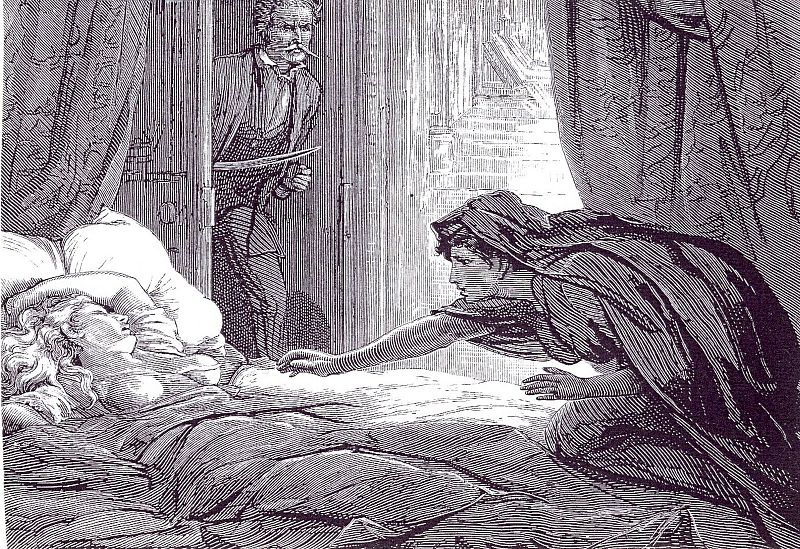
The other book is the anthology In A Glass Darkly by Joseph Sheridan Le Fanu (with the suggestion that if people are are stuck for time they just read "Carmilla"). In A Glass Darkly was first published in 1872 and presents a series of macabre stories loosely linked together as coming from the papers of one Dr. Hesselius. Octocon is running a number of Gothic-themed panels this year and having a bookclub for In A Glass Darkly allows us to look back at a classic foundational text of the genre. I have read these before and aside from "Carmilla" (a key influence on Bram Stoker's Dracula) I also recommend "Green Tea" (a warning against over-consumption of that stimulating beverage) and "The Familiar" (evocative of Le Fanu's native Dublin in the late 18th century), but all of them are good.

Both of these books are readily available in bookshops. In A Glass Darkly can also be found on Project Gutenberg.

For more on the Octocon bookclub, click here.

images

To Be Taught, If Fortunate cover (Goodreads)

David Henry Friston "Carmilla" illustration (1872) (Wikipedia)

Sunday, October 12, 2014

[folk horror] "A Fiend in the Furrows". A conference in Belfast

This was a conference held in Queen's University Belfast. What first attracted me to this was the poster, with its stylised image from The Wicker Man. The event was billed as "presenting perspectives on 'Folk Horror' in literature, film and music" and promised papers on various kinds of weird fiction and films like The Wicker Man and A Field in England, together with musical and theatrical performance. By folk horror they seem to mean horror fiction or films that draw on disconcerting folk practices. Anything with strange "old ways" would probably fall under this banner.

I only found about the event just before it was about to go ahead. Unable to find affordable accommodation in time, I could only attend one of the three days, taking the bus to and from Dublin. This involved getting up very early and listening to the bus driver's choice of dreadful music radio until we crossed the border and the more appealing sounds of BBC Radio 2 came on. For your delectation I will now briefly outline my impressions of the programme items I attended.

The day began with a plenary address by Stuart McWilliams on Aleister Crowley. He was introduced by another fellow whose name I unfortunately did not catch, who ran through the biographical details of Crowley's life. As you know, Aleister Crowley was a famous practitioner of ritual magic and achieved such notoriety that the tabloid press at one point dubbed him "the wickedest man alive"; he seems to have referred to himself as The Great Beast, among other things. He also appears to have signed his name so that the first A looks like a giant penis.

McWilliams himself adopted a somewhat droll approach, initially talking about the hagiographical bollocks put out by some of Crowley's biographers: that he anticipated Einstein's theory of relativity, that his political and economic ideas could transform the world into a utopia, and so on. He then went on to talk about Crowley's portrayal in fiction, which began even in his lifetime with Somerset Maugham's The Magician, whose villain is clearly modelled on Crowley, whom Maugham had met in Paris. McWilliams delighted us with some scenes from a 1920s silent film adaptation of The Magician, which featured a bacchanalian orgy where, somewhat unusually, everyone present seemed to be having the most terrible fun.

McWilliams' most fascinating point was that people should pay more attention to how conservative Crowley was. He seems to have been defiantly anti-modernist in his cultural tastes. Despite, or perhaps because of, his relatively humble background he adopted all kinds of faux noble titles and acquired a stately home in which to live the life of an aristocrat. He delighted in the company of people from old money backgrounds (especially impressionable young ladies). His professed political beliefs were a bit slippery, but he was happy enough to write a letter to Henry Ford congratulating him on the crushing of labour unions, affirming that union busting was in accord with his own esoteric principles.

This was followed by a panel pairing Edmund Cueva and Darren Oldridge. Cueva delivered a paper entitled The Wicker Man: Nothing to Do with Dionysus? The title played on an Athenian saying about the theatre and the paper itself drew a line of continuity from The Bacchae by Eurpides and popular film The Wicker Man. The Bacchae is the one about the cult of Dionysus arriving in Thebes; King Pentheus tries to resist the cult and suffers a terrible fate. You can do a great compare and contrast job on the play and film, with Howie and Pentheus mapping onto each other (both representing state authority and inflexibility), though the difference is that Howie is an outsider while in The Bacchae it is the new cult's priest (eventually revealed as the God Dionysus himself (spoilers)) who is the outsider.

One thing I always love hearing about is how the ancient Athenians related to theatre, which at the time was a very new thing. Herodotus recounts a story of a play about a Greek defeat by the Persians that so upset the audience that the entire city was given over to grief for days after the play's staging (Herodotus did not see this himself). Cueva mentions another such story. Apparently at the first staging of The Furies by Aeschylus, when the actors playing the demonic Furies first appeared on stage, audience members were so convinced by the costumes that they thought real demons had landed and so fled the theatre in terror.

In his paper Filming Magic: The Problem of Belief from Witch finder General to A Field in England, Oldridge talked about the problems we have engaging with folk magic beliefs in fictions when we no longer believe in such things ourselves. He cites the Witchfinder General film, in which the eponymous witchfinder is portrayed as a smarmy hypocrite where it might have been more disturbing to paint him as the sincere opponent of evil the historical character he is based on seems to have been. Likewise, for all its engagement with the strange to us beliefs of the 17th century, A Field In England somewhat cops out by introducing magic mushrooms as a partial explanation for the supernatural elements. In contrast, The Wicker Man presents the islanders as true devotees of their strange religion, not as sadistic maniacs or hypocrites.

We then broke for lunch, which was buffet style and included in the admission price. Jurassic Park! After some slight confusion over which items contained the flesh of dead animals I ate my fill, particularly enjoying the vol-au-vents. These edible treats were followed by a theatrical one, the Wireless Mystery Theatre's adaptation of Joseph Sheridan Le Fanu's Green Tea, which marked this year being the 200th anniversary of Le Fanu's birth.

Green Tea is an odd beast (like the demonic creature revealed as its villain), alternating between psychological horror (the growing sense of the terror stalking the vicar at its centre, coupled with an ambiguity as to whether the whole business is the product of mental illness) and bumptious comedy (coming from the self-important and largely ineffectual Dr Hesselius, who narrates that story as a case history). I myself have always thought that the vicar's dread contrasts with the somewhat comedic nature of the monster that is tormenting him (as in I could imagine a demonic monkey being more of an entertainment than a torment). Like so much horror, the vicar's doom is the result of a seemingly trivial choice, in his case a fondness for excessive consumption of green tea.

This production was very enjoyable. Even though it was presented as a radio play, it still managed to have a dramatic quality, thanks to the quality of the actors' performance. The live musical accompaniment was also highly effective.

You can read the full horror of the afternoon programme of this terrifying event here

A Field in England