Showing posts with label audio drama. Show all posts

Friday, January 09, 2026

2024: My Favourite Audio Dramas

I've been posting about my favourite 2024 things. In my last post I looked at theatrical productions while the whole series can be seen here. And now my attention turns to audio drama I enjoyed in that year, some of which is from further back in time.

Limelight: Money Gone (2024)

This begins with all the bank accounts in the world suddenly emptying, leaving everyone with only whatever cash they have on them. The multi-stranded narrative follows different characters over a chaotic few days, with their paths eventually coming together at the end (mostly). It's good but at times the intense drama jarred with the more slapstick comedy elements (although I did really like the out of her depth prime minister and her stupid aides), while the ending was a bit pat.

Listen here

Limelight: Exemplar (2022)

This sees Gina McKee playing a sonic investigator, who listens to audio recordings to investigate crimes and stuff. It is episodic, in that individual episodes are largely self-contained (and somewhat variable in quality). However, hints of an overarching story lurk in the background, with this exploding into view in the superb last episode that is alone worth the price of admission.

Listen here

The Foundation Trilogy (1973)

This is a vintage BBC radio adaptation of the Isaac Asimov novels, featuring voices you've probably heard on Doctor Who, I Claudius, and other TV programmes of the era. It suffers from the fundamental Foundation problem: the Foundationers are a shower of imperialist shits and the story only really becomes interesting when The Mule shows up to kick their ass. But it's well done and in particular The Mule twisteroo is very enjoyable. The bits with the Encyclopedia Galactica voice are also amusing as a clear influence on The Hitchhiker's Guide to the Galaxy.

Listen here and here.

Limelight: There’s Something I Need to Tell You (2023)

While on holidays with his new girlfriend in Dubai a man meets some Russian guy in a bar, who offers him ten grand to mind an envelope for a few hours. In a situation like that there is a right choice and a wrong choice to be made, but let's face it, it is making bad choices that drives narrative. And I know, jaded cynics might well feel that the setup here is a bit hokey but I assure readers that this drama manages to ratchet tension up to an unbearable level.

Listen here.
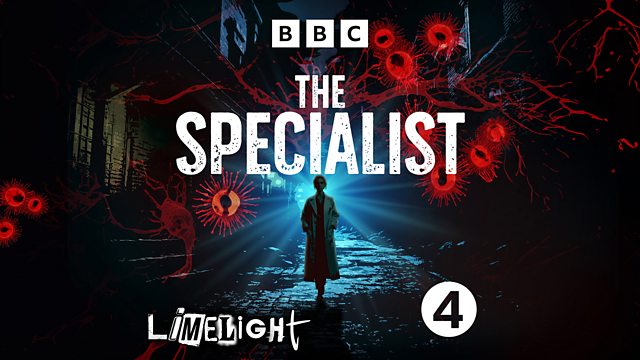
The Specialist (2024)

This superb drama from the ever-reliable Matthew Broughton tells of a doctor and her brother who move to an isolated Welsh community where the recently deceased previous doctor had a somewhat cavalier approach to medical ethics, scientific experimentation, and doctor-patient relationships.

Listen here.

Limelight: The Incident at Ong's Hat (2023)

BBC audio dramas are typically set in Wales, but this moves the action to the United States. Jon Frechette and Todd Luoto have created a faux documentary about some weird stuff that is actually a real internet conspiracy except that was made up too by some japester (OR WAS IT?). The faux documentary format working very well, giving things a disconcerting and strange ambience.

Listen here.
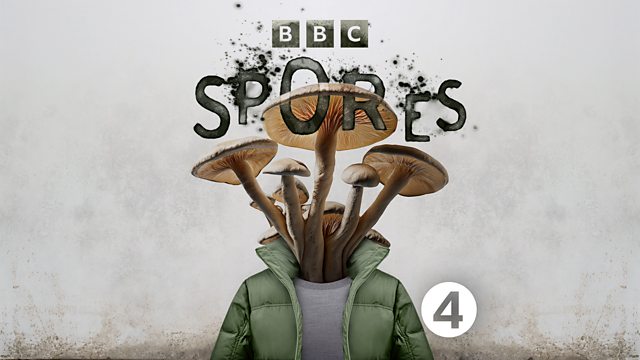
Limelight: Spores (2023)

Written by Marietta Kirkbride, this is a split narrative in which a woman in the present day is being interviewed by someone (a journalist? a psychiatrist? a scientist?) about past events, with the other strand being flashbacks to those past events. And in the past she describes working as a social worker (in Wales) and seeing a strange mould appearing first in a client's home and then her own. But somehow only she is able to see the mould. It wobbles slightly in the middle but overall this is a deeply unnerving and my audio highlight of the last year.

Listen here.

Thursday, January 01, 2026

Flashback: My 2025 Blogposts

My blogposts start life as things written for Frank's APA (the amateur press association for people who like music). I actually write quite a lot for that august journal, much of which fails to make it onto this blog for various reasons. Some of it is too conversational, making sense in the pages of the APA but not being something anyone would want to read online (although going by the stats on this blog's readership, what I post is also not in tune with the reading preferences of the online world). And some of it I never get round to revising and formatting for the blog because I am a procrastinating slackass. So as it turned out, I did not make too many blogposts last year, but here they all are again.

Music in Film 01: The Zone of Interest, Perfect Days, and others: I talk about some films I saw in 2024, focussing to some extent on their musical content. Some of the films are discussed very briefly.

Music in Film 02: All You Need Is Death, Eno, The Colour of Pomegranates, Portishead, Lone Star: More fairly short notes on films seen in 2024 that featured music.

Music in Film 03: Star Wars, The Long Goodbye, Soundtrack to a Coup d’Etat: More films with music (including the very music-focussed Soundtrack to a Coup d’Etat). Post features the celebrated Long Goodbye cat scene.

2024: My Favourite New Songs: I present a list of my favourite new tunes of 2024, with a link to a Spotify playlist that features some of them.

2024: My Favourite Newly Discovered Old Songs: A list of great old tunes I heard for the first time in 2024, also with a link to an almost complete Spotify playlist.

2024: My Favourite New Films: The new films I liked the most in 2024.

2024: My Favourite Newly Discovered Old Films: The old films I liked the best in 2024.

2024: My Favourite Theatrical Productions: Still looking back on 2024, here are the best theatrical productions I saw in that year (which I think might also be all the theatrical productions I saw).

2024: My Favourite Audio Dramas: BBC radio dramas old and new that I enjoyed in 2024.

What have I nominated for the 2025 Hugo Awards?: Things I nominated for the 2025 Hugo Awards, many of which failed to make the ballot due to biased political voting and an impartial application of the so-called "rules".

The films of David Lynch: a definitive ranking: I appeared on a David Lynch panel at Eastercon, which means I am officially an expert on the popular filmmaker. Here I objectively rank the great man's films. My ordering may surprise you.

Gamelan Corner: Accumulation: I wrote about an American gamelan piece I was trying to play in our Gamelan class.

Troubled Songs: Music of the Northern Ireland Conflict: I put together a compilation of songs dealing with the Northern Ireland Troubles and used them as a way of presenting a history of that unpleasant conflict. This post got a lot of traction thanks to a well-connected friend sharing a link to it, replies to which revealed that there are a lot of people out there who like The Cranberries.

A Scottish Gamelan Retreat: I travelled to a remote Scottish location to spend a week playing gamelan music. This was a key 2025 event for me and I am pleased with how this write-up of it came out.

Live: Gibby Haynes plays the hits of the Butthole Surfers (with The Scott Thunes Institute of Musical Excellence and Evicshen): Gibby Haynes is or was in popular Texan band The Butthole Surfers and this was my account of seeing him play their songs live with a bunch of kids as his backing band and a whip-wielding lady as his support act.

And that's it. I'll try to do more blog posts in 2026. Judgement

Monday, April 29, 2024

Journeys into Darkness part 3: the Terrifying World of Audio Drama

I am bringing you on a journey into a world of the sinister and macabre, previously discussing 1973 classic The Exorcist and some other horror films that have crossed my path. But now I bring you to the particularly unnerving world of horror audio drama, where the mind's eye can create terrors far more horrific than anything that can appear on screen.

The Woman in White is a 2001 BBC adaptation of a novel by Wilkie Collins. It is not a supernatural story although there are moments when you think it could go in that direction. Rather it is a gothic sensation novel and an example of the heiress-in-danger subgenre. This radio adaptation follows the shifting points of view of the novel by changing its focus over the four episodes from square-jawed hero Walter Hartright (played by Toby Stephens) to indomitable and resourceful heroine Marian Halcombe (Juliet Aubrey) and back again, with Jeremy Clyde and Philip Voss playing the villains Sir Percival and Count Fosco. The drama follows the basic outline of the plot, with its mysterious woman in white showing up at opportune moments together with its sinister villains whose dark secrets threaten to undo them and the resourceful heroes working to thwart them. The real stars are Aubrey's Marian (capturing well the qualities that had 19th century correspondents writing to Wilkie Collins asking if the character was based on a real woman and if so would she be open to a proposal of marriage) and Voss's Fosco (ever-so-polite, ever-so-sinister). Maybe you should read the book first but if you have already done that or couldn't be arsed the drama is available on archive.org.

Dead Air is an audio drama from an Irish podcast factory, part of their Petrified strand of horror dramas.To be honest, it is not great. It features an Irish talk radio host working the graveyard shift who starts finding himself talking to an increasingly creepy caller, with things getting increasingly edgy. The drama uses sound well but the plot seemed a bit woolly. And Dead Air featuring intrusive ads for another non-drama podcast in which two excitable blokes go on about how much they love their mammies did rather wreck the buzz. But if you want to find out for yourself, check it out here.

The Haunter of the Dark meanwhile is the latest of the Julian Simpson loose adaptations of H. P. Lovecraft stories made for the BBC and packaged together as the Lovecraft Investigations. I may need to listen to this again, but my initial feeling with this was that it was a bit weak compared to its predecessors. Its plot in particular seemed overly complicated plot, while the narrative featured some odd leaps of logic. That said, it did have one of the best depictions of Mythos related sanity deterioration I have come across in a dramatic presentation. It can be downloaded or streamed from the BBC here, but if you haven't listened to any of the other Lovecraft Investigations yet don't start with this one: go to the first one, The Case of Charles Dexter Ward (which is also the best).

images:

The Woman in White (archive.org)

Petrified (SoundCloud)

The Haunter of the Dark (BBC)

Thursday, August 25, 2022

Nigel Kneale audio drama: "The Stone Tape" and "The Road"

These are two BBC radio adaptations from 2015 of much older teleplays by Nigel Kneale. They are not available to stream or download on the BBC's own website, but they can be found on shady websites like the Internet Archive or YouTube.

The Stone Tape

This one was adapted from Kneale's 1972 original by Peter Strickland (who also directs) and Matthew Graham. The basic set up is essentially the same as in Nigel Kneale's original: some scientists move into a Victorian mansion to do research and discover that it seems to be haunted; they stumble onto the "stone tape" theory of hauntings (that traumatic events of the past can somehow be recorded in their surroundings). And computer programmer Jill Greely (Jane Asher in the original, played this time by Romola Garai) seems to have a special sensitivity towards the ghostly manifestations.

If you've seen the TV drama then the way this one ends will probably not surprise you. What is maybe interesting is the way in which it deviates from the TV version. For one thing, it is set in 1979 rather than the early 1970s. Also the scientists are working on using sound waves in mining or something, rather than trying to make a breakthrough in recording technology. But the really striking difference for me is the lack of the original's all pervasive racism. I'm guessing that comes from the march of progress and a sense that having a play full of characters who make jokes about "the Japs" or their Irish employer would be a bit problematic in our more enlightened times. Yet it feels like a retreat, not because I am a colossal racist but because the original characters' racism struck me as a marker of weakness and unease on their parts, whether over having to take orders from an Irishman or the imminent destruction of their industry by Japanese competition.

Still, this remains an impressive work, thanks to strong direction and acting bringing out the best of the source material. The play also features striking electronic music by James Cargill of Broadcast and Children of Alice.

The Road

The TV version of this was broadcast in 1963, but no recordings of it survive. For this radio version, Toby Hadoke adapted Nigel Kneale's original script and Charlotte Riches directed. Actors included Mark Gatiss and Hattie Morahan. Set in 1768 this centres on an investigation of mysterious phenomena in a wood by the local squire (one of those gentleman scientist types, played by Adrian Scarborough) and a visiting urban philosopher (Gatiss); the philosopher seems to be carrying on with the squire's wife (Morahan), or maybe I am supposing too much here.

The phenomena being investigated see strange sounds manifesting in a local wood, but only on one night of the year. People report hearing unfathomable and disconcerting noises, but also the sound of screams and people in extreme terror. And a local girl reports that she also heard the sound of people moving over a paved roadway, even though the wood has been there since time immemorial. There are stories of Queen Boudicca's followers being massacred in the woods during Roman times; the squire thinks the sounds might be a stone tape echo of this but the philosopher dismisses such ideas as superstitious nonsense. He sees the supposed haunting as the product of over-active imaginations. It turns out both squire and philosopher are wrong: the actual nature of the haunting may surprise you. The ending packs a considerable punch; rather than spoil it I encourage readers to listen to the audio drama themselves.

Like everyone my age I have not seen the original television version of The Road, but I did find myself wondering how Toby Hadoke's version might have varied from the source material. My suspicion is that Nigel Kneale's philosopher probably did not have a West Indian former slave as a manservant, although it's not impossible that someone of his class at that time might have done. It pleased me that the drama presented 18th century race relations in a reasonably realistic manner and did not present us with a fantasy bollocks utopia version of such things (as seen in popular drama Bridgerton).

images:

The Stone Tape (BBC)

The Road (BBC)

Wednesday, August 24, 2022

More BBC Audio Drama: "Broken Colours", "Who Is Aldrich Kemp?", "Siege"

These BBC audio dramas all came out earlier in 2022.

Broken Colours This one was written by Matthew Broughton, who wrote the brilliant Tracks, which ran for five series. This one begins with Jess (Holli Dempsey) suffering an injury when a demonstration turns into a riot. A passer by named Daniel (Josef Altin) brings her in for medical treatment. A romance blooms between them, despite their very different backgrounds, but Jess starts thinking there might be something a bit sketchy about Daniel. And then he disappears from her life and stops returning her calls. Obviously people are ghosted all the time, but there's a bit more to it here. The depiction of the shady world Daniel inhabits is fascinating, but so is Jess's own descent into problematic moral compromises. It's also good on how Daniel and Jess are attracted to each other, despite being from completely different worlds. All in all this is a strong piece of drama that I recommend engaging with.

You can listen to it here: https://www.bbc.co.uk/programmes/m0014p7z

Who Is Aldrich Kemp?

New drama from Julian Simpson, who wrote those Lovecraft Investigation dramas. And an exciting whammy at the end of an early episode reveals that this actually overlaps with those. But unfortunately it is more like another episode of those not great Mythos-Glamis-Albion spy dramas than proper Lovecraftian spookiness. It's not really to my taste but I suspect I will still download the sequel when it comes out.

Don't believe the rumours: https://www.bbc.co.uk/programmes/m0014gtt

Siege Now this is good. Written by Katherine Jakeways, Eno Mfon and Darragh Mortell, it is presented as a series of interviews with people who found themselves being held as hostages when a small-time crook's attempt to rob a convenience store goes badly wrong. The former hostages all have axes to grind and records to set straight, with the way they were previously presented in the media being a particular bone of contention; they also have their problems with each other. Thanks to a great ensemble cast and impressive direction from John Norton the format works really well. Siege is a great example of what can be achieved with audio drama.

Listen to it or download it here: https://www.bbc.co.uk/programmes/m00146bz

Tuesday, August 23, 2022

Audio Drama: "The Sink", "Body Horror", "Power Out", "Steelheads"

These are all BBC audio dramas that I listened to on lunchtime walks while working from home. Some are better than others.

Body Horror (2020)

This was written by Lucy Catherine, who also wrote Harland, which disappointed me. I liked this a bit more. It is set in the near future when the march of progress means it is now possible to perform full body transplants. The main character is a middle aged woman who is less than comfortable in her unfit overweight body. She wins the lotto and has her head grafted onto the body of a young woman who died in a tragic accident. She also has some kind of remould to de-age her face. So all is good. Except she starts feeling ghostly impressions of her new body's former owner. And she begins to hear suggestions that the body transplant clinic might have its own dark secrets.

I thought maybe this unfolded in a somewhat predictable manner, but for all that it was well made and packed a few punches as it rolled along. Try it for yourself and see what you think: Body Horror

Power Out (2020)

And this one is about a kid hacker who gets involved in a radical group who decide to bring down the UK national grid as a protest against environmental destruction or something. The characterisation is pretty good but I thought the kid hacker was portrayed too positively; the programme did not really engage with how many people would die or see themselves fall into destitution if the UK power grid was brought down. But you can listen to it yourself here.

Steelheads (2021)

This one starts off with an up and coming star tennis player who has an inoperable brain tumour. She agrees to be placed in suspended animation in the hope that the passage of time will mean that future science be able to cure her. But when she awakes, the world has gone to complete shit despite it being only a couple of years into the future.

It is by the same people who created The Cipher but is much better than that, with the plotting carrying things along in an enjoyably relentless manner while Jessica Barden is impressive as the lead. But when they finally reveal what has happened to the world I didn't really buy it. I found myself thinking that a problem with mystery dramas is that too often the writers make them up as they go along, coming unstuck when they have to pull an explanatory rabbit out of the hat.

Listen to it yourself here.

The Sink: A Sleep Aid (2020)

I have saved the best till last, and it is an odd one. Written by Natasha Hodgson and with creepy narration by Alice Lowe, it presents itself as being a kind of programme to help people sleep, combined with some kind of semi-scientific study of people's dreams. So it starts off with Alice Lowe talking about how worried she is about how the listener hasn't been sleeping too well lately and how we should sit back and let her help us, but then it switches into what seems to be re-enactments of people's dreams. At first these are bizarre but comic, with the kind of surreal logic found in real dreams. A writer finds himself being berated by an interviewer after he has written a book so big that it won't fit in his house. A couple go for a picnic in the woods in an attempt to save their troubled relationship but then encounter a man who has got stuck while taking part in a fun run in a "Sonic the Hog" costume; their efforts to help him trigger the destruction of their relationship. And so on. But the mood begins to shift, with things becoming noticeably more ominous when one guy asks another, "Did a bird man ever come to your school?" After that it becomes impossible to miss all the references to birds peppering the various dreams.

What it's all actually about remains a bit arcane but the journey is a fascinating one. And I find myself thinking that I should give it a re-listen while lying in bed falling asleep, letting it seep into my dreams. Maybe you should do that too, but be careful of the Bird Man.

One great thing I discovered subsequently is that back in 2012 Natasha Hodgson tweeted about how the Bird Man did actually come to her primary school. So clearly this drama was a long time hatching, making her an obsessive hero for our sleep deprived times.

Listen to it yourself here: https://www.bbc.co.uk/programmes/p08vxrgx. Sweet dreams.

Wednesday, January 06, 2021

Possible nominations for the Best Dramatic Presentation, Short Form Hugo Award

Yesterday I grumbled about how the Hugo nomination rules work against non-mainstream cinema and highlighted some films that would have been great nominees for the 2021 Hugos if 2019 festival screenings had not invalidated them. Now for some dramatic presentations that are actually eligible, starting with ones shorter than 90 minutes, which compete in the Best Dramatic Presentation, Short Form category.

Last and First Men - This is Jóhann Jóhannsson's adaptation of Olaf Stapledon's classic novel of future history, featuring Tilda Swinton as the voice of our descendants from the unimaginably far future. This austere work is not for everyone but I think the film would be a worthy Hugo award flag-bearer for cerebral science fiction. It is available to view on the kind of streaming services that offer up weirdo art house films.

I Am Not Legend - This is an edited version of George Romero's classic Night of the Living Dead. The film-makers overdub new dialogue and replace the zombies with white blobs, apparently after printing off every frame from the original and manually altering them. I'm not sure the end result is that essential but it would make a great eligibility head scratcher for this year's Hugo administration team if a load of people tried to nominate it. However, I am not sure how one could go about seeing this (I saw it as part of the online Bram Stoker Festival).

Eternal - All kinds of items can be nominated in the Hugo dramatic presentation categories, not just films and TV programmes. Eternal, from Darkfield Radio, is an audio drama, designed so that you listen to it while lying in bed alone in a darkened room. I heard it as part of the Bram Stoker Festival, so you may be correctly guessing that it features vampires. UK-based readers can pay money to stream it from the Darkfield Radio website.

A Spell At Home, With Hester - This was a piece of live-streamed theatre by the Hermetic Arts theatre company, in which Carrie Thompson played the eponymous Hester. It was set up as though we were taking part in a Zoom magick ritual during which flaky Hester reveals the dark side of the quaint village she lives in. It is a companion piece to Carbury Gifts, which I have not yet seen. Both of these were performed at Rural Gothic events organised by the Folklore Podcast and Room 207 Press. I'm not sure how you could go about seeing either of these and I may be the only Hugo nominator who has actually seen A Spell At Home, With Hester.

I will probably nominate at least three of the above, though I suspect that Last and First Men is the only one with a chance of making it onto the final ballot, and even that is a long shot.

image:

Last and First Men (Observations on Film Art - Vancouver: First sightings)