"Yeah bud, yeah. So what's your name anyway?"
"Barry… No, Mick. It's Mick."
Sunday, May 27, 2012


Stray Dog Joins Road Race, Runs for 1700 Kilometres
 Xiaosa the dog has become a sensation in China, after he joined cyclists in a road race and ran for 1700 kilometres. The plucky little fellow had befriended the cyclist Xiao Yong and decided to run along with the bicycles, travelling up to 60 kilometres a day. The journey saw the dog climbing 12 mountains.
Xiao Yong now plans to adopt Xiaosa, who has started his own blog.
More
Even more (with video)
An inuit panda production
Saturday, May 26, 2012
Indian Film Festival 2012

The Indian film festival is back! This year it has moved from the Swan Cinema in Rathmines to the Dundrum Cinema. Here is their website. The only listing they seem to have showing the films that are on with times is in a cumbersome PDF version of the programme. As a service to all lovers of Indian cinema and film generally, I have extracted the information and created the following list. All of these films are on in Dundrum, apart from Mughal-e-Azam, which is being shown in the Chester Beatty Library.
Friday 08/06/2012
Gala Opening Double Bill:
18:30 India by Song (2011) – documentary / musical (seems to be a Bollywood version of the Rock and Roll Years) IMDB
20:00 West Is West (2012) – family drama / UK set (sequel of sorts to East Is East) IMDB
Saturday 09/06/2012
13:00 This film is being shown in the Chester Beatty Library Mughl-e-Azam (1960) – Classic, Historical (Mughal era) IMDB
14:00 Delhi Belly (2011) – some kind of wacky caper film IMDB
16:00 Hisss (2010) – SF / horror, US co-producion, directed by Jennifer Lynch IMDB
18:00 Jodhaa Akbar (2008) – historical (Mughal era) / musical IMDB
Sunday 10/06/2012
14:00 Hare Rama Hare Krishna (1971) – Classic / musical IMDB
17:00 Dirty Picture (2011) – biopic of tragic Bollywood actress IMDB
19:50 Ajintha (2012) – musical / historical [mysteriously unlisted on IMDB]
Monday 11/06/2012
11:00 Chillar Party (2011) – kiddie film IMDB
13:30 Aarakshan (2011) – political / controv (deals with caste issues etc.) IMDB
16:00 Pakeezah (1972) – classic / historical / musical IMDB
19:05 One Dollar Curry (2004) – contemporary, set in France IMDB
Vijay Singh, the director of One Dollar Curry and India by Song will be in attendance, as will Ila Arun, who appears in West Is West and Jodhaa Akbar.
Any pointers on things to see? The one real essential for me is Hare Rama Hare Krishna, which features the famous Asha Bhosle tune 'Dum Maro Dum' and which casts a caustic eye on the Hare Krishna movement and the stoner hippies from the West who had descended on India. I will probably try and go to at least one of the historical epics. Dirty Picture might also be an interesting depiction of the dark side of the Indian film industry, a Bollywood Sunset Boulevard.
There is also a black tie gala dinner with live entertainment on the 9th of June, to raise money for an orphanage in Delhi. See the Indian Film Festival website for details.
My previous experiences with this festival: 2011, 2010. It upsets me that I never got round to saying more about Omkara, one of the best films I have ever seen. Such is life.
An inuit panda production
Thursday, May 24, 2012
Don't Be Afraid Of Your Fantazy
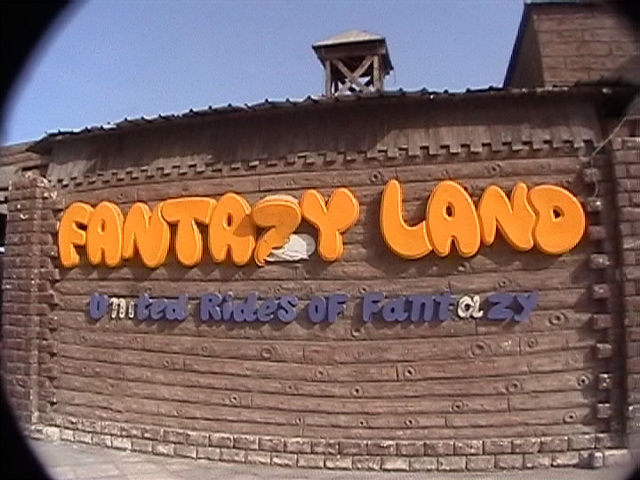 I am planning to go to Egypt later this year. The country has many sights – temples, pyramids, giant statues, places of religious worship… and Fantazyland. This is a theme park near Alexandria, where the entrance fee varies from seven to thirty Egyptian pounds a person, depending on how much respect the cashier plans to show you. It boasts many attractions, some of which may even be functioning correctly when you visit.
More
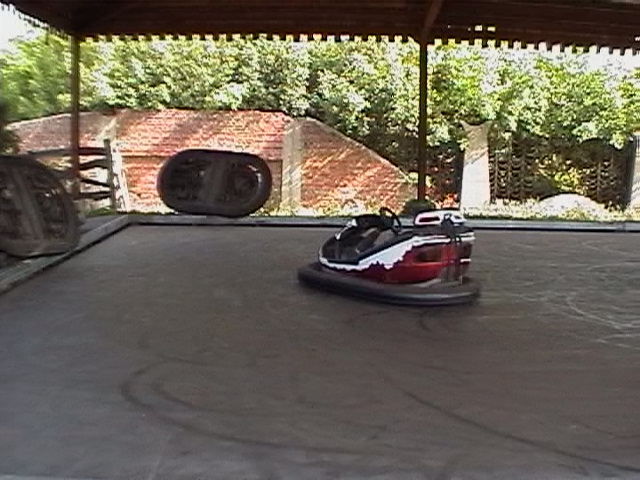 even more
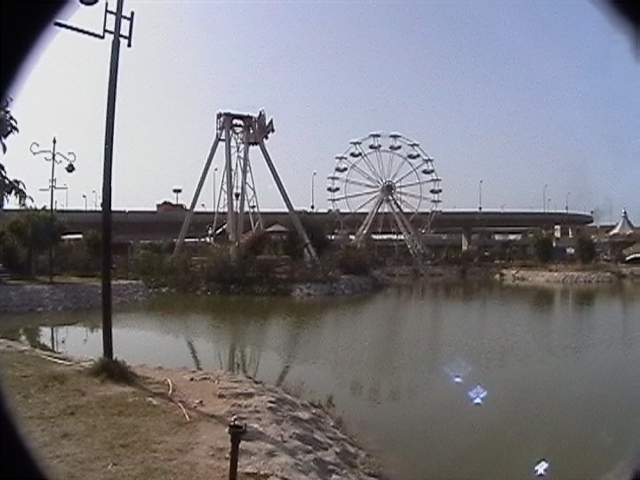 An inuit panda production
Terrifying images of the past
Oh, you beautiful child
Mainly, but not entirely, bands from the past - featuring the kind of people who were expelled from Swedish showbands for their poor dress sense.
Mainly, but not entirely, bands from the past - featuring the kind of people who were expelled from Swedish showbands for their poor dress sense.
Monday, May 21, 2012
Hills

I recently went out to Killiney and walked over the hill from there to Dalkey. This is probably the most definitively rich part of town, where the wealthy live behind high walls and gates with intercoms. Many of the streets and houses have Italianate names that evoke the Bay of Naples or the hills above Sorrento. I used to find this a somewhat laughable affectation, but now having been to that part of the world I can see why one place would remind of the other. On a sunny, day as you climb the winding but leafy paths of Killiney you could easily imagine that you were in the hills above Sorrento – except that there are more mansions and less olive groves around you.

One other thing you do not see above Sorrento is loads of U2-related graffiti, the sighting of which suggested that I was near Bongo's Killiney home. I did not pay him a visit.

There is a park on top of the hill between Killiney and Dalkey on which a number of interesting items are to be seen. The most famous is probably the Obelisk, a mysterious item that was apparently built in the 18th century by whatever nobleman owned the hill back then. It is probably no more than a decorative folly, but it is easy to imagine it being part of some sinister cult's activities; I seem to recall that it makes an appearance in the book that reveals Dublin's Occult Grid, but then so does every other structure of note in the city and county. I have heard rumours that on certain nights people gather at the Obelisk to worship Satan, but it sounds a bit unlikely. I would imagine that devil-worshippers would prefer somewhere a bit more secluded. I suspect that more typical night-time visitors to the Obelisk and its environs are worshippers of some kind of cheap and nasty god of cider drinkers.

Near and slightly below the Obelisk there is a little pyramid. It has steps running up and looks more like a very small version of those Aztec Pyramids than the Egyptian pyramids that more typically appeal to the Masonic types who build obelisks. I do not know what it was for, if anything. You could just about imagine a priest to some thirsty deity ripping out the still-beating heart of a sacrificial victim at its apex, but only if both priest and victim were not very big and had a superb sense of balance (even after death in the case of the victim).

And beside the pyramid is a second obelisk, the much smaller one known as The Witch's Hat. It is now hidden by trees from the big obelisk, but would be very visible on the seaward side.

Beyond that on towards Dalkey, the hill also boasts an aircraft safety aid (possibly to prevent aircraft flying into the hill during poor visibility) and what was once telegraph station and now seems to be abandoned but nevertheless bristles with mysterious aerials.

An inuit panda production
Sunday, May 20, 2012
Vanished Music Museums of Dublin
 I have never previously had to consider whether I am for or against music museums, but the subject came up in the pages of Frank's APA after one of our members mentioned visiting some. It was also mentioned that Simon Reynolds in Retromania has argued that they are a Bad Thing in some way.
 There were two music museums in Dublin, both of which have closed down. One of them was the Dublin Rock Music Hall of Fame, which I think consisted of some of Bongo's used kecks (for foreign readers – kecks are not musical instruments) behind a glass case and a couple of back issues of Hot Press – that'll be a twenty quid, sir. The other was called Ceol (Irish for music) and which dealt with Irish traditional music.
I liked Ceol and went to it a few times, mostly when attempting to demonstrate the great culture of Ireland to visitors. It used technology in what seemed like an innovative way and seemed to successfully convey information and give a sense of the various forms of the music it was covering. But it did not get enough visitors and was unable to attract public subsidy so it closed down. I think maybe its timing was unfortunate – it was located in a part of town that has since been redeveloped (not entirely successfully, but God loves a trier) and connected up to public transport, so it might do better now. But the time has passed.
Museums are often interesting in and of themselves, not for what they contain but how they choose to present it. One of my friends has said of Dublin's Natural History Museum that it itself should be in a museum. This is a subject I hope to explore further, with other examples.
Someone else was less impressed by Ceol.
This guy liked it more (and is not a smartarse).
image source
An inuit panda production
Saturday, May 19, 2012
Jeff Mangum ATP Part 7: THE FINAL PROGRAMME
I am still going on about the Jeff Mangum curated All Tomorrow's Parties Festival, in Butlins Minehead.
And then to Group Doueh. As noted in the Executive Summary, the SADR sensations were a bit less trippy than on the record I have, but they did serve up an appealing stew of desert guitar music. Mr Doueh took a relatively modest role (apart from when he nonchalantly played guitar behind his head), letting the band's two women singers front things. They also did a bit of getting down and dancing, which was endearingly odd considering that they a good bit more modestly dressed and round than is the case with western dancers.

After Group Doueh had finished we were about to drift off to see Sebadoh (largely for the want of anything better to do) when some excitable fellow said to us that he had heard that there was going to be an All-Star Jam taking place down here. At first we were unsure, but as the place started to fill up with hipsters – and as the supposedly finished venue made no efforts to throw people out –we wondered if maybe he was onto something. And yeah, he was. Members of bands such as the Sun Ra Arkestra, the American Contemporary Music Ensemble, a Hawk And A Hacksaw, Roscoe Mitchell and many many others appeared onstage and started banging out a chaotic yet enjoyable barrage of music that seemed largely to be based around an Arkestra groove. I felt a bit trend being there with all the people taking photos of everything to prove that they had been There, but it was one of the most fun ATP things ever.
That is largely that for me and the Jeff Mangum ATP. I did not see enough stuff on the ATP TV channel to say much about it except that i) the Rutland Weekend Television stuff reminded me of how impressive Eric Idle's technique is and ii) the production values in The Life of Brian were much higher than I expected; I particularly liked how they decorated the walls of Pilate's study with copies of the murals from the Villa of the Mysteries in Pompeii [so called because the confusing audio guide makes finding its famous wall paintings a rather mysterious process].
I did find the lack of chalet-mate sociability a bit of a drag (my beloved can be so grumpy!), so I would not be too keen on the two-person chalet again, for all that they do the job. I must therefore give a shout out to ILX superstar Aldo Cowpat, his lovely wife and their friends (who all have names but it is more exciting on the internet if I make them sound mysteriously unnamed) for having us round for tea and cake. And vodka, they are Scottish after all. We watched a bit of that Sherman's March film (a documentary about this guy who starts off trying to make a film about Sherman's march through Georgia but ends up using the "Hi, I'm making a documentary" line as a way of meeting but not actually copping off with loads of women).
And so my account of this festival trails away…
An inuit panda production
And then to Group Doueh. As noted in the Executive Summary, the SADR sensations were a bit less trippy than on the record I have, but they did serve up an appealing stew of desert guitar music. Mr Doueh took a relatively modest role (apart from when he nonchalantly played guitar behind his head), letting the band's two women singers front things. They also did a bit of getting down and dancing, which was endearingly odd considering that they a good bit more modestly dressed and round than is the case with western dancers.
After Group Doueh had finished we were about to drift off to see Sebadoh (largely for the want of anything better to do) when some excitable fellow said to us that he had heard that there was going to be an All-Star Jam taking place down here. At first we were unsure, but as the place started to fill up with hipsters – and as the supposedly finished venue made no efforts to throw people out –we wondered if maybe he was onto something. And yeah, he was. Members of bands such as the Sun Ra Arkestra, the American Contemporary Music Ensemble, a Hawk And A Hacksaw, Roscoe Mitchell and many many others appeared onstage and started banging out a chaotic yet enjoyable barrage of music that seemed largely to be based around an Arkestra groove. I felt a bit trend being there with all the people taking photos of everything to prove that they had been There, but it was one of the most fun ATP things ever.
That is largely that for me and the Jeff Mangum ATP. I did not see enough stuff on the ATP TV channel to say much about it except that i) the Rutland Weekend Television stuff reminded me of how impressive Eric Idle's technique is and ii) the production values in The Life of Brian were much higher than I expected; I particularly liked how they decorated the walls of Pilate's study with copies of the murals from the Villa of the Mysteries in Pompeii [so called because the confusing audio guide makes finding its famous wall paintings a rather mysterious process].
I did find the lack of chalet-mate sociability a bit of a drag (my beloved can be so grumpy!), so I would not be too keen on the two-person chalet again, for all that they do the job. I must therefore give a shout out to ILX superstar Aldo Cowpat, his lovely wife and their friends (who all have names but it is more exciting on the internet if I make them sound mysteriously unnamed) for having us round for tea and cake. And vodka, they are Scottish after all. We watched a bit of that Sherman's March film (a documentary about this guy who starts off trying to make a film about Sherman's march through Georgia but ends up using the "Hi, I'm making a documentary" line as a way of meeting but not actually copping off with loads of women).
And so my account of this festival trails away…
An inuit panda production
Natasha's Dance
 I have been reading War and Peace since January, a chapter a day. The book has three hundred and sixty six chapters, and 2012 has three hundred and sixty six days, so it seemed like a good idea. And it is, the book is among the greatest things ever, and the chapter a day pace suits it really well. I think at the start maybe reading only five pages a day seemed a bit restricting, but as you go along you get into the rhythm of it
Before reading the book, I did not too much about it. I knew, obviously, that it was set during the Napoleonic Wars and made a big deal of Napoleon's invasion of Russia. And I suppose from the title I could deduce that it featured stuff relating to people's peace-time lives as well. And that really was it – or almost it. I did have one other piece of advance knowledge, thanks to a partial reading of Orlando Figes' book Natasha's Dance: A Cultural History of Russia. When I first approached that book I took it that the "Natasha's Dance" bit of the title was metaphorical, but it turned out to be a layered metaphor – it refers to a scene in War and Peace where a character called Natasha does a dance, the dance and the scene being metaphorical. That gave away two spoilers – firstly that there is a character called Natasha who will do a dance and secondly that this Natasha is somehow important to the book as a whole, something that would not immediately have been apparent when she first appears in the novel (and something which is only beginning to become apparent now that she has done her dance).
But what is the dance thing all about? Well, Natasha is from a minor noble family whose menfolk are all fuckwits who are bringing the rest to the brink of ruin with their feckless and incompetent ways. Like all of the nobility, their lives are focussed on the cities, either Moscow or St. Petersburg, and the jockeying for position there. They speak French rather than Russian and are disdainful of the plain countryfolk and their way of life. But in this chapter, Natasha and her brother (amiable fuckwit Nicholas) find themselves back in the house of a very minor noble neighbour of their country estate, a man so barely noble at all that he lives on terms of easy familiarity with his serfs in his ramshackle house. He serves a simple meal (featuring pickled mushrooms, which sound like the best thing ever) and some drink to his guests and then his serfs play some music on a balalaika, and then Natasha is invited to dance – and she does, but she does not do one of the poncey French dances that she would have been thought in the cities, but a true Russian peasant dance whose steps she somehow just knows from the depths of her being. I think this says something about the Russian national character, or Tolstoy's view of it.
It is a lovely scene, independently of whatever meaning Tolstoy wants to communicate in it, with a lovely sense of unbuttoned joie de vivre very much at odds with the uptight lives of so many of the characters. It is one of the moments in this book that brings home what a great writer Tolstoy is and why so many people say that War and Peace is the greatest book ever written.
A review of Natasha's Dance
and another
image source
Later – oh great, trying to find a YouTube video of Natasha's Dance from one of the book's many adaptations I have come across a BIG SPOILER.
An inuit panda production
Subscribe to:
Posts (Atom)