Wednesday, March 31, 2010

Vervet Monkeys Ignore Males

Scientists have discovered that Vervet Monkeys largely ignore what male monkeys do, only paying serious attention to what the lady monkeys are up to. This was shown experimentally by letting some monkeys find out how to access some food, then letting some other monkeys watch them getting at the tasty morsels and finally letting the watchers into where they could get at the food themselves. If the monkeys had been watching a female, then they were significantly more likely to copy her and find the hidden food.

Scientists have explained this behaviour by reference to the social setup of the Vervet Monkey. These little fellows live in matriarchal societies, where the males are marginal and inclined to drift from group to group. Vervets understand that it is best not to pay too much attention to anything a male is doing, as they do not really know much about anything.

more

An inuit panda production

Free State V

pshooom! I am actually on my way to Cuba, but through the power of forward dated posts I have set this to appear now while I am in transit. As future posts appear it should guarantee a certain kind of brief eerie longevity in the event of unfortunate unexpected travel events.

This was a concert by the Crash Ensemble, Dublin's leading contemporary music performance group. They were playing new pieces by Irish composers, with their artistic director resisting the urge to throw any of his own works onto the bill.

One piece was by GrĂ¡inne Mulvey, which featured a piccolo player interacting with a load of funny recorded electronic music. It was an odd combination – the electronic music sounded like something from a Jon Pertwee Dr Who episode. I may well have enjoyed that well enough on its own, but it was not obviously suffering from having an acoustic instrument played over it. There was also an interesting piece by David Fennessy in which a cellist played over a recording of a harmonium drone; I liked it, but I did wonder what would be the difference between this and having someone there playing the harmonium.

I liked all the pieces, including a stripped down composition for strings by my Facebook pal Benedict Schlepper-Connolly. Increasingly I find that contemporary music is what I most enjoy in the live context. But, sadly, all of the composers were present tonight, meaning that I could not stand up after a piece and pretend to have written it. One day I will.

If you fancy catching Crash live yourself, they are playing some concerts outside Ireland in the near future – check out their website for details of dates in London, Washington DC, and Montclair NJ (places very accessible to all inuit panda readers, I know).

An inuit panda production

Tuesday, March 30, 2010

Ian goes to the Opera

I recently attended an Opera Ireland concert performance of I Capuleti e I Montecchi by Vincenzo Bellini. It takes its story not from Shakespeare's Romeo & Juliet, but from the same Italian sources that he mined for his play. So it has some elements in common (lovers from opposing sides, some of the character names, the somewhat improbable ending) while having many differences. For one thing, this story seems more political in tone – the Montecchi and Capuleti are not fighting some kind of familial feud but are leading families on opposite sides of the Guelph-Ghibbeline conflict that divided mediaeval Italy. Romeo here is also a general in the Ghibbeline army, and not some scaldy young lad like in Shakespeare's play.

Musically this is all much more like what I think of opera as sounding like than either the Ligeti or Wagner operas I saw last year. Particularly in the instrumental bits we get loads of rococo flourishes and the like. I liked the sung bits more, as they give more space for that kind of over the top emotionalism one associates with the form. Overall, though, this was musically not so much to my taste; I am beginning to think that only Wagner really does opera properly.

It was still enjoyable enough musically, and, as with the Rheingold, the acting was rather impressive (with Eric Martin-Bonnet as Capellio (Giulietta's father and the local head of the Guelphs) being my particular favourite). But I will not be back, for one simple reason. There was a plague of talkers in the audience, and having to put up with their yap did rather limit my enjoyment of the performance.

Maybe this is what you get from sitting in the cheaper seats. By this I do not just mean being among the lower orders but more the particular layout of the Gaiety theatre. The cheaper seats in the parterre are towards the back, partly underneath the dress circle. I could imagine this might make the more munterish members of the audience think that they are somehow back at home watching the performance on television and so it is alright for them to chatter away to each other. But whatever the reason, I am not exposing myself to this kind of behaviour again.

An inuit panda production

Monday, March 29, 2010

Pet Myths Debunked

Astonishing news from the Guardian – apparently many things people believe about their pet animals are wrong. Dogs do not wag their tail to show they are happy, as tail wagging is used to display a complex range of emotions. Furthermore, cats do not just purr when they are happy – they also purr when they are in pain or dying. So if your cat is purring, watch out.

Particularly disturbing for people who like both cats and wild birds is the revelation that putting a bell on a cat does not stop them from catching birds – apparently the little scamps just learn to move more quietly, becoming even more efficient predators.

It nevertheless turns out to be true that hamsters run for miles and miles on their running wheels – apparently as much as six miles in a day.

An inuit panda production

Recent Amphibian Adventures

v/a Celestial Grass
v/a nlgbbbblth cd 09.06: Can You Travel In The Dark Alone?
v/a The Beat-Beat-Beat of the Tom-Tom
v/a La Classe de Danse
v/a Best of 2009 Disc 2: "MMIX"
v/a Best of 2009 Disc 1: MMIX
v/a The Doggie Daddies (somewhat unlistenable 2000s compilation)
v/a The Naughty Oughties (somewhat listenable 2000s compilation)
v/a nlgbbbblth: The Magic Garden
Ray Davies (Feat. His Funky Trumpet & The Button Down Brass) Part 3: (1975-1977)
Elvis Presley Dig Right In


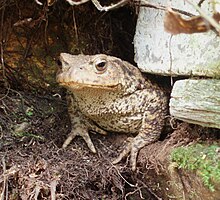
And what are these? Why, they are TOADs. The acronym is one my pals in Frank's APA use. It comes from the early days of that august organisation. TOAD stands for Tape Once And Distribute, reminding us of a by-gone era where people in the APA distributed compilations on tape, and where people could be expected to make a copy of a tape and then pass it on. The name has stuck, even though now a TOAD might well be a CD you can keep or (*shudder*) something you "download".

Some might say that this is a surfeit of TOADs. There could be something to be said for some kind of TOAD rationing system – I am thinking maybe that no one in the APA should be allowed make more than two CD-R equivalents in one calendar year. Let us see if I am able to enforce this.

The one great winner of these discs is the third Ray Davies compilation. The second collection of music by this great trumpeter seemed to falter a bit, but here he is stormingly back on form. Maybe this is as much down to the track choices – you cannot really go wrong with parping versions of the theme from The Man With The Golden Arm, Magnum Force, The Big Boss, etc. Ray Davies' version of the theme from The Good, The Bad, and The Ugly is easily the best non-Morricone version of the tune, blowing away the lamer Hugo Mantanegra effort.

With the other CDs, it is random tracks here and there that stick in my mind. One of "MMIX" or MMIX features Art Brut's 'The Passenger' (about the joys of public transport), reminding me of how great this lot were at Indietracks last year. I remember this tune well from when I saw them live, but it seems a bit different here – different in an interesting way. Live, Art Brut seem to a bit more rock than art rock, but here they sound a bit more like some kind of complicated art project. I think maybe it is to do with the vocals being fairly high in the mix. Either way, this lot seem like an excellent band – I must seek out their records, and would love to see them again live.

La Classe de Danse provided an always-welcome opportunity to hear Robert Wyatt's recording of 'Stalin wasn't stallin'. I also liked the 'To Whom It Concerns' by Magic (or the theme music to the Late Late Show as you may know it).

The Beat-Beat-Beat of the Tom-Tom-Tom features many wonderful tracks, including rocktastic tracks by Pissed Jeans (who live up to their name) and A Place To Bury Strangers. The latter's track made me wish I had caught them at ATP last December.

I enjoyed all the others as well.

One thing I find Frank's APA TOADs good for is generating an enormous musical databank, such that if I hear about random musical figure and wonder what they sound like, it often turns out there are a couple of their tracks lurking on TOADs. I got that most recently with yer man Franco and TPOK Jazz – after reading the intriguing article about him in the Journal of Music, it turned out that I had a couple of his tunes on my iPod, all thanks to the magic of the TOAD. Fascinating.

Tall Toad

An inuit panda production

Sunday, March 28, 2010

Attention former members of Frank's APA!

I don't suppose you fancy re-joining, even temporarily? I am guest CM-ing the next issue, and it would be nice to bring you back into the fold. The deadline will be the first Friday in May. Drop me a mail if you are interested.

Non former members of Frank's APA: move along, nothing to see here.

"Moby Dick", by Hermann Melville

I suppose I ought to say something about Moby Dick. I pathetically underestimated how long it would take to finish, only reaching the end the day after we met in the Lord Edward; the experience was chastening, and I will be more careful with future reads of the big books of the past.

But anyway, what did I think of Herman Melville's classic (in which, for those of you are unaware of these things, a whaling ship commanded by the monomaniacal Captain Ahab sets off on a doomed hunt for the titular White Whale who bit off the captain's leg)? Well, I thought it was incredible. I am not sure if I would be one of those people who say that it is the greatest novel ever written, but I can see why people would see it as that. There is an epic grandeur to it that you see in few works of fiction. One thing I have heard said about the book is that it prefigures the modern novel in certain respects, but I was struck by how gothic it was. As Ahab closes in on the whale, there is an almost palpable sense of doom clinging to the pages; rather than being a prototype 20th century anti-hero, Ahab seems more of a kind with Heathcliff or Melmoth as he races to his own destruction.

Moby Dick is also an odd book. The narrative chapters are interspersed with many discursive chapters on whales and whaling, the style of the narrative chapters themselves shifts from normal first person narrative to scenes described as plays, to scenes where we get interior monologues by characters other than the narrator. There are also some great comedy moments, like the whole Ishmael-Queequeg bed-sharing stuff, that run rather counter to the general gothic feel of the book. I could imagine some people finding all this a bit annoying, but they would be wrong to do so.

There might be a case to be made for an all-narrative abridged version of Moby Dick that leaves out the digressions – it could be useful for first time readers. I think, though, that they are part of what gives the book its power. They are certainly part of what will keep this book on my shelf – it is something that I will keep wanting to dip into.

One of the things with Moby Dick is its initially poor critical reception. Although it seems to have remained in print, albeit somewhat intermittently, it was only in the 20th century that it began to be seriously championed as a great novel. In discussion in the Lord Edward, Mr W---- suggested that it was the book's disjointedness that appealed to the modern critic, as it mirrors the stylistic innovations of the 20th century; he felt, however, that these critics were picking up on the failings of Melville's writing (his rambling inability to stick to the narrative, etc.) but hailing these as strengths. It is a view, but again I think the Melville's willingness to go where the narrative winds take him is a strength rather than a weakness.

I will leave you with an odd piece of Moby Dick related trivia. The well-known German far-left nutters the Red Army Faction were apparently obsessed with the book, and used it to give each other codenames for their internal communications. Andreas Baader picked Ahab for his own codename, something that seems not to have set alarm bells ringing.

Post your own thoughts on the book as a comment here. If you have already posted about Moby Dick on your own blog, post a link to that instead.

An inuit panda production

Friday, March 26, 2010

Desperados Waiting For A Train, Punctured Flapper

American Vampire #1, by Scott Snyder, Rafael Albuquerque, and Stephen King*

This is somewhat intriguingly plotted and well drawn, but there is a fundamental problem here. Look at the title: American Vampire. Jesus, what was I thinking? Vampires are no longer interesting and there should be a law against anyone using them as a basis for a story.

I'm not quite sure where the image comes from. If it's yours, let me know and I will include a link.

*yes, that Stephen King.

Thursday, March 25, 2010

Other travel related news

My beloved and I are going to Cuba over Easter! Cha cha cha! We are going independently rather than taking a package, so we look forward to lots of trouble about finding accommodation and finding out how to get from town A to town B in time to get our flight back home. I am in some ways expecting this holiday to be a bit of a trial, but it is imperative that we visit Cuba before it is flooded by US fratboys. At the moment our planned itinerary is something like Havana, Cienfuegos, Trinidad, Sancti Spiritus, Santa Clara, Havana again, Viñales, Havana, and home. But all this might change..

Anyway, I am getting all fired up about Cuba's ever-welcoming Jinitero community. I will be very disappointed if they do not actually begin every sentence with "hey blondie!"

more Cuban poster action

An inuit panda production

Wednesday, March 24, 2010

TV, Lisbon, Haiti, Earthquakes

And we watched some Portuguese TV. It was all in foreign, so we did not have a breeze what they were on about, but it was fun watching telenovellas and trying to work out how the characters related to each other. One great one kept cutting between some people doing one thing to these two women in a kitchen having a conversation. One of them was doing most of the talking, while the other kept being astonished by everything said to her. The astonished one was a wonder to behold – she seemed to have an endless array of non-verbal squeaking noises to draw on. We are still doing impressions of her whenever anything even slightly out of the ordinary occurs.

Ruined Churches
One other big TV thing while we were there was the Haiti earthquake. Lisbon had its own earthquake back in the 17th century, as big a deal across Europe in its own way as the Haitian earthquake now, if not bigger. It seems like the relief effort back then was exemplary, and the grandeur of the city now is largely a product of its rebuilding back then. So who knows, maybe a better Haiti will rise from the rubble*.

What was interesting about the TV coverage of the Haitian earthquake was the difference between how CNN and the European news networks covered it. The European channels seemed very factual – this is happening, here are scenes from Haiti, here is stuff about relief efforts, etc. The CNN coverage, on the other hand, was incredibly emo – lots of asking people how they felt about what was going on, with even the anchorfolk in the studio having to let us in on their emotional state.

It is easy to scoff at CNN here for its touchy feely response, but maybe an event of horror like this should not be dealt with as cold news. On the other hand, one problem with the CNN approach seemed to be an endless search for US-centric human interest stories – Americans whose relatives were caught up in the disaster, Americans who were themselves in Haiti, Americans who were trying to do something about the disaster, and so on.

Of course, Irish news is as bad. I think there was one Irish guy killed in the earthquake, and I bet he was all over the news here. Fortunately I was in Lisbon.

That is maybe it for Lisbon. I would love to go back, if only to check out the exciting modern bit of town that we never really looked at. Anyway, if you want to see pictures of Lisbon (and neighbouring Sintra), follow the links.

An inuit panda production

* Or maybe not – 18th century Lisbon was the capital of a world empire; Port-au-Prince is not.