These BBC audio dramas all came out earlier in 2022.
Broken ColoursThis one was written by Matthew Broughton, who wrote the brilliant Tracks, which ran for five series. This one begins with Jess (Holli Dempsey) suffering an injury when a demonstration turns into a riot. A passer by named Daniel (Josef Altin) brings her in for medical treatment. A romance blooms between them, despite their very different backgrounds, but Jess starts thinking there might be something a bit sketchy about Daniel. And then he disappears from her life and stops returning her calls. Obviously people are ghosted all the time, but there's a bit more to it here. The depiction of the shady world Daniel inhabits is fascinating, but so is Jess's own descent into problematic moral compromises. It's also good on how Daniel and Jess are attracted to each other, despite being from completely different worlds. All in all this is a strong piece of drama that I recommend engaging with.
New drama from Julian Simpson, who wrote those Lovecraft Investigation dramas. And an exciting whammy at the end of an early episode reveals that this actually overlaps with those. But unfortunately it is more like another episode of those not great Mythos-Glamis-Albion spy dramas than proper Lovecraftian spookiness. It's not really to my taste but I suspect I will still download the sequel when it comes out.
SiegeNow this is good. Written by Katherine Jakeways, Eno Mfon and Darragh Mortell, it is presented as a series of interviews with people who found themselves being held as hostages when a small-time crook's attempt to rob a convenience store goes badly wrong. The former hostages all have axes to grind and records to set straight, with the way they were previously presented in the media being a particular bone of contention; they also have their problems with each other. Thanks to a great ensemble cast and impressive direction from John Norton the format works really well. Siege is a great example of what can be achieved with audio drama.
These are all BBC audio dramas that I listened to on lunchtime walks while working from home. Some are better than others.
Body Horror (2020)
This was written by Lucy Catherine, who also wrote Harland, which disappointed me. I liked this a bit more. It is set in the near future when the march of progress means it is now possible to perform full body transplants. The main character is a middle aged woman who is less than comfortable in her unfit overweight body. She wins the lotto and has her head grafted onto the body of a young woman who died in a tragic accident. She also has some kind of remould to de-age her face. So all is good. Except she starts feeling ghostly impressions of her new body's former owner. And she begins to hear suggestions that the body transplant clinic might have its own dark secrets.
I thought maybe this unfolded in a somewhat predictable manner, but for all that it was well made and packed a few punches as it rolled along. Try it for yourself and see what you think: Body Horror
Power Out (2020)
And this one is about a kid hacker who gets involved in a radical group who decide to bring down the UK national grid as a protest against environmental destruction or something. The characterisation is pretty good but I thought the kid hacker was portrayed too positively; the programme did not really engage with how many people would die or see themselves fall into destitution if the UK power grid was brought down. But you can listen to it yourself here.
Steelheads (2021)
This one starts off with an up and coming star tennis player who has an inoperable brain tumour. She agrees to be placed in suspended animation in the hope that the passage of time will mean that future science be able to cure her. But when she awakes, the world has gone to complete shit despite it being only a couple of years into the future.
It is by the same people who created The Cipher but is much better than that, with the plotting carrying things along in an enjoyably relentless manner while Jessica Barden is impressive as the lead. But when they finally reveal what has happened to the world I didn't really buy it. I found myself thinking that a problem with mystery dramas is that too often the writers make them up as they go along, coming unstuck when they have to pull an explanatory rabbit out of the hat.
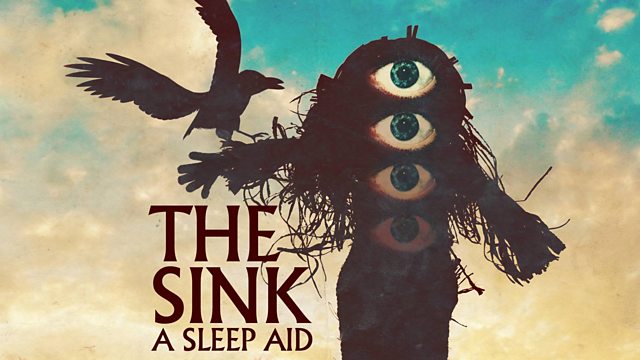
I have saved the best till last, and it is an odd one. Written by Natasha Hodgson and with creepy narration by Alice Lowe, it presents itself as being a kind of programme to help people sleep, combined with some kind of semi-scientific study of people's dreams. So it starts off with Alice Lowe talking about how worried she is about how the listener hasn't been sleeping too well lately and how we should sit back and let her help us, but then it switches into what seems to be re-enactments of people's dreams. At first these are bizarre but comic, with the kind of surreal logic found in real dreams. A writer finds himself being berated by an interviewer after he has written a book so big that it won't fit in his house. A couple go for a picnic in the woods in an attempt to save their troubled relationship but then encounter a man who has got stuck while taking part in a fun run in a "Sonic the Hog" costume; their efforts to help him trigger the destruction of their relationship. And so on. But the mood begins to shift, with things becoming noticeably more ominous when one guy asks another, "Did a bird man ever come to your school?" After that it becomes impossible to miss all the references to birds peppering the various dreams.
What it's all actually about remains a bit arcane but the journey is a fascinating one. And I find myself thinking that I should give it a re-listen while lying in bed falling asleep, letting it seep into my dreams. Maybe you should do that too, but be careful of the Bird Man.
Did anyone else ever have the bird man come to their primary school? WITH THE PHOTOS OF OWLS AND HUMMINGBIRDS? AND WE BOUGHT THEM. SO MANY.
One great thing I discovered subsequently is that back in 2012 Natasha Hodgson tweeted about how the Bird Man did actually come to her primary school. So clearly this drama was a long time hatching, making her an obsessive hero for our sleep deprived times.
Now we are in late summer, which means that the Glastonbury festival took place nearly two months ago. As always, many people watched TV coverage of Glastonbury while muttering sagely that they'd much rather enjoy the performances from their living room than actually attend the festival. Good for them. It does fit with our hypermediated age that for many people their preferred mode of engagement with the festival is one that sees them looking at it on a screen. I nevertheless remain committed to the controversial belief that if you are doing Glastonbury by watching it on television then you are doing it wrong. Actually I would go further than that. You don't "do" anything by watching it on television. To actually do Glastonbury you need to be sleep deprived, caked in at least three days worth of dried-in sweat and have no clothing items that don't reek of woodsmoke or second hand joints (admittedly I know several people who regularly manage this from the comfort of their home).
That said, it's a while since I actually attended Glastonbury. But as I don't have a television I have not been watching live performances onscreen either. However, on a visit to my parents shortly after the festival concluded I caught a broadcast on the BBC of Glastonbury highlights: one tune from a succession of artists across a range of stages. I'm assuming they cherry-picked the best bits or biggest hit from each performer (though why anyone thought we needed to see Primal Scream lurching through "Jailbird" is anyone's guess: it was like a horrifying flashback to that period in the 1990s when every music magazine came with a tape of the song), but in some respects the format is a bit unsatisfying, as there is no sense of a set building. That'll teach me not to either go to the festival or have a television to watch the live coverage.
One thing I found odd about the BBC's Glastonbury coverage was how it was filmed and edited. We got a lot of fast cuts and camera shots that seemed to be taken from the stage itself or just in front of it, with performers often being shown in close-up. For me an effect of this was that the footage looked less like something taken at a festival or live performance and more like something shot in a studio, as though Glastonbury was just an extended episode of Later With Jools Holland. The crowd did feature in the occasional reaction shots, but shots showing the stage from the audience's perspective were rare. Once I noticed this it started grating on me and I found myself comparing it all unfavourably with Stop Making Sense, with its many long shots from the audience's perspective giving viewers far more of a sense of what it would be like to actually attend the concert.
The acts themselves… well they were variable. Megan Thee [sic] Stallion (not actually a stallion) had a certain "put it away love, you'll have someone's eye out" quality to her performance; some may have found this a distraction from the music, which may have been the intention. My mother felt that Wet Leg looked like escapees from the 1970s while I found myself thinking that maybe I should stop watching videos of them performing "Chaise Longue" and just wait till I see them myself in November. Paul McCartney doing "Band on the Run" with Dave Grohl was a bit underwhelming, but I wondered if that might be a product of seeing it on its own as opposed to the full set (McCartney was great when I saw him at Glastonbury in 2004, at a point when he was only starting to be cool again). I continue to not really get St. Vincent, for all that on paper her brainy lady pop music sounds like something designed for me personally. Billie Eilish's song meanwhile was pretty entertaining in a chunky kind of way, reminding me that I should probably engage more with her music as part of my plan to get down with the kids. I also liked Olivia Rodrigo's tune enough to consider taking a punt on her album.
The thing I saw that most had me wishing I was there was Lordé doing "Solar Power". If you timed your enhancements well then the tune's transition point would be the most epic of moments. The art direction of the staging was also stunning, with Lordé's hair dyed blonde to match the yellow costumes of her attractively laid out musicians and a stage set that for "Solar Power" looked like something from Philip Glass's Akhnaten. Ms Lordé also has this great wriggly dance (which I understand to be controversial, as some consider it to be a sign of how she is keeping it real, while others see her un-choreographed dancing as amateurish and an indicator that she is not serious about her art).
Beyond that I found Diana Ross doing "Upside Down" interesting on a number of levels. The security people at the front doing a formation dance that they had obviously learned five minutes previously was kind of endearing. Ross herself was far less aloof than I was expecting, as I had the idea she was one of those diva-like figures who find audiences a squalid inconvenience. Instead she seemed very relaxed and incline to crack jokes and engage with the crowd, not really coming across as the glacial "Miss Ross" I was expecting. More power to her.
I'm sure there were lots of other good acts at the festival whose music was not included in the highlights programme. Overall though I was struck by many mainstream pop acts there were playing. That was increasingly the case when I was still going to the festival and it's not an intrinsically bad thing, as not all mainstream pop music is bad. But it does feel a bit like the festival is losing or has long ago lost any countercultural edge it might once have had. Much of this I suspect is a product of the festival's televising. TV brings in a pile of money but it does mean you're going to have to programme acts that will appeal to the people at home. I wonder if that mean that the eccentrics who padded out the bill at the smaller stages no longer get a look in. No Joolz, Attila the Stockbroker, or John Otway: no credibility.
I'm also struck by how much bigger the festival site is now, which surely means that there are a lot more people attending than there were in my day. That again must impact on the festival's atmosphere, making it more mainstream and less countercultural. Oh well.
A Ritual Sea are Dublin's very own Hiberno-French gothgaze sensations and this February concert saw them launching their debut album. When I arrived a support act was already onstage, a woman who played a mysterious stringed instrument (later revealed to be a balalaika) while she sang and fiddled with electronics. I think at least one song was about her cat. There was a definitely appealing quality to her sound but it was a real struggle to find out who she was, with people I asked not knowing or not remembering the name she was trading under, or else they did know and said it to me but the ambient noise meant I was unable to pick it up. Eventually research revealed that she records and plays as Cormorant Tree Oh and is on Bandcamp ( https://cormorant-tree-oh.bandcamp.com ). I recommend checking her out.
A Ritual Sea themselves I have seen a few times supporting other people and once playing as headliners in a small venue with problematic sound. This was my first time seeing them in all their glory and they have really flowered into an impressive live band. On record they tend towards the ethereal end of shoegaze but live they are a good bit more muscular, with a lot of this down to the powerful rhythm section. However the shimmering guitar action keeps the shoegaze faith, with the delightful interlocking tones of guitarists Florian Chombart and Nina Ruminska counterpointing the vocals of Chombart and Donna McCabe. Ruminska's playing in particular is stunning; she seems to be one of those people who are ridiculously mutli-talented, as investigation reveals her to be a gifted creator of visual art.
So this was a great concert and the crowd responded in kind. However, there was a note of sadness to proceedings. The band had already said that this would be their only concert this year, but now from the stage McCabe intimated that it could be their last concert ever, without going into the reasons for this possible ending. This struck me as most unfortunate. After releasing their likeable album last year and then delivering such a strong live performance it's hard not to see A Ritual Sea as a band really hitting their creative stride, so it would be a shame if they were to disappear just as they are showing such promise.
Join me in a journey back to February for what was my first proper gig post-lockdown: you know, a gig where you stand up and buy drinks from a bar and people dance a bit and stuff. But unfortunately I found that I had largely forgotten how to do gigs properly, crucially failing to recall that you really don't want to be bringing too much clothes along with you. It's better to be a bit chilly while walking to the venue than stuck with a mountain of stuff at it, particularly as it turned out that either the Grand Social was not operating a cloakroom or else had decided to carefully hide it away where none might find it.
LoneLady you will recall is the edgy electronic retro dance music sensation from Manchester whom I discovered via Tim Burgess and his listening parties (notably the one for her brilliant 2021 album Former Things). But before her there was a local support act: a chap called Chósta, who turns out to be from the picturesque locality of Donabate, which is the next place along on the train from where I grew up but somewhere I have never really explored properly, making it a zone of mystery and danger (accentuated by it being adjacent to an enormous but now largely derelict Victorian asylum). Mr Chósta was one of those laptop guys, so I was expecting him to be a bit boring, but actually his set was very enjoyable in a low key glitchy electronic kind of way. Consider checking out his material on Bandcamp: https://chosta.bandcamp.com
Although her records are all her own work, LoneLady (real name Julie Campbell) was playing with two other people: James Field, who bashed away at electronic drum pads while standing up, and Kendra Jane Frost, who played electronic keyboards and other instruments. The performance was great but I think maybe the other attendees were a bit like me and so were trying to remember how to do gigs. Audience responses seemed a bit muted, only really ramping up by the concert's latter stages. By the time members of Dublin's LoneLady fan community had remembered how to enjoy themselves it was time for LoneLady and her friends to bid us farewell. Still, it was great hearing the edgy electronic tunes from Former Things live, together with the tracks from her earlier albums, at the time still new to me. I hope that Ms LoneLady returns to these shores now that we have all remembered how to do concerts.
These are concerts I went to back in January and February. They were on in the Hugh Lane Gallery and because Covid-19 was still a big deal then they involved both a degree of social distancing and mask wearing, which was a bit weird.
The first concert was by William Butt, who is a cellist. I had seen him previously at those greatly missed Santa Rita concerts that the Ergodos lads had put on. He is an impressive performer, with the physicality of his playing being particularly striking if you are able to see him close up. For this concert he was performing two pieces by Bach (Cello Suite no. 1 in G and Cello Suite no 4 in E flat). I don't really have much to say about this but that it was great, the perfect combination of musician and work. But sadly I was a little bit puppy tired and may have nodded off at one or two points.
And the concert can actually be watched on YouTube, should you want to see William Butt in action.
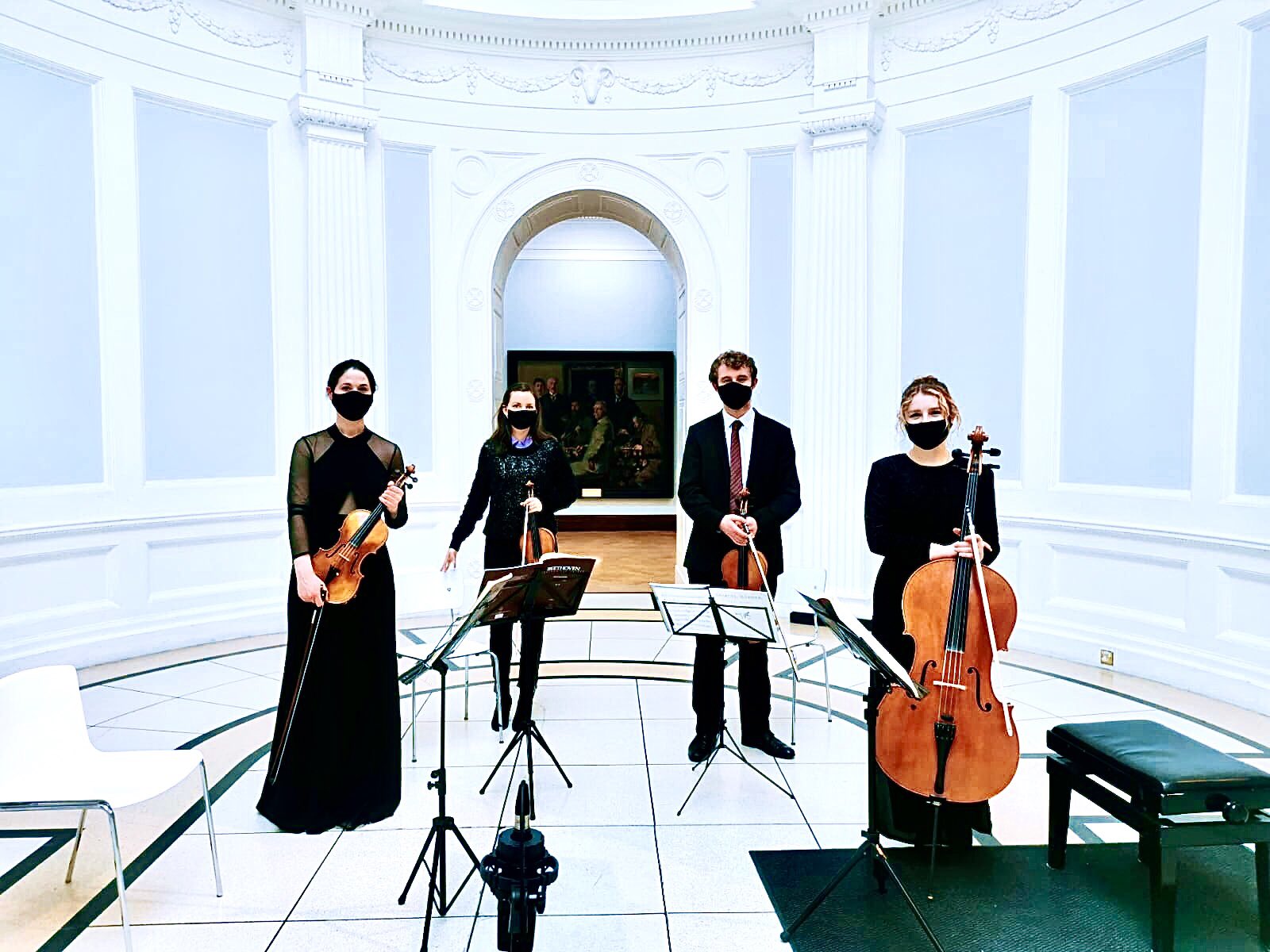
For the second concert I made sure to knock back an espresso beforehand to ensure there would be no embarrassing sleepy moments. This time the performers were the Spero Quartet. They are a string quartet made up of young people, three of whom are women. Like a rock band they were travelling around Ireland playing this show, with the Hugh Lane concert being the final date of the tour, which meant there were some hi-jinks. The programme was an adventurous one, with the initial Mozart Quartet in D major being the most conventional piece on offer, a genuinely beautiful piece that would have been worth the price of admission on its own.
Then there was Satellites, a three movement piece by composed by Garth Knox, who introduced the piece before the Spero people played it. The first part of this, "Geostationary" was based around the idea that a geostationary orbit is in constant motion while remaining fixed relative to a point on the Earth's surface, with the music attempting to reflect this. More easily recognisable was the second section, "Spectral Sunrise", which was inspired by how people on the International Space Staton experience some 16 sunrises a day, with the music evoking several of these from their first tinges to the full on appearance of the sun (and then because why not, an attempt to render in music some astronaut doing a space walk). The last section of Knox's piece, "Dimensions", was a musical exploration of multiple dimensions, but sadly only the three spatial dimensions. Part of this was done by having the players use their bows in non-standard ways, including as whips (on the air, not each other).
The last piece was Shostakovich's String Quartet no. 9 in E flat major, a late composition of his from 1964. Things were finally going well for the composer at that point. He was finally basking in some sustained official favour and no longer in danger of being sent to the Gulag for making music Stalin deemed tuneless. And also he was now happily married to his third wife, Irina Supinskaya. For all my love of Shostakovich, his string quartets are a bit of a blind spot for me, but it was interesting how there was a bit of an edge to this piece, with it not having the complacent feel one might expect from the work of a composer whose life was now one of relative contentment. The piece contrasts interestingly with the ones from Mozart and Knox: less avant-garde than the latter but edgier than the former, with its composer's characteristic refusal to just serve up beautiful music typifying his 20th century modernist approach.
At last I review the album everyone has been talking about. But first a quick recap for readers who have not been paying attention. Wet Leg were founded by two women from the Isle of Wight (of all places), Rhian Teasdale and Hester Chambers, who recruited a bunch of blokes to pad out the sound. On the back of two brilliant singles last year (the languid pervathon "Chaise Longue" and the truly epic "Wet Dream") they garnered a lot of attention, leading to a considerable build up of anticipation before the release of this, their debut album.
So, what's it like? If you've watched YouTube videos of Wet Leg playing live you'll have this sense of Teasdale and Chambers as rofflers, and this comes across on record too, mostly in Teasdale's vocal delivery. But the odd point of comparison in her singing style for me is with Cate Le Bon, with tracks like "Oh No" displaying a particular debt to the Welsh siren.
I have seen it suggested that the album is in one respect reminiscent of Elastica's debut, in that there is a good bit of filler once you get away from the big tunes. Aside from being offended by this calumny towards the wonderful Elastica album, I'm not sure it is entirely true of this one either. Definitely it is the big tunes that gather my attention here, to the extent that it is hard not to just keep playing "Wet Dream" over and over, but the other tunes have a heft to them too. I particularly like "Loving You" as a sad lovesong of the "I am so not over a terminated relationship" variety.
But for me this is the "Wet Dream" album. God that is such a tune. I think the song would be a hit on the back of the music alone, with its propulsive rhythm, call-response vocals, handclaps, and mega drumming driving things forward, but the vocals really hit it out of the park, both Teasdale's lyrics and her delivery. Again for the benefit of people who have been living under a stone, this sees her describing in lurid detail an erotic dream that the listener has been having about her, in tones suggesting an ever increasing level of shock and disgust at what the listener has been imagining her doing and having done to her. The positioning of her authorial perspective as somehow looking in on someone else's private imaginings is wonderfully meta.
Overall this is a fun record that I love listening to. It leaves me with a sense of what could be magically achieved if more no-hoper indie bands were to suddenly develop killer tunes and topnotch production.
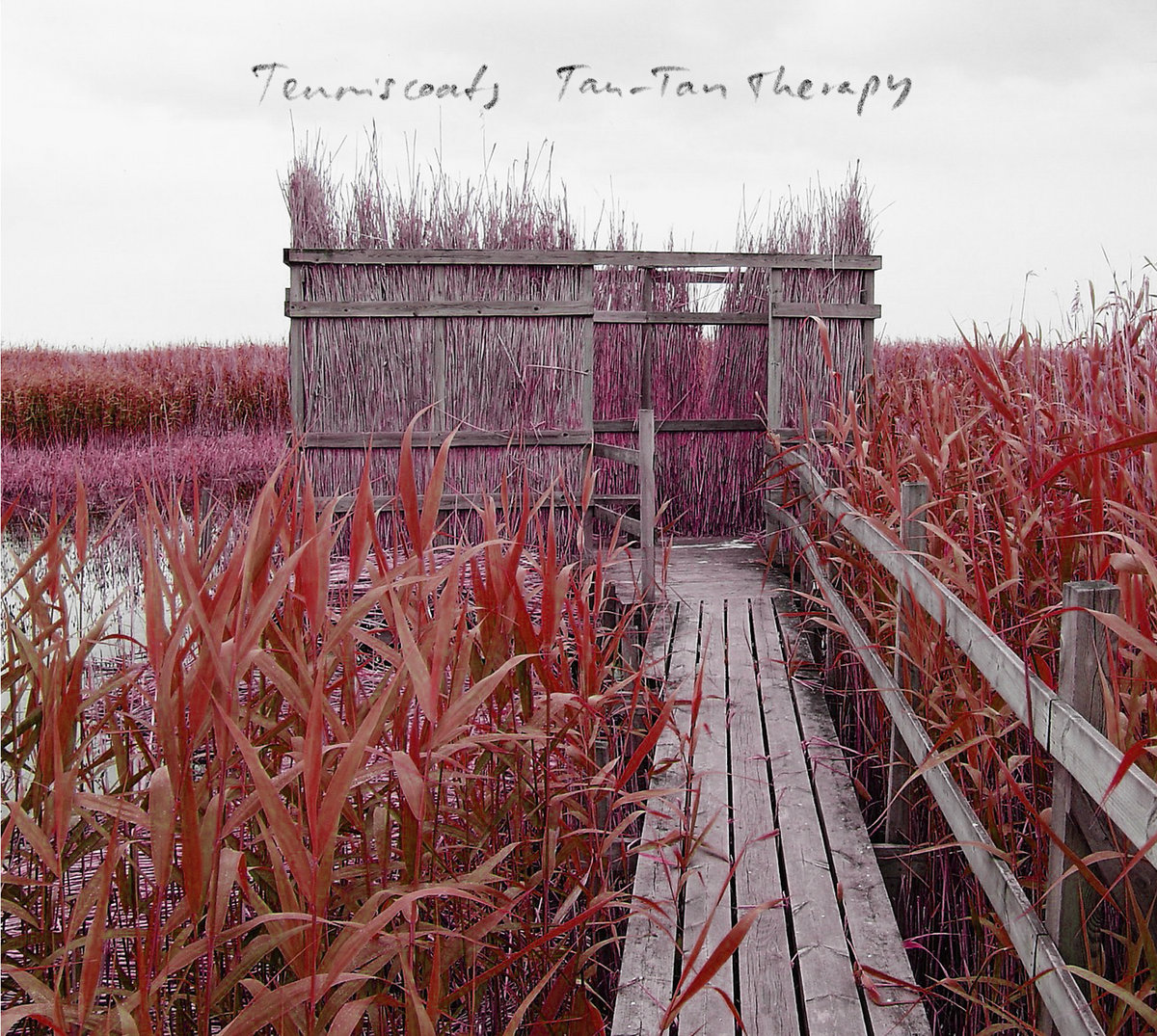
TenniscoatsTan Tan Therapy (2008)
Readers will recall that I liked Tenniscoats when I saw them at Le Guess Who last November. My beloved liked them too, so I decided to get something by them for her as a Christmas present. The problem with this plan is i) Tenniscoats have a lot of records and ii) no shop in Ireland stocks anything by them. Having to embrace the horror of online ordering meant also that I had to seek some straight dope on the best introductory Tenniscoats record from a friend who knows about these things. He also checked out with a bud who is some kind of Tenniscoats superfan. They both included this album in their key recommendations list. And so I came to order this CD all the way from Japan. And despite my leaving it very late to order, it still arrived in time for Christmas. Well done Japan.
In case you've never heard any Tenniscoats music, this is basically collection of quiet gentle tunes that make for a perfect antidote to the hustle and bustle of the world that surrounds us. It is not solely the product of Tenniscoats' own labours, being a collaboration with a band called Tape who are apparently from Sweden. However I know so little about Tape that I cannot really say where Tenniscoats end and Tape begin. I think the vocals are all Saya Ueno from Tenniscoats but I can't really tell with the music. I think Takashi Ueno from Tenniscoats only really plays guitar, so perhaps the drums and advanced keyboards are by Tape. Anyway, it's all good, give it a listen, you may like it. "Uta ga Nainoni" [Like no songs], the album's second last track is a bit of a stand-out, Saya's non-verbal vocals appearing over music that flows like a river.
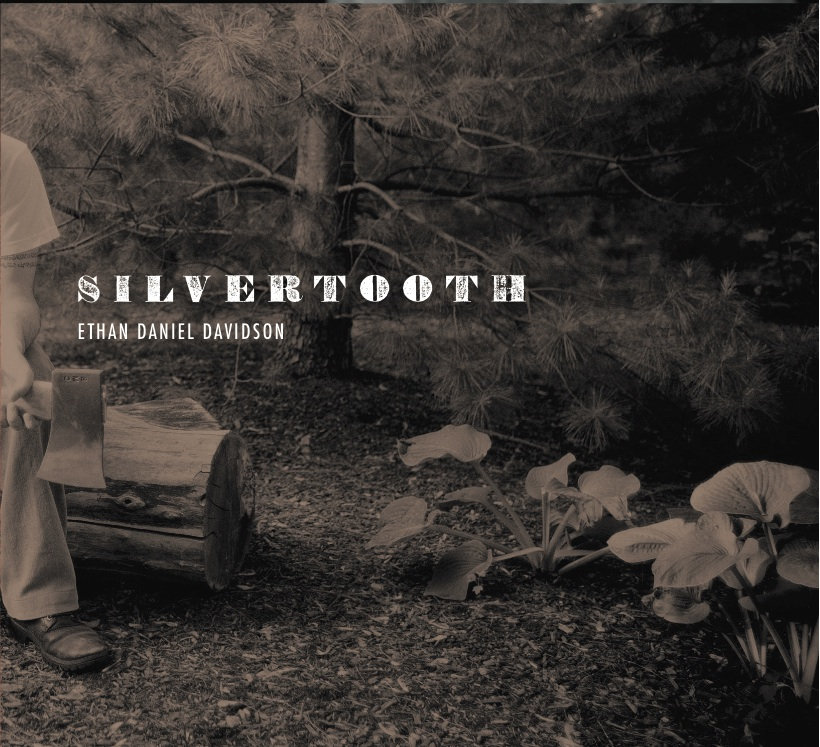
A bit of an odd impulse purchase this one, except it was free because Mr Davidson is so against capitalism that he makes it impossible to pay him any money for his wares. I downloaded this from Bandcamp because Bernard Clark was bigging it up on Lyric FM's Blue of the Night. Blue of the Night is an odd programme, appearing on the classical music station of our national broadcaster. Bernard Clarke is the presenter of Blue of the Night. He previously presented Nova, a contemporary classical music which was not to everyone's taste. It was denounced in the Irish Senate as "an hour or two of unmerciful, thumps, bangs, whistles, squelches, belches and God Almighty knows what" and ultimately the show was cancelled.
Blue of the Night is a more gentle kettle of fish. It runs from 9.00 pm to midnight Monday to Thursday and is meant to be a gentle wind down programme, except that Clarke can be a bit wayward, having a tendency to go off on one by serving up a Led Zeppelin triple play or else treating listeners to some reggae tunes. Anyway, one evening he was going on about how amazing this Ethan Daniel Davidson guy was and being really impressionable I went and downloaded this album from Bandcamp (where it is available for free, as previously mentioned). And you know, it's fine, broadly blues based, but not really my thing and frankly I can't see why anyone would get that excited by it either, though of course listening to it as I write this I am thinking "Mmmm, that 'I See Satan Fall Like Lightning' song has a good beat".
This year the World Science Fiction Convention (i.e. Worldcon) is taking place in Chicago. I am not going, but because I voted in site selection I have a supporting membership of the convention, which means I get to vote in this year's Hugo Awards. That means I receive the voters packet: digital copies of most of the works that made it onto the ballot. But before the packet was distributed I went and read all the finalists in the short story category, as these are all available to read online. To be honest, not all of these are great, but one really stood out for me, that being Sarah Pinsker's "Where Oaken Hearts Do Gather". This is presented as though it were the talk page of Lyricsplainer, one of those websites like Mudcat where people discuss the lyrics of folk songs. In the story the people are discussing the obscure folk tune "Where Oaken Hearts Do Gather", whose lyrics can also be found in both the Child and Roud collection of ballads. The song tells of a man and woman meeting together for a tryst in the woods, where oaken hearts do gather (that line is repeated throughout the song). There is an element of foreboding, with the reader perhaps fearing that the man will have less than noble intentions, but things take an unexpected turn and it is the man who suffers a terrible fate. The lyrics go on to suggest that his fate is a ritualistic one and that these events will be repeated when other men find themselves lured into the woods, where oaken hearts do gather. What exactly is happening here remains oblique, but that only adds to the sense of unease the lyrics generate.
Meanwhile, in the Lyricsplainer comments people there are discussing the song and making the case for particular variants of the words. We also see the kind of feuding and trolling that bedevils the online world. But buried in among all the chatter one of the commenters starts talking about how he thinks the song is set in a specific place in England, which he decides to find for himself. As the discussion progresses he posts again about how his inquiries are progressing. What happens next may not surprise you; in the best tradition of folk horror, the reader twigs where the story is going a good bit before the protagonist does. That does not stop the ending from packing a considerable punch.
You can read the story for yourself on the website of Uncanny magazine here:
https://www.uncannymagazine.com/article/where-oaken-hearts-do-gather/
Sarah Pinsker meanwhile is a musician as well as a writer. Her band The Stalking Horses have recorded their own version of the song. It would not spoil your enjoyment of the story if you listened to this first, or vice versa.
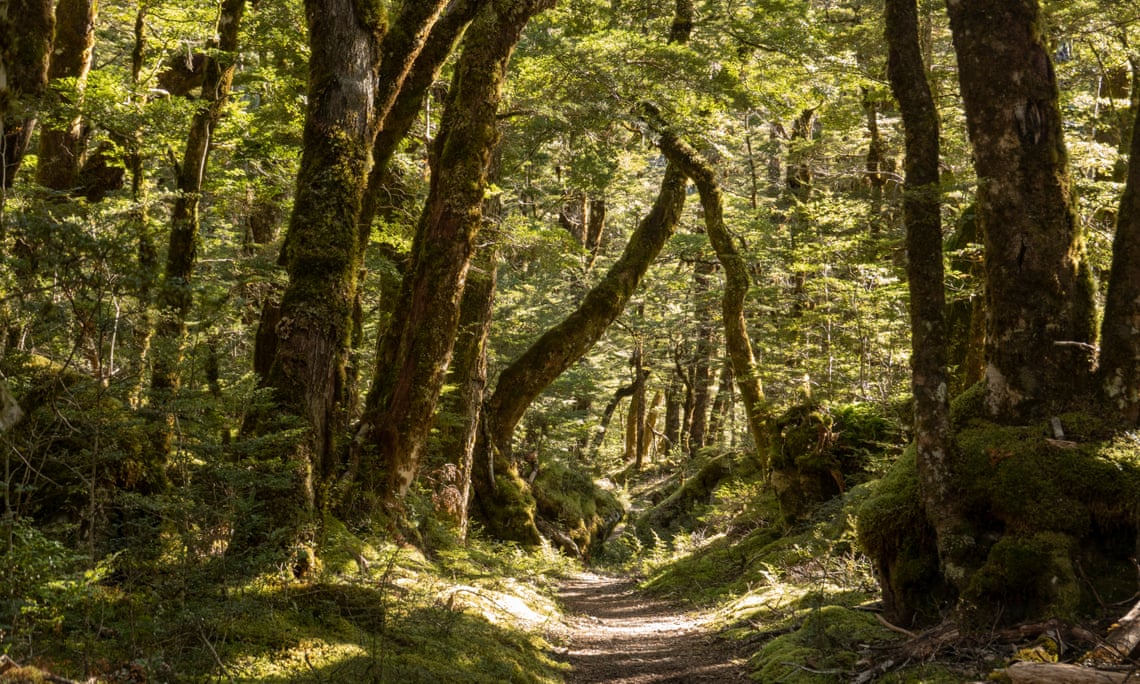
image source (Guardian: "Getting back to nature: how forest bathing can make us feel better")
Previously I wrote about my favourite new tunes of 2021. Now let me talk you through some tunes from before 2021 that first crossed my orbit in that year. I originally compiled this as a CD-R and now I have made YouTube and Spotify playlists for these, though not all of these tracks are available on those platforms.
Here are some quick notes on the tunes, with information on where I heard them.
Silver Apples "Oscillations" (1968) [Silver Apples' untitled album]
I feel the most guilty about including this one as it is not completely completely new to me: I have heard it around and possibly even seen a version of Silver Apples live. But I had not previously owned a copy of the album and so had not had a chance to listen to this odd piece of music that seems to prefigure all kinds of cool later music from later years. Ironically I still have not listened to it that much as cat name of Billy Edwards does not like it.
The Silver Apples album is available in all good record stores.
Annette Peacock "Pony" (1972) [v/a Cafe Exil: New Adventures In European Music 1972-1980 (2020)]
I do not know very much about Annette Peacock and would not have heard this track if I had not finally knuckled under and bought the Café Exil compilation. It is an enjoyable piece of 1970s weirdo music, somewhat electronic but only round the edges.
Café Exil is available from all good record stores. I have yet to see an Annette Peacock album in the wild.
Camizole "Camizolemania" (1975) [Camizole 1975]
This is the product of a French electronic prog outfit. I am unclear as to whether they are actually famous or just well-known in the pages of Frank's APA, the journal of record for sonic explorers. The music is faintly ominous and lacking in vocals. In an alternate universe these guys are massively successful and no one has heard of Tangerine Dream.
Lynsey De Paul "Sugar Shuffle" (1976) [v/a Bob Stanley Presents 76 In The Shade (2020)]
This is from Bob Stanley's compilation of songs evoking the scorchingly hot summer of 1976. Ms De Paul's languid sounds conjure up a dance floor of couples fearing that their erotic heat might lead to a mass outbreak of spontaneous human combustion.
76 in the Shade is available from all good record shops.
More funny electronic music from days of yore, this sees Glenn-Copeland in a relaxing mystical mode. It's a bit "hello trees hello sky" but nevertheless makes for a relaxing listen.
The whole Keyboard Fantasies is worth a listen. Beverly Glenn-Copeland did one of those Tim's Twitter Listening Parties for it.
Klimperei "Le Chat du Cheshire" (2000) [Alice Au Pays Des Merveilles]
Klimperei "Qui A Derobé les Tartes?" (2000) [Alice Au Pays Des Merveilles]
I had to get the Alice Au Pays Des Merveilles record after one of my Frank's APA buds reported a daughter describing it as "disturbing". Conceptually this is like something from the 1970s, when releasing an album of songs based on Alice's Adventures in Wonderland would have seemed like a perfectly normal thing to do, but instead it is from 2000 and is in French. It has a certain sing-song quality to it, like it is music for children, except this is what you play to children if you want them to grow up to become serial killers.
Damon & Naomi "A Second Life" (2005) [In the 21st Century (2019)]
Some people tell me that Damon & Naomi's post Galaxie 500 work is fundamentally inessential. Listening to this gently likeable tune suggests otherwise.
The Anchoress "One for Sorrow" (2016) [Confessions of a Romance Novelist]
I started to explore The Anchoress's back catalogue, with this poppy number from 2016 being one of the more striking tunes from her album of that year. The lyrics share concerns with some of the more striking tunes from 2021's The Art of Losing.
The Sisters of Mercy "Jolene" (1983) [BBC Sessions 1982-1984 (2021)]
Another false entry as I previously had this on a cassette, but as that obsolete device long ago made its way to landfill it seemed reasonable to pick up an officially released collection of the songs the early Sisters played for various BBC radio programmes. This is of course a cover of the Dolly Parton classic, either played straight or with tongue so firmly in cheek that it makes no difference.
Available from all good record stores.
Maria ja Marsialaiset "Kirjoita Postikorttiin" (2017) [Pysy Hereillä]
"Are these people friends of yours?" one might ask, in this case receiving a partial "Yes", in so far as one of these Finnish ladies is in fact one of buds from the long defunct Bowlie forum. The tune is a cover of the Shocking Blue classic "Send me a postcard", but with more rock.
Confidence Man "Try Your Luck" (2018) [Confident Music for Confident People]
It can't be long before I get sick of Confidence Man but I aim to enjoy the ride as long as possible. This opener to their 2018 debut album sets down the template for what I think of as the Confidence Man sound: Janet Planet singing about how amazingly cool she is over dance floor beats.
Gemma Dunleavy "Up De Flats" (2020) [Up De Flats]
Gemma Dunleavy is an Irish pop music person. Here she sings about her pride in her origins in the Sherrif Street flats.
Death Valley Girls "Under the Spell of Joy" (2020) [Under the Spell of Joy]
This songs comes from the album of the same name that was an impulse purchase following a Twitter listening party where they gave good tweet. This is ritualistic psych-influenced music from their album about turning positive thinking into arcane magic.
The Anchoress "Wicked Game" (2020) [Bandcamp download]
Ms the Anchoress sings one of the saddest of all love songs. But it's no longer on Bandcamp and is also not available in any shop or streaming platform, though there is a short excerpt on Facebook.
Ennio Morricone "Un Uomo Da Rispettare" (1972) [Crime and Dissonance (2005)]
People were telling me that Ennio Morricone's music is worth exploring beyond the Spaghetti Western soundtracks, so I picked up a digital copy of this highly recommended compilation. The album features various tunes from Italian crime films of the Bastardo Policia variety, with Un Uomo Da Rispettare being a crime drama starring Kirk Douglas (I have not seen it myself but I am guessing they dubbed his dialogue (because it is an Italian film from the 1970s, when they dubbed everyone's dialogue)). It's a monster tune, 11 minutes of intermittent trumpet and ominous shuffles based around a plaintive piano sequence. God only knows how they use it in the film (I can imagine it being a bit on the long side for film viewers) but it makes for an amazing listen on record.
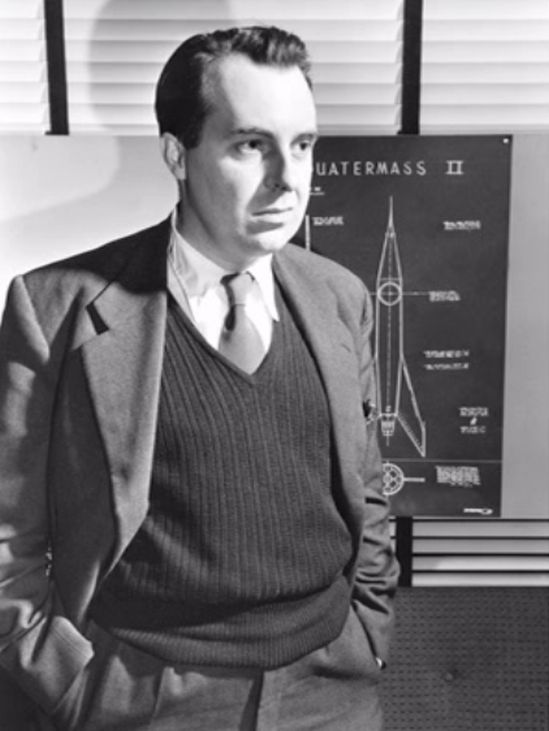
I went to London for a celebration of the centenary of the birth of screenwriter Nigel Kneale. Organised by Jon Dear, with the glamorous assistance of Toby Hadoke, Howard David Ingham, and Andy Murray, this was a day of screenings and panel discussions in the Crouch End Picturehouse.Nigel Kneale is not a household name by any means, but in his long career he produced striking work for television and cinema. He started writing for television in the 1950s, when TV drama was starting to become a thing, and while he initially wrote all kinds of stuff it is his science fiction and horror writing that he is remembered for. His best known works probably being the three 1950s series of Quatermass (a kind of proto-Doctor Who, except for grown ups), though he was still writing into the 1990s.
The first panel looked at Kneale's early work with the BBC, which started with literary adaptations and then moved on to The Quatermass Experiment in 1953 and its follow-up serials in 1955 and 1958, as well as his adaptation of Nineteen Eighty-Four in 1954. These were the event television of their time, with questions being asked in parliament about Nineteen Eighty-Four and the streets reportedly emptying when Quatermass was on, though of course this was also a time when there was only one British TV channel. The details of television's early years brought up the panelists were fascinating. At that point television, even drama, was still mostly broadcast live; pre-recording was only used for material shot outside, which was still a bit of a novelty. Drama was also conceived in very theatrical terms, with Reginald Tate, the actor playing Quatermass in the first series, taking a bow at the end of the last episode.
One of the panelists had looked up what was actually shown on the BBC on the day the first episode of The Quatermass Experiment was shown. Initially there was alternating coverage of Royal Ascot and Formula One motor racing, then a short piece of children's programming, more Ascot and motor racing, and a news reel, all interspersed with interludes when nothing was being shown. And then a warning from the announcer that the following programme might not be suitable for children or those of a nervous disposition, before the ominous tones of Holst's "Mars" brought us into the world of Professor Quatermass and his experiment.
Another point made by the panelists (and one repeated through the day) was that for all Nigel Kneale's best remembered work dealt with science fiction and horror themes, he never thought of himself as a genre writer and was indeed very dismissive of science fiction. Partly that derived from his having a somewhat limited sense of what constituted science fiction, seeing it as something characterised by the US pulp tradition and screen material inspired by it. Science fiction fans will rightly grumble that the genre has so much more to offer. And yet if you look at what passes for screen science fiction now you see that it is dominated by films in which people in stupid costumes punch each other or by formulaic Trek Wars crap that is cosily familiar rather than in any way challenging. It's like the pulp tradition has taken over science fiction, so maybe Kneale was right to dismiss the genre entirely.
This discussion preceded a screening of "Contact has been established", the first episode of The Quatermass Experiment. Professor Quatermass is the director of a British space programme that has sent a manned rocket into orbit, but something has gone wrong. Eventually the rocket crash lands in south London, but inexplicably there is only one of the three astronauts left inside the capsule.
One thing that struck me with this episode was how the shadow of the Second World War hangs over Kneale's early work. After the rocket lands on a residential street displaced locals reference the Blitz, with one confused woman seeming to think that the V2 rockets are back. The later Quatermass and the Pit sees people finding something during tunnelling that they initially think is an unexploded German bomb (that drama's nightmarish climax sees people consumed by an urge to exterminate the different, which also evokes the horrors of the Third Reich). And Kneale's Nineteen Eighty-Four feels very much like it is set in a world where the Second World War never stopped (which I think was Orwell's intention but it is maybe less obvious to us when reading his book). I suppose in the 1950s the war was still very recent, with some food rationing still in place when the first Quatermass episode was broadcast. That the war, or something like it, could start up again must have been a fear forever lurking below the surface. The depiction of a street destroyed by a rocket must have triggered uneasy memories on the part of many viewers (and for all the studio bound nature of the first Quatermass episode, the ruined house set is surprisingly effective).
"Contact has been established" was followed by Tom Baker reading Kneale's short story "The Photograph"; the story is from much further back but this was broadcast in 1978, when Baker had only recently departed from Doctor Who (ironic in that Kneale thought Doctor Who was rubbish but also resented how its producers lifted his plots and themes). After a short break Jon Dear talked to Douglas Weir of the BFI about the restoration of Kneale's Nineteen Eighty-Four (out now (finally) on DVD and Blu-Ray); having seen that some years ago at Loncon I am looking forward to catching it again in all its restored glory.
Then we had a panel on Nigel Kneale in the 1970s. This was Kneale's folk horror period, with ancient evils supplanting the dangers of science gone wrong in his work (though arguably the danger of chthonic terrors from the past was also a theme appearing in some of his earlier work, notably Quatermass and the Pit, while the 1970s still saw Kneale engaging with science fiction themes in the likes of The Stone Tape and the final 1979 Quatermass series). By now of course television was a much more mature medium, broadcast in colour with drama no longer going out live. And there were more channels in Britain (three, to be precise). TV was also edgier: for all that Mary Whitehouse was clipping its heels, much more could be shown now than in the 1950s. There was an interesting point made by Una McCormack about how not all of this lack of inhibition in the 1970s was necessarily great, with the television and cinema of the era sometimes seeing sexism slide into outright misogyny (think about how common sexual assault of women is in notable works of the decade); she talked of Kneale acknowledging this and reacting against it in the likes of Murrain or the Beasts episode "Special Offer". You could see something similar in The Stone Tape, where Jane Asher plays almost the only woman in a drama otherwise featuring a lot of often boorish men.
That was followed by a screening of Murrain, originally broadcast by ITV as part of the Against the Crowd anthology series. The film is based on two conflicts: the young vet representing science and modernity versus the superstition of the country folk, and then same superstitious country folk versus the eccentric old woman they believe to have cursed them. It makes for disconcerting viewing as it is never quite clear where your sympathies are meant to lie. Well, the vet is always operating with the most noble of motives, but beyond that it gets more complicated. Are the countryfolk bad because they are persecuting an old woman for no crime other than being a bit odd? Or is the old woman actually an evil witch who has brought a curse down on her neighbours? Or is she a woman of power who is merely striking back against her neighbours' persecution? The drama also retains an ambiguity as to whether the old woman is actually possessed of sinister powers, or whether the various ailments afflicting those who have slighted her are psychosomatic (which could be the case even if the old woman thinks she has cursed them). On the other hand, the farmer's pigs are actually suffering from a mysterious sickness (the murrain of the title), something that for them is unlikely to result from a belief in witchcraft.
Murrain is also surprisingly funny. Not funny all the time, but it has its moments. Like when the vet is in the village shop trying to buy stuff for the old lady. He asks the shopkeeper if she has any olives or chorizo; she gives him a look suggesting there is not much demand for such fripperies in these parts.
Murrain also gives us the great phrase from the vet, "We don't go back", with which he asserts his confidence that science will always provide the answers and that the old ways of superstition have nothing to offer us. The phrase gave Howard David Ingham the title for their book on folk horror, because the whole genre is largely based on the idea that maybe we will go back actually. By the end of Murrain even the vet's confidence in science seems to be shaken, for all that the drama's climax remains ambiguous.
That was followed by a panel on Kneale on film. For all that he wrote primarily for television, there are a good number of films based on his work or else scripted by him. Hammer made films of the three 1950s Quatermass series, the first two in the 1950s while Quatermass and the Pit (the best by a considerable margin) did not appear until 1967. He wrote some other films for Hammer (Abominable Snowman and The Witches) as well as an adaptation of H. G. Wells' The First Men in the Moon (which seemed to be always on television when I was a child). And he did some non-genre work (including, surprisingly to me, adaptations of John Osborne plays). But it was hard to escape the feeling that film was not really his medium, with his writing for the big screen being littered with projects that were stillborn or ended up as compromised failures (e.g. Halloween 3). Cinema is a more difficult medium for writers, with the amount of money riding on a picture meaning that someone like Kneale was never going to be given the kind of free rein he had on television.
And then we had a short clip from The Quatermass Xperiment [sic], the 1955 Hammer film adaptation of the first Quatermass series. A little girl playing on her own meets what we know to be a man transforming into something else, in a scene that cannot but evoke a disturbing counterpart in the 1931 film of Frankenstein. The girl was played by Jane Asher, who started out as a child actor. We then had the excitement of Jon Dear interviewing Jane Asher (Jane Fucking Asher!) as an introduction to a screening of The Stone Tape, in which she played the leading role.
Asher lent the day an air of star quality and was an engaging and entertaining interviewee. I was particularly amused by how one of her anecdotes pivoted to "He was a lovely man" when she discovered that its subject (a Stone Tape collaborator) was still alive. I had to admire her making a long round trip to attend the event, particularly given that she did not stay for the screening (she mentioned hating seeing herself on screen, something which I understand is not uncommon among actors). I was also struck by how there was an accidental echo of The Stone Tape in her appearance in the Picturehouse. In the TV drama she plays almost the only female character, isolated in a world of blokey blokes, while the Nigel Kneale Centenary event was also a pretty male-dominated affair, both in terms of the audience and the programme participants (there were several manels and no panel with more than one female participant); hopefully this event went better for her than The Stone Tape did for the character she played.
And so to The Stone Tape itself. As with almost all the screenings, this was my first time seeing this, though it is something I have heard discussed at folk horror online events. It is a feature length TV play first broadcast on BBC 2 in 1972. It mixes science fiction and horror, being in part a ghost story but also attempting to offer a scientific explanation for hauntings (the idea that places can somehow record events that have taken place in them, now often referred to as the Stone Tape theory, for all that the idea preceded the drama). And the play itself is about recording, as its premise is that a team of recording engineers are setting up in a country house to research new audio technologies. The house being haunted presents some challenges, but when they hit on the Stone Tape theory they start thinking that this could maybe be harnessed into a revolutionary new audiovisual recording medium. But this is horror so things do not entirely work out.
I mentioned that Jane Asher plays (almost) the only female character in The Stone Tape, a computer programmer. The sexism of the era is a bit of a theme to this one, with the married head of the project in a problematic relationship with her, while she often finds herself patronised by her colleagues. But what is really striking about the drama is the racism. The researchers are in competition with Japanese rivals, and every time they are mentioned (usually as "The Japs") the characters switch into the kind of parody Asian accent and facial contortions that would disbar you from public office if a recording of you doing it were to surface. And also the company they work for, Ryan Electrics, is owned by an Irishman; he never appears but whenever he is invoked the characters switch into stage Irish accents. Yet it is hard not to see all this as signs of weakness rather than confidence. It must gall these arrogant Englishmen to be taking orders from the scion of one of their former colonies. And for all their mocking of the Japanese, it is stated fairly explicitly that unless the team achieve their sonic breakthrough the British audio industry will be soon wiped out by its East Asian competitors. The sexism might also mask a blokey unease that women are now moving into the workforce and occupying roles that would previously have been the preserve of men.
I should also mention that The Stone Tape features an amazing BBC Radiophonic Workshop soundtrack.
I was talking after the screening to one of my neighbours about how Ireland and the Irish people are a bit of recurring theme for Kneale. As well as Ryan, he mentioned how in Quatermass II the revolt against the alien invaders begins on St. Patrick's Day and is spearheaded by Irish labourers. And there is an Irish drunk in The Quatermass Experiment. Irish names show up throughout Kneale's work. I'm not sure what the significance of this might be. Kneale was not from Ireland and as far as I know he did not have ancestors from here; he may never have visited the island. But maybe this is not so remarkable: there are lots of Irish people in Britain after all, and they are an easy kind of slight other to represent.
And then we had an odd thing, a live performance of You Must Listen a lost Nigel Kneale radio play broadcast in 1952. Again it combined technology and hauntings, with an initially comical tale of crossed telephone lines becoming more macabre as the intruding voice is revealed to be that of a dead person. It had a lot of characters, who were performed by programme participants and a few professional actors (these were not mutually exclusive categories). I was impressed by how Mark Gatiss, probably the most famous participant, took a relatively minor role.
You Must Listen reminded me somewhat of Robert Presslie's short story "Dial 'O' for Operator", in some respects a similar tale of crossed wires and temporal distortion, though in other ways rather different. Presslie's story did not appear until 1958, so it is possible Kneale's drama planted the seed in his brain.
The final panel looked at Kneale's legacy. Stephen Gallagher compared Kneale to Stephen King, in that both writers revolutionised horror by placing it in everyday contemporary settings (sadly no one noted that we were attending an event in Crouch End, setting and title of one of King's most effective short stories). There was also reference to the disturbing prescience of his late 1968 TV play The Year of the Sex Olympics, which prefigures much of the reality television that blights our age, with something like Naked Attraction almost looking like it took Kneale's play as a template. Mark Gatiss mentioned that at the peak of The League of Gentlemen's success, he tried to push the BBC's controller to commission a new series from Kneale, still living at the time. However, he was told that there was no place on the BBC for someone whose career started before the invention of the remote control.
And then the day closed with a screening of Quatermass and the Pit, the 1967 Hammer film version of the 1958-59 TV series. Directed by Roy Ward Baker and with a strong cast including Andrew Keir as Professor Quatermass, James Donald and Barbara Shelley as palaeontologists, and Julian Glover as an army officer. Like much of Kneale's work, this combines science fiction and horror, with Quatermass's space research interrupted by the discovery of strange hominid remains during construction work on an extension to the London Underground's Central Line; that initial find is followed by ever more disturbing revelations about the true history of humanity.
It is a stunning piece of work, with the tension building as the awful truth is gradually uncovered and the drama moves towards an apocalyptic climax. Maybe the closing section of the film is ever so slightly rushed, but Kneale nevertheless did an amazing job condensing a TV series of more than three hours into a film of 97 minutes, with the propulsive energy of the narrative carrying the viewer along without leaving them time to ponder possible logical gaps in what they are watching. Much of the horror comes from people realising things or just having an idea at the edge of their understanding: there is an astonishing scene early on where a tough policeman comes close to a breakdown merely be viewing odd graffiti marks in an abandoned house. As one of the panellists earlier remarked, The Quatermass Experiment is about an alien incursion happening now while Quatermass II has an invasion that began a couple of years ago, but in Quatermass and the Pit the alien invasion took place five million years ago and basically succeeded, profoundly altering the course of human development but not in a good way (this a year before the publication of Erich Van Daniken's Chariot of the Gods).
The film also looks amazing. It has the saturated colour of Hammer films of the era but somehow this all seems more impressive in what was then a contemporary context rather than being in some backward corner of Mitteleuropa. Like other Hammer films Quatermass and the Pit is also happy to focus much attention on the good looks of a female lead. Yet for all that Barbara Shelley appears in a succession of stunning outfits, she is never presented as the kind of sexy lady seen in other Hammer films (for comparison see her performance in the latter part of Dracula, Prince of Darkness); the film's poster is somewhat misleading in this regard.
And that I suppose was that. I enjoyed the event a lot, with the combination of programming and discussion working very well. The material shown to us was particularly well chosen, presenting a fascinating overview of Kneale's career, building like one of his works to a terrifying climax, in this case Quatermass and the Pit. The panels were full of interesting people whose insights greatly improved our enjoyment of the screenings and had me thinking of more things to watch. Overall the event had the feeling of a cosy SF con (there was even a slightly redux Lally Wall). Looking back though I found myself thinking about two things the panellists did not really touch on. The first was Kneale's non-genre work, only really mentioned in passing. There was a surprising amount of this, including an episode of Kavanagh QC (his last work according to IMDB), an adaptation of Sharpe's Gold, the previously mentioned John Osborne screenplays, and an adaptation of Wuthering Heights (which admittedly is semi-genre). What I was curious about here is whether in his work on these non-genre pieces he still somehow injected some Kneale magic into proceedings, or whether they are essentially pieces of generic hackwork that could have been written by anyone. The other thing I found myself wondering was whether Kneale ever considered moving into direction, thereby trying to become a proper auteur director rather than a writer who had to worry about how his work would be realised. Books like Into the Unknown by Andy Murray (on sale at the centenary event but sadly all copies were snapped up before I could buy one) or We Are The Martians (edited by Neil Snowdon) might provide further insights into these questions.
 This one was written by Matthew Broughton, who wrote the brilliant Tracks, which ran for five series. This one begins with Jess (Holli Dempsey) suffering an injury when a demonstration turns into a riot. A passer by named Daniel (Josef Altin) brings her in for medical treatment. A romance blooms between them, despite their very different backgrounds, but Jess starts thinking there might be something a bit sketchy about Daniel. And then he disappears from her life and stops returning her calls. Obviously people are ghosted all the time, but there's a bit more to it here. The depiction of the shady world Daniel inhabits is fascinating, but so is Jess's own descent into problematic moral compromises. It's also good on how Daniel and Jess are attracted to each other, despite being from completely different worlds. All in all this is a strong piece of drama that I recommend engaging with.
 Now this is good. Written by Katherine Jakeways, Eno Mfon and Darragh Mortell, it is presented as a series of interviews with people who found themselves being held as hostages when a small-time crook's attempt to rob a convenience store goes badly wrong. The former hostages all have axes to grind and records to set straight, with the way they were previously presented in the media being a particular bone of contention; they also have their problems with each other. Thanks to a great ensemble cast and impressive direction from John Norton the format works really well. Siege is a great example of what can be achieved with audio drama.