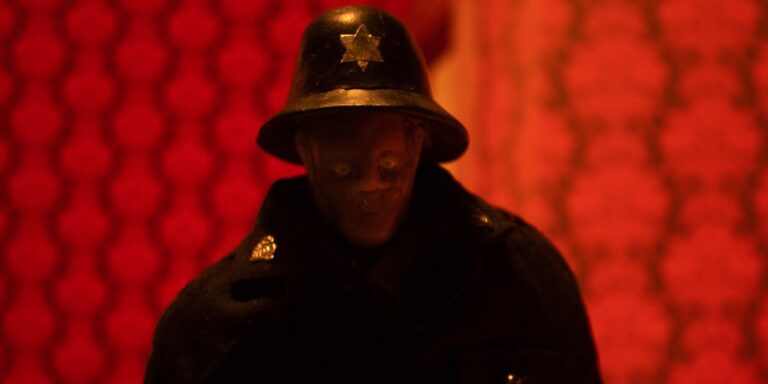
 The Tell-Tale Heart is a 2023 short film that I have mentioned in passing previously, first when listing the best short films I saw last year and then when I was outlining what I was going to be nominating for this year's Hugo Awards (and like almost everything else I nominated, it failed to make the ballot). Directed by Max Hendrickson, It is a stop-motion animated adaptation of the Edgar Allan Poe story of the same name, the one narrated by a guy who describes a murder he has committed while being at pains to deny his insanity. I saw it in the Stoneybatter Film Festival last year, and it is stunningly atmospheric piece of work, all the more impressive considering Hendrickson was still in school when he made it. It is on YouTube, so check it out (and if you like it, have a look at his other films too).
Lust for a Vampire is a 1971 Hammer horror that was on television when I was away last year. I did not see all of it, but I saw enough. It is a sequel to The Vampire Lovers, Hammer's previous adaptation of Sheridan Le Fanu's "Carmilla" (the story that pretty much launched the important sexy lesbian vampire subgenre). This one is largely set in a finishing school for young ladies: the kind of place where at bedtime they have to help lace up each other's nightdresses to put away their ample bosoms. An English ne'er-do-well inveigles his way into a teaching job (he comes across as the type who likes assisting in the education of young ladies); he soon becomes convinced that new student Mircalla might be legendary vampire Carmilla resurrected. Despite this he falls in love with her. Various things happen but I got bored and went to bed before it all concluded. It did rather put the ham into Hammer.
The Omen (1976) is one of those famous films I have been aware of since it came out but somehow had not seen until it showed up in a horror film season in the Lighthouse. People often talk of the unholy trinity of folk horror films: The Wicker Man, Witchfinder General, and Blood on Satan's Claw. I think of The Omen as forming a second trilogy with The Shining and The Exorcist, a trilogy of big budget mainstream horror pictures that were event films when they came out. And you know what? It's not that great and is a far inferior film to the other two of my imaginary trilogy. It suffers from being excessively camp and lacking the sense of mounting dread that the other two films successfully create.
I was struck by one scene that seemed to be deliberately echoed in The Shining. At one point we see little Damien (the child of Satan [/spoiler]) zooming around in a peddle car before charging down a corridor to do something dramatic. I found this highly reminiscent of the very different scenes in The Shining, in which Danny zooms around the hotel's corridors in his own peddle car. This observation does not make this film worth going to see, but it is perhaps worth having seen in the past.
image source:
A threatening policeman (Utah International Film Festival: "The Tale-Tale Heart" — Max Hendrickson)