Showing posts with label Peter Moran. Show all posts

Sunday, July 05, 2026

Archipelago: a fusion of Javanese and Irish Traditional Music

Danger, fusion. This was a concert in the National Concert Hall's Studio by the UCD Traditional Music Group and the UCD Gamelan Orchestra. For anyone reading this who is not familiar with Dublin institutes of higher education, UCD is an abbreviation for University College Dublin. The two student groups here both operate under Dr Peter Moran, who is also the director of the gamelan group I play in and of the NCH Gamelan Orchestra. The concert was a game of two halves, with the two groups playing separately to show off their work, but it was still Irish-music dominated for reasons that will be discussed.

The first half saw the UCD Traditional Music Group playing together on pieces they had been taught by Paddy Glackin (celebrated fiddler known for his solo work but also his sometime membership of The Bothy Band) and learned themselves through field work. They also played their own original compositions. I was struck by how the pieces the students had learned from Paddy Glackin saw them playing together in a large group, while the student compositions all involved solo rather than group play, with the exception of two pieces where each composer played with the other (but in this case the two had previous and were well used to playing together). It was very enjoyable but I don't really have the vocabulary to say too much about the pieces apart from expressing my admiration for them.

Then we had the UCD Gamelan Orchestra, playing the archipelago project with some special guest stars: Mark Redmond (uillean pipes, tin whistle), Viktória Sinkarová (guitar) and Liam Ó Maonlaí (bodhran, vocals). The pieces (or was it one long piece broken up into sections?) were composed and arranged by Moran and Sinkarová with Anon Suneko; Suneko unfortunately could not make the concert because the Trump War had disrupted travel from Indonesia. This half saw the UCD Gamelan Orchestra play gamelan arrangements of Irish (and occasionally Scottish) traditional music (or new music derived therefrom). I'm a bit suspicious of this kind of fusion and whenever I hear of it my first thought is always "why?". There's a question of perspective here. Some people really like exploring what gamelan instruments can do, and part of that is seeing how western pieces have to be adapted to be playable on them (as previously noted, gamelan tunings do not line up with notes on western scales); for many people this is the answer to my "Why?" question. But I am more interested in exploring the repertoire of central Java.

Nevertheless, it did feel like a lot of thought had gone into this piece and overall it worked for me. Crucially it felt like a serious cross-cultural engagement and not a semi-colonialist imposition of western musical forms onto gamelan instruments. The students are going to be recording this as an album and I think it would be worth picking up; it might even be a free download on Bandcamp like the UCD Traditional Music Practices' Seven Springs album (see: here).

The only real quibble I would have with this concert was that they didn't include a traditional Javanese gamelan piece in the programme, as I think it would be useful to give people a sense of what unfused Javanese music sounds like. It might also have been interesting to arrange a gamelan piece for performance by the UCD Traditional Music Group. It feels like people are always arranging western tunes for gamelan instruments but it is far less common for people to try things the other way round.

Liam Ó Maonlaí was an interesting presence here. To people of my vintage he is very famous as the lead-singer of the Hothouse Flowers, who had a monster hit with "Don't Go" after performing it at half-time during the Eurovision. I'm unclear as to how famous he is now with the young people but to me he was the most famous person I have ever seen at a gamelan concert. I was impressed by how he just got on with things and didn't turn proceedings into the Liam Ó Maonlaí Gamelan Experience. "I have read all these books"

Saturday, January 10, 2026

Battling Gamelan records: Palegongan and Kyai Jati Roso

Imagine if in Germany there was a centuries old tradition of orchestral music, but the orchestras only played music by German composers. And then in France there was a separate tradition of orchestral music, played on similar or identical instruments to those of their German counterparts, but the French orchestras only played music by French composers and professed complete ignorance as to the ways of German composers and German orchestras. That at least seems to be the way it is with Javanese and Balinese gamelan, with the neighbouring islands developing musical traditions independently of each other with little or no cross-fertilisation. Or so I have been led to believe. As presented to me, the Javanese tradition (the one I have been playing in classes in the National Concert Hall) was historically a court music played by ensembles in the employ of local sultans, while the Balinese music was played by village ensembles for more local purposes. This to some extent drove how the music worked, with the Javanese music being more stately and focussed on group playing (perhaps so that no individual player would become so noted in their own right that they overshadowed the patron), while Balinese music has more in the way of virtuosic individual playing and can get a bit raucous.

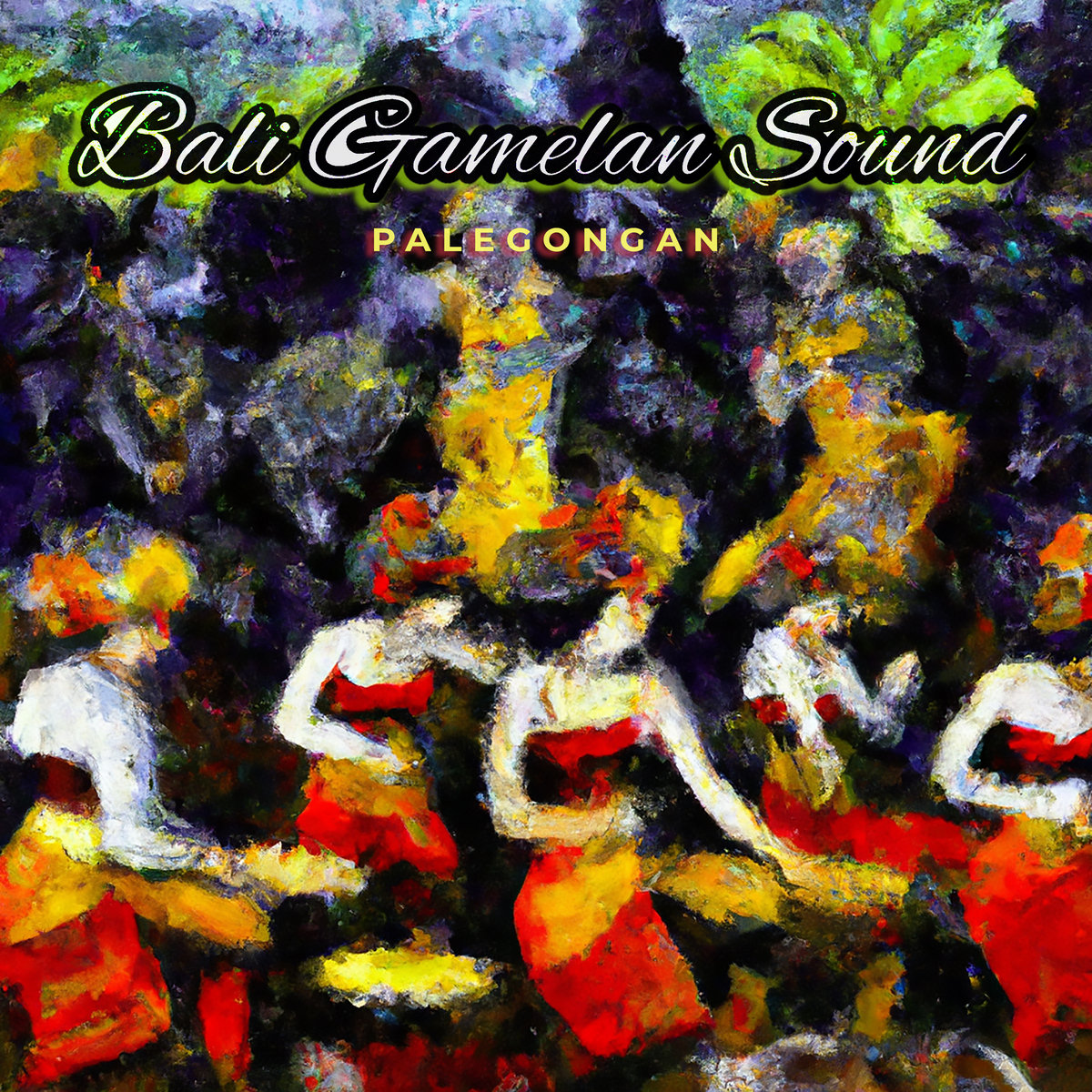
But how accurate is this thumbnail description of the two traditions? I found myself thinking about this when I found myself listening to Palegongan, a recording by a performance by Sanggar Sidakaria released by Bali Gamelan Sound. This is Balinese gamelan, recorded in Denpasar, Bali's capital, yet the first two tracks sound almost like they could be something that might be played by a more advanced Javanese gamelan group: they have a certain stateliness and they retain the cyclical qualities of Javanese music. The later tracks get considerably more frenetic and do not sound so much like you could imagine anyone in Java playing them. But I'd still like to get some sense of how Balinese gamelan works and indeed what interplay there has been between the traditions on the two islands, as I find it hard to believe there has been no cross-pollination whatsoever between them.

You can listen to and/or purchase Palegongan here.

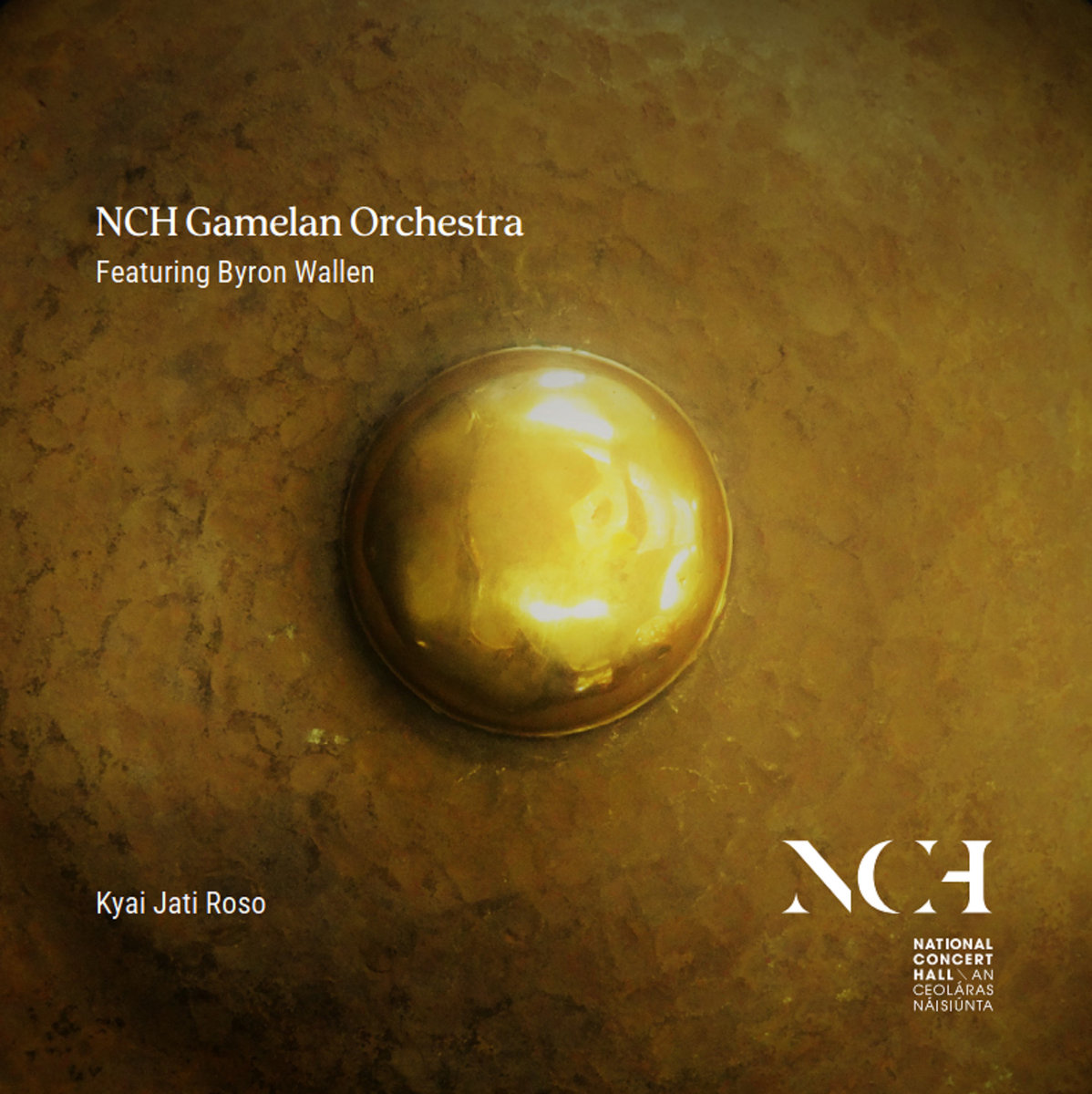
Kyai Jati Roso meanwhile is a 2024 recording from the NCH Gamelan Orchestra. The pieces are mostly traditional pieces from the Javanese repertoire but there are two interesting exceptions. The first very short track is from a field recording of a workshop where gamelan instruments are being tuned. Because this involves workmen bashing the metal pots to a natural rhythm, it ends up sounding almost like music itself. Then the second track, "Embat", is a composition by the NCH's gamelan director, Peter Moran, and an updated version of a track released in 2020. This deliberately evokes the rhythms of the workmen on the previous track, but in this new version we also have trumpet from British jazzer Byron Wallen. I've become a bit of a gamelan purist over time (ironic given how little I really know about Javanese gamelan and my complete lack of direct personal connection to the cultural heritage of Indonesia generally and Java in particular). As a result, I am wary of Western compositions being played on gamelan instruments or of gamelan being combined with instruments from outside the tradition. However, this does not mean that I always dislike gamelan fusion. "Embat" works for me, without feeling like an unnatural meshing of things that should not be combined. I think partly this must be down to Wallen himself being gamelan-curious (apparently he has his own gamelan set back in his base) and, obviously, Moran's deep immersion in the tradition.

After that it's all pieces from within the Javanese tradition. These are mostly ladrangs and lancarans, two types of music we have played in our class. The basic difference between these is that in lancarans the basic melody line is played pretty quickly while in ladrangs the melody is slower but there is considerable ornamentation from the other instruments (I can hear the grinding of teeth of any serious gamelan people reading this simplistic description of the difference between ladrangs and lancarans). On this record however elements are introduced that are beyond klutzes like me: handclaps, vocals, and complex variations that you need to have your wits about you to play. There are also Javanese pieces of a type I have not played myself and so find rather mysterious.

I've always had the idea that on hearing a gamelan recording blind I would be reasonably likely to guess whether it was from Java or Bali (stately: Java; flashy: Bali). These two records rather challenge that, with Palegongan moving in a rather stately direction while the NCH Gamelan Orchestra's album sees the playing at times getting a bit flash on us. Could it be that the two traditions are not so very different? Either way I think Kyai Jati Roso might be a useful introduction for anyone curious about gamelan played in the Javanese style. If you are curious you can check it out here.