Showing posts with label Gamelan. Show all posts

Tuesday, July 07, 2026

NCH Gamelan Orchestra: concert and recording

The NCH Gamelan Orchestra is the professional gamelan orchestra operating out of the National Concert Hall. I like to think that they are the bloated late period prog rock version of gamelan while our group are the scrappy young punks, but in practice I suspect that they are The Clash and we are Dumpy's Rusty Nuts. They played a concert on the evening after ours and I went along to it because I can't get enough of the gamelan. They had a few pieces that they played gadhon style, which means they use a stripped down ensemble that is pretty much just the soft instruments (AKA the hard-to-play instruments, viz. the gambang (wooden xylophone like thing), the suling (flute), the rebab and other things people play if they think they're great). The gadhon pieces included two that I have played in full line-ups, Ladrang Moncer and Ladrang Mugirahayu, but they were pretty much unrecognisable in this format.

The concert also had dancers for a couple of pieces, which genuinely was great. I'm curious about the role of dance in Javanese gamelan and would like to know more about it. The concert finished with a gending, which is a new type of gamelan piece for me. Like the types of gamelan piece I am familiar with (ladrangs and lancarans), this went through cycles, but the gending cycles are much longer. I was talking to one of the players (who also performs with our group) and she was saying that they only cycled through it twice but it still was around 20 minutes long.

I also recently picked up a copy of Confluence, an album the NCH Gamelan Orchestra released digitally last year, with a physical copy finally becoming available in recent months. There are no gendings here and not much in the way of music from the Javanese tradition, with this instead being a mix of new compositions in non-standard styles and attempts to combine western instruments and the gamelan, with cellist Martin Johnson and uillean piper Mark Redmond joining the ensemble. Mixing western and gamelan instruments is not easy, because the tunings are very different and the notes do not line up. I think they managed it here though, and despite my status as a fusion-sceptic I found this to be an enjoyable listen, but I was a bit irked that the physical release contained no information on the individual tracks (you need to go to Bandcamp for that). You can check out the recording for yourself here.

images:

NCH Gamelan Orchestra (RTÉ: Gamelan on - bringing the sound of Indonesia to New Music Dublin)

Confluence (Bandcamp)

Monday, July 06, 2026

Gamelan: our end of year concert

I've been playing with a community gamelan group in the National Concert Hall for a while now, and in June we played an end of year concert. It looked for a while like this would be very ropey, which would be a bit embarrassing given how long some of us have been playing together. But with some extra sessions and hard thought we got it together in the end, or at least so it seemed from where I was sitting. Here's what we played:
  • Ladrang Parawisata: this is the one about going on holidays in Indonesia. I had been singing this in Poolewe and was singing it here too, but we were alternating the singing with handclaps and chants in the fast section. I found doing these simultaneously very hard and I'm not surprised I have a look of intense concentration in the one video of the concert that shows me performing on this piece.
  • Ladrang Moncer: for me this was the easiest of our pieces in the programme as I just had a basic balungan line to play, something I can pretty much do in my sleep at this stage.
  • Jimmy Ward's Gig: an arrangement by Peter Moran, our director, of an Irish traditional music tune for gamelan. We are going to Indonesia next year so the thinking here is that it would be nice to have something Irish to play for the locals. This was a real struggle to learn as it had the standard set of problems for arrangements of western pieces being created for the group, with the piece's score and structure changing from week to week. Also for me the score was confusingly presented on the page, making it easy for my eye to jump to the wrong notes. I found this a lot easier to play when I retyped the score and thanks to that and extra rehearsals I feel like I didn't make a complete mess of this and it all came good in the end. It has this terrifying second part where the piece breaks into harmonies and everyone seems to be playing something different but as fast as is humanly possible, and it's a great feeling when that all lines up. Top marks here however need to go to Lora and Camen, our bonang players, who were delivering the jiggiest part of this jig (and having to play at speeds that were multiples of everyone else's).
  • Ladrang Nuswantara: I was playing peking on this, which is similar to the balungan instruments (i.e. it has seven keys) but is played twice as fast as them in Irama 1 and twice as fast in Irama 2 (I will discuss irama in due course). Peking is hard because you have to play more quickly than everyone else but also keep pace with them and not find yourself getting confused, especially when the balungan are repeating notes ("oh balls have I played 5 6 three or four times?"). The Irama change from 1 to 2 is also tricky as you have to first slow down as everyone else does and then start playing more notes but without falling into the temptation to go out of synch with them. I think I managed this OK, with the notes I played mostly lining up with the gong at the end of each round.
  • Lancaran Majemuk: A fun piece that saw me playing the kanong, one of those structural instruments. I sometimes find these a bit tricky as I find it easy to lose my place, but for this one I had to play on every second balungan note, which meant less in the way of gaps to get lost in. Kanongs people generally play with a stick in each hand and it took me a while to get the hang of which hand to play which note with, but once I had that this was pretty easy piece to play.
  • Wake Up: I disliked Arcade Fire when it was neither profitable nor popular so you might think I would hate playing this arrangement of their big tune by Des Egan, but actually it was fun, once you allow for the usual problems involved with trying to get the hang of western pieces being arranged for gamelan. Maybe all Arcade Fire songs would sound a lot better if they didn't have yer man singing and were being played on a gamelan.

And that was our last song. One of my buds made a recording of the concert and we sound pretty good but I was a bit disappointed at not being able to really hear my peking on Nuswantara or vocals on Parawisata, so I can't evaluate my own performance on the pieces I was most concerned about. Not being able to hear myself on Parawisata was particularly irksome as I was doing my best to belt the tune into the microphone placed in front of me.

The beginner's group played before us and they have some great tunes too, most notably Esuk Esuk, which is insanely catchy. They also had Marta from our group doing shadow puppets (and nearly didn't because just after our last rehearsal I almost stepped on them).

It would be nice if someone posted the short videos of the concert on YouTube, but that's not my decision to take. There is also one long video of whole thing which might also be worth watching on YouTube if it were ever posted there; it's a continuous static shot but it would mean that people at home could see the shadow puppets.

My one big gripe with the concert was that there were a lot of empty seats. And that's not me complaining that philistine Dublin is not queuing up to attend performances of niche music from central Java, because the concert was notionally sold out. The actual target of my ire is the ticketing practices of the National Concert Hall, which gave every participant in this concert two complimentary tickets, notionally selling out the concert in an instant but then leaving some people with tickets they didn't want and others with less than they required. It would be far handier if the concert hall allowed participants a pre-sale period when they could book two tickets if they wanted them and then put the remainder up for the general public (I probably should suggest this to them rather than moan about it here on my blog that is largely devoid of readers).

And now we break for summer, but we are playing at an Indonesian Independence Day event in August at which there might be over a thousand people present. My face appears on the poster (as do other people's). And then we have a gamelan birthday party in September, at which I am hoping some of my Scottish gamelan friends will make an appearance (but will understand if they don't as people with lives). And then classes begin again later in September, except from then we will be counting down to our trip to Java next year.

It is a poster for an event in Ireland to mark Indonesia's 81st independence day. The event takes place on 23 August 2026 in the Mountview Community Centre in Blanchardstown. The posted gives an idea of what to expect at the event - food, various musical performances (including gamelan students), a magic show, a fashion show, etc. etc.

Sunday, July 05, 2026

Archipelago: a fusion of Javanese and Irish Traditional Music

Danger, fusion. This was a concert in the National Concert Hall's Studio by the UCD Traditional Music Group and the UCD Gamelan Orchestra. For anyone reading this who is not familiar with Dublin institutes of higher education, UCD is an abbreviation for University College Dublin. The two student groups here both operate under Dr Peter Moran, who is also the director of the gamelan group I play in and of the NCH Gamelan Orchestra. The concert was a game of two halves, with the two groups playing separately to show off their work, but it was still Irish-music dominated for reasons that will be discussed.

The first half saw the UCD Traditional Music Group playing together on pieces they had been taught by Paddy Glackin (celebrated fiddler known for his solo work but also his sometime membership of The Bothy Band) and learned themselves through field work. They also played their own original compositions. I was struck by how the pieces the students had learned from Paddy Glackin saw them playing together in a large group, while the student compositions all involved solo rather than group play, with the exception of two pieces where each composer played with the other (but in this case the two had previous and were well used to playing together). It was very enjoyable but I don't really have the vocabulary to say too much about the pieces apart from expressing my admiration for them.

Then we had the UCD Gamelan Orchestra, playing the archipelago project with some special guest stars: Mark Redmond (uillean pipes, tin whistle), Viktória Sinkarová (guitar) and Liam Ó Maonlaí (bodhran, vocals). The pieces (or was it one long piece broken up into sections?) were composed and arranged by Moran and Sinkarová with Anon Suneko; Suneko unfortunately could not make the concert because the Trump War had disrupted travel from Indonesia. This half saw the UCD Gamelan Orchestra play gamelan arrangements of Irish (and occasionally Scottish) traditional music (or new music derived therefrom). I'm a bit suspicious of this kind of fusion and whenever I hear of it my first thought is always "why?". There's a question of perspective here. Some people really like exploring what gamelan instruments can do, and part of that is seeing how western pieces have to be adapted to be playable on them (as previously noted, gamelan tunings do not line up with notes on western scales); for many people this is the answer to my "Why?" question. But I am more interested in exploring the repertoire of central Java.

Nevertheless, it did feel like a lot of thought had gone into this piece and overall it worked for me. Crucially it felt like a serious cross-cultural engagement and not a semi-colonialist imposition of western musical forms onto gamelan instruments. The students are going to be recording this as an album and I think it would be worth picking up; it might even be a free download on Bandcamp like the UCD Traditional Music Practices' Seven Springs album (see: here).

The only real quibble I would have with this concert was that they didn't include a traditional Javanese gamelan piece in the programme, as I think it would be useful to give people a sense of what unfused Javanese music sounds like. It might also have been interesting to arrange a gamelan piece for performance by the UCD Traditional Music Group. It feels like people are always arranging western tunes for gamelan instruments but it is far less common for people to try things the other way round.

Liam Ó Maonlaí was an interesting presence here. To people of my vintage he is very famous as the lead-singer of the Hothouse Flowers, who had a monster hit with "Don't Go" after performing it at half-time during the Eurovision. I'm unclear as to how famous he is now with the young people but to me he was the most famous person I have ever seen at a gamelan concert. I was impressed by how he just got on with things and didn't turn proceedings into the Liam Ó Maonlaí Gamelan Experience. "I have read all these books"

Sunday, June 28, 2026

Gamelan Magic: a return to Poolewe

Last September I spent a week in north west Scotland, attending a gamelan retreat with other aficionados of the popular Indonesian music. And in April I returned there. The local gamelan group were playing a concert but needed some extra players to fill out their line-up. Ginevra House, the Poolewe gamelan organiser, put out a call for ringers and when it became apparent that I would be able to get a lift from Glasgow with some members of that city's Gamelan Naga Mas ensemble I arranged to fly over and travel up with them.

My journey to Glasgow proved eventful. The initial plan was that I would fly over in late morning, pooter around central Glasgow, and then meet my gamelan buds at their rehearsal in the psychiatric hospital that is their set's home. In the airport I had to board a bus that would take me to the aeroplane, but when I did so the bus sat there for a bit and then it was announced that there was a problem with the plane and that it wouldn't be going anywhere for at least half an hour, so we had to get off the bus. And then we were told that the flight was cancelled and we had to pick up our checked baggage and await further instructions.

Eventually I was rebooked on a flight to London and then another to Glasgow, which meant that I wouldn't arrive until the early evening but my bag would at least be checked through all the way. But then when I landed in Glasgow, there was no sign of my bag. The baggage handling lady (reeling from an encounter with an irate flyer who seemed to think that the baggage handling lady was personally responsible for their lost luggage) took Ginevra's details and said they would send on my bag. I had naive hopes that the bag would arrive in Wester Ross around the same time that I did, but I should have taken her "So you'll be there until Monday?" question as a warning.

Gamelan Naga Mas

I had no time to explore central Glasgow and instead had to race out west to wander around the map-free hospital campus in an increasingly confused search for the gamelan's location. Once there I got to play a little bit on the Glasgow gamelan set. Then it was off to stay over in the nearby house where gamelan friend Thessa was cat-sitting (the cat did not take to me), which was near where we would meet the others in the morning.

Cat does not like strange man

There were five of us in the car. By an odd coincidence it turned out that three of my fellow travellers were former or current drummers and it was interesting listening to their percussion chat, particularly as they were all women while drumming is a stereotypically male endeavour. Our journey was a long one and we made a number of stops along the way: in Dunkeld (for lunch and a stroll), in a shopping centre outside Inverness (so we could pick up provisions and so that I could buy some clothes), and at Loch Maree where we saw a beautiful rainbow. While we were there some passing French tourists asked us to take their picture and then returned the favour.

Hannah and Sophie admire a rainbow

We dropped our stuff in Ginevra's and then went over to Poolewe for a quick rehearsal and a reacquaintance with the Poolewe gamelan people (and a meeting with some we hadn't encountered on the September trip). This also involved working out the running order for the pieces we would be performing and who would be playing what. I was also reacquainting myself with the Poolewe gamelan set. Gamelan sets have names, and the Poolewe set is unusual in that it has a female name, Madam Hot Chilli. She is a venerable lady, and I understand some of the instruments to be over a 100 years old. Ginevra reminded us that some of them are a bit fragile and should not be hit too enthusiastically.

Neil, Catriona, Chloe, Ginevra and Sophie and the gamelan

And then it was back to Ginevra's for dinner, chit-chat and bed. Ginevra lives with her father and had another family member visiting so I did find myself flashing back to how a much younger version of myself would behave when staying with friends and started worrying that I would commit some kind of terrible faux pas in front of the grown-ups. I had not got the memo about when we were meant to be getting up and was in a room on my own, so in the morning I lay in bed fearing that getting up would mean I would find myself having to talk to a grown-up on my own. Then it turned out that everyone was about to go to a morning rehearsal so I had to jump up and get ready very quickly.

Village hall

After a last rehearsal we moved the instruments over to the village hall where afternoon concert was to take place. Gamelan instruments are bulky and heavy, and moving them from where they are stored to where concerts will be performed is always the least fun part of the gamelan experience and in this case involved multiple car trips and walking over some of the bulkier bits of kit. Once everything was there we set it all up (full disclosure, I slacked off a bit on this). We had a bit of a gap then and amusingly bumped into the French people we had met at Loch Maree, who were leaving their car by the village hall before going off for a stroll. We invited them to come to our concert (which involved a somewhat confusing explanation of what exactly gamelan music was, given their limited English and our limited French).

People actually showed up for the concert (including the French people), which was nice. Here is a quick run through of the pieces we played:

  • Lancaran Baita Kandhas: This is a lancaran, one of the simpler kinds of gamelan piece. I was playing kempul (small hanging gongs) and the main gong on this, structural instruments that contribute little to the melody but are important for marking time. For these you play far less notes than the people on the balungan line that makes up the skeleton of the piece, but the notes must be played at the right time or people will start worrying that they have lost their place. So kempul and gong is actually quite stressful to play, and in this case made harder by the piece getting faster and faster as we went through it. I think I managed but the smaller gongs did start flapping around a bit, particularly later in the piece.
  • Ladrang Wilujeng: the most famous of all gamelan pieces. I think I was playing the kanongs on this, which are a set of upside down pots, but also I was playing the ketuk, which is another upside down pot but one that makes a deliberately dull sound. This was a bit non-standard for me, as in my Dublin group the kanong and ketuk are played by different people. Like the kempul, the kanong is a structural instrument, so you play less notes than the balungan players. The pattern on this piece was something like hitting the ketuk instead of the kanong every fourth time you hit something. You're also meant not to hit the ketuk just once but to give it follow-up taps creating a kind of bouncing ball sound. I never mastered that.
  • Ca' the Yowes: Margaret Smith of Glasgow's Gamelan Naga Mas had arranged this Robert Burns classic (as noted in my account of the September gamelan retreat) and now I was part of the singing group for this while others played the instruments. The gamelan arrangement is based on a beautifully simple descending and ascending line that then breaks into embellishments. We did have people joining in with the singing but I am never clear on whether this sounds as beautiful and moving to listeners as it does to us when we play it.
  • Ladrang Parawisata: I was singing with others on this one too. Parawisata is that rare example of a Javanese gamelan tune where I know the name of its creator, in this case Ki Nartosabdho, an important figure 20th century gamelan (both music and the puppetry that accompanies it). He is credited with helping to push forward the form and ensure its continued popularity. With Parawisata I think he put the words to a pre-existing tune, and the lyrics are about going on holidays in the Indonesian archipelago. In the first part the singing is fast and lively, evoking the excitement of going on holiday; then in the section half the singing is slower, perhaps evoking the tiredness you might feel at the end of a day's holiday fun as you return to where you are staying.
  • Lancaran Baita Kandhas workshop: after an interval Ginevra invited the audience to have a go at playing Baita Kandhas themselves. So a randomer played the kempul and gong part while I supervised, saying "you've fucked it up again" every time she hit a wrong note.
  • Improv: in my Dublin group we never improvise but it seems to be much more of a thing in Scotland. For this we started off playing a traditional piece and then slid into improv. Like all improv it may have been more fun for the performers than the audience.
  • Ladrang Mugirahayu: I was singing on this one as well, with Ginevra and local gamelaner Chloe. Gamelan has no concept of harmony so it's like no one ever thought "why not have a woman sing the high parts and a bloke sing the law ones?" and instead gamelan pieces often expect the singer to have an unlikely and impractical range. The vocal on this starts at a pitch I found almost completely unmanageably high but then dropped at times to chthonic depths that would pose difficulties most lady singers. There is an element of technique to this and it's a technique I haven't mastered, but it was fun giving this a go.
  • Lancaran Bendrong: a straightforward piece to finish off with.

And then we were done. After bringing the instruments back to the gamelan cottage we repaired to Chateau Ginevra to party like only gamelaners can party. While we were chopping vegetables for dinner I mentioned the Beach Boys song "Vegetables" and was a bit surprised that only Ginevra was familiar with it. After dinner we drank various things, notably a whisky from Dublin (for which one of my Dublin gamelan buds was the master distiller until Diageo made her redundant) and some mead courtesy of Ginevra's nephew, which was tasty and interesting.

Ain't no party like a gamelan party.

There were some interesting conversations. One thing I came to realise is that we have it pretty handy in Dublin with our gamelan set that lives in the National Concert Hall. In the UK recent years have seen a gamelan retrenchment, with many institutions getting rid of their sets or locking them up in storage and forgetting about them. Gamelan sets are big and if you've ever seen one you might think that the key barrier to making gamelan music more widely known in the west is the expense involved in acquiring the instruments. But actually acquiring a set is the easy bit. At one point the Indonesian embassy was giving away sets to anyone who talked a good game, while the National Concert Hall set was acquired for nuppence on foot of a well-crafted begging letter to the sultan of Yogyakarta. But once you have the set you need somewhere to store it and you need someone who knows what they are about to run gamelan groups, both of which consume resources, resources many UK institutions have decided they are no longer willing to provide. Ginevra thought this was a product of the same insular mindset that gave rise to Brexit, with institutions deciding that it wasn't worth their while funding funny music from the other side of the world. I wondered if it might also be a general post-austerity thing, with gamelan a niche music that resource-depleted institutions find it easy to give up on.

Another book recommendation

I was also talking to Ginevra about the history of gamelan notation. Gamelan used to be an entirely oral tradition, with people just remembering the tunes (people were cleverer in the past). The first attempts at notation came from western musicologists who thought the music was in danger of dying out and should be recorded for posterity first (which reminded of the way folk song collectors in the West thought they were saving a dying tradition for posterity). These early attempts failed because the musicologists approached gamelan like western compositions and tried to notate all the parts, only to be thrown by how different ensembles would play pieces very differently, with pieces even coming out differently when played again by the same ensemble. The modern gamelan notation was developed more collaboratively by gamelan musicians and musicologists. This reflected the fact that much of how a piece is played is based on subjective interpretation. This isn't improvisation as such, more a decision by groups as to how they will approach a piece and what choices they will make about how to play it. Gamelan notation only explicitly states the notes played by the balungan players who provide the skeleton to a piece, with other musicians working out their part from that in a process called garap. Ginevra did however refer to some guy who has extensively studied gamelan and reached the conclusion that actually you only really need to notate what is played on the rebab, a stringed instrument, with everyone else being able to garap their part from that; that would be like a score for a western symphony only covering the lead violin and telling everyone else to work it out for themselves.

I was recommended this book.

And I was recommended two books, one about gamelan and one which wasn't. One is Gamelan: Cultural Interaction and Musical Development in Central Java by Sumarsam, which Ginevra reckoned would be the kind of book I would like if I was interested in reading more about the history of the gamelan tradition of central Java. The other was A World Appears: a Journey into Consciousness by Michael Pollan, which is one of those books that explores the mysterious world of consciousness. I find consciousness interesting as a topic. It feels important to me that I am conscious, yet there seems always to be at least the possibility that consciousness is the illusory by-product of mechanistic processes. I'm hoping the book will make it into paperback at some point.

Climbing, looking

Another fun thing we did in Poolewe was go for a walk in the woods. A friend and neighbour of Ginevra's guided us on our perambulations and while there wasn't much musical content to all this it was very enjoyable.

On our way back we took the scenic route, which meant we saw a convoy of boy racers fly by in their Porsches. But also were able to gaze upon Gruinard, better known (to me) as Anthrax Island. This was where the British ran biological warfare experiments in the Second World War, dropping anthrax bombs on the island to observe the effects on the sheep who lived there. The tide of the Second World War ended before the RAF was able to use anthrax bombs against Germany, but Gruinard remained contaminated. Spores would periodically blow over to the mainland, killing livestock; generous pay-outs and liberal use of D-Notices suppressed discussion of Gruinard's taint. Decontamination work finally began in the 1980s and the island was declared free of anthrax in 1990, but I would not set foot on it or eat anything grown there.

Reunited with my bag

And so back to Glasgow and then on to the airport, where I was reunited with my bag (which perhaps unsurprisingly had not made the journey to Gairloch) and made my way home. There I received a message from one of my carmates saying that when she got home she had hopped in the shower only to find a tick stuck to her leg. I checked and sure enough I had a tick too, which Iremoved with tweezers like you are meant to and then got a precautionary course of antibiotics from the croaker. I don't seem to have come down with Lyme disease yet but I do find I now have an insatiable thirst for human blood. I've also become obsessed with the idea of arranging 2 Unlimited's "No Limits" for gamelan but I'm not sure if these things are related.

Photobombed by Alison and Chloe

More picures.

Saturday, January 10, 2026

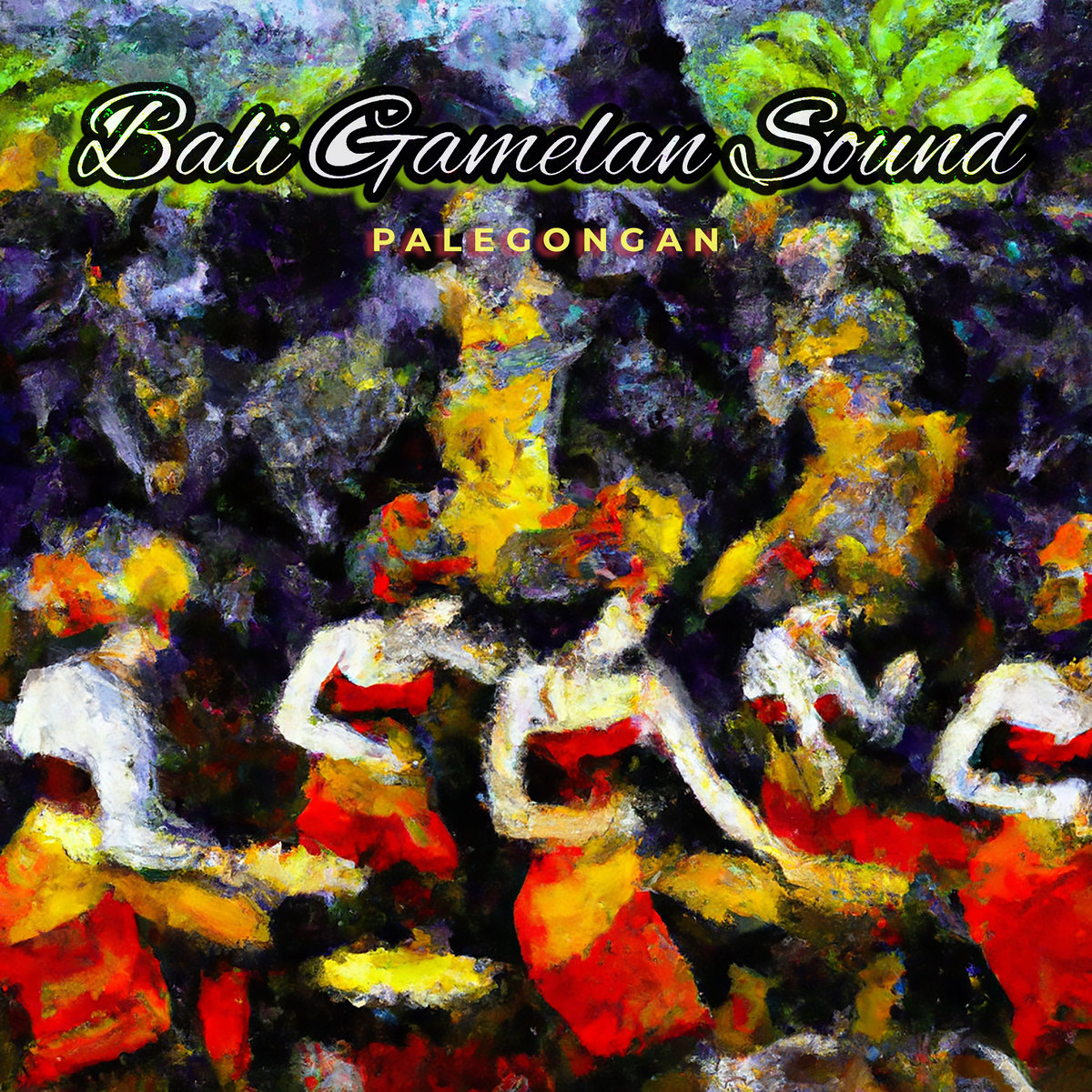
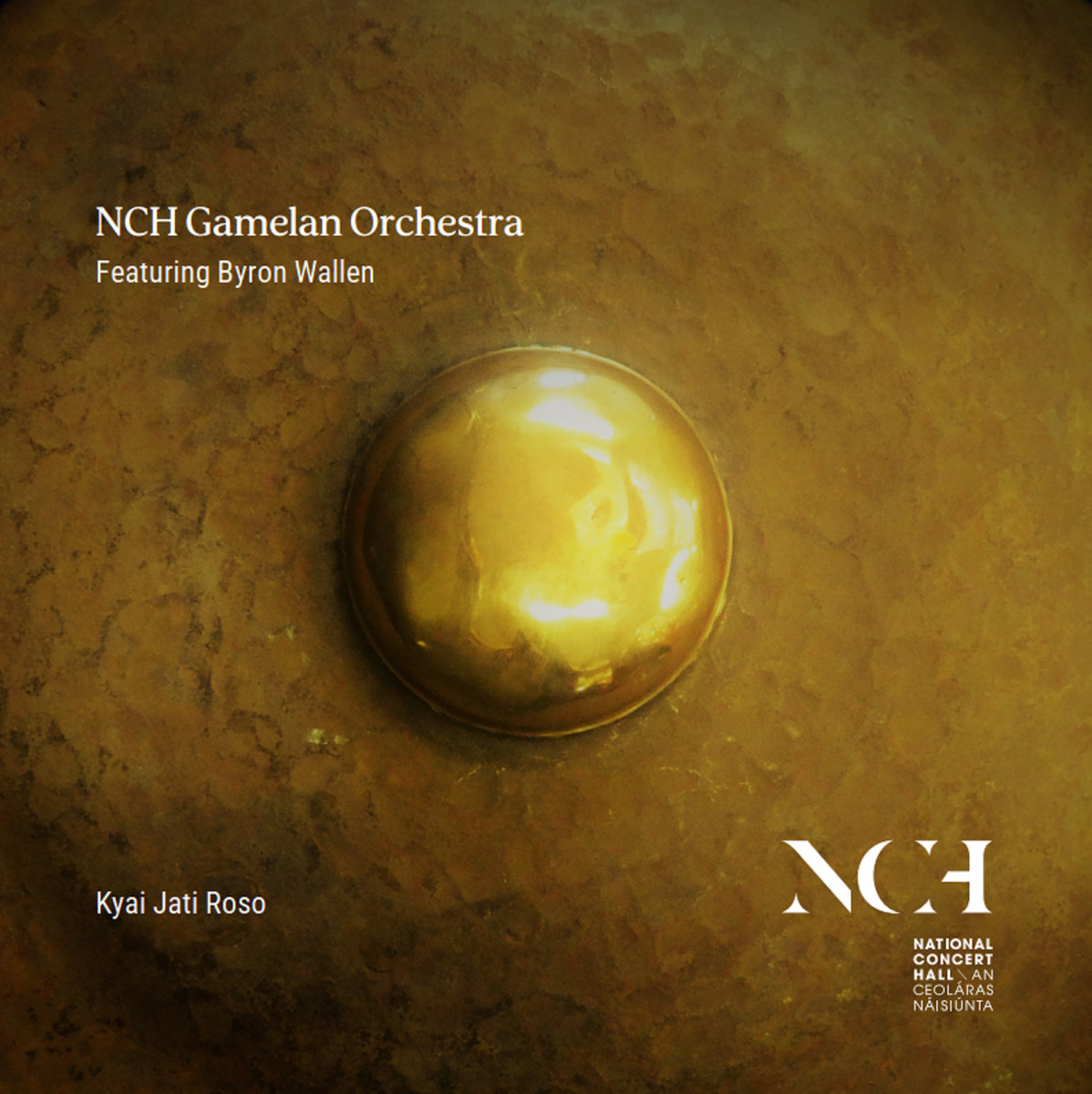
Battling Gamelan records: Palegongan and Kyai Jati Roso

Imagine if in Germany there was a centuries old tradition of orchestral music, but the orchestras only played music by German composers. And then in France there was a separate tradition of orchestral music, played on similar or identical instruments to those of their German counterparts, but the French orchestras only played music by French composers and professed complete ignorance as to the ways of German composers and German orchestras. That at least seems to be the way it is with Javanese and Balinese gamelan, with the neighbouring islands developing musical traditions independently of each other with little or no cross-fertilisation. Or so I have been led to believe. As presented to me, the Javanese tradition (the one I have been playing in classes in the National Concert Hall) was historically a court music played by ensembles in the employ of local sultans, while the Balinese music was played by village ensembles for more local purposes. This to some extent drove how the music worked, with the Javanese music being more stately and focussed on group playing (perhaps so that no individual player would become so noted in their own right that they overshadowed the patron), while Balinese music has more in the way of virtuosic individual playing and can get a bit raucous.

But how accurate is this thumbnail description of the two traditions? I found myself thinking about this when I found myself listening to Palegongan, a recording by a performance by Sanggar Sidakaria released by Bali Gamelan Sound. This is Balinese gamelan, recorded in Denpasar, Bali's capital, yet the first two tracks sound almost like they could be something that might be played by a more advanced Javanese gamelan group: they have a certain stateliness and they retain the cyclical qualities of Javanese music. The later tracks get considerably more frenetic and do not sound so much like you could imagine anyone in Java playing them. But I'd still like to get some sense of how Balinese gamelan works and indeed what interplay there has been between the traditions on the two islands, as I find it hard to believe there has been no cross-pollination whatsoever between them.

You can listen to and/or purchase Palegongan here.

Kyai Jati Roso meanwhile is a 2024 recording from the NCH Gamelan Orchestra. The pieces are mostly traditional pieces from the Javanese repertoire but there are two interesting exceptions. The first very short track is from a field recording of a workshop where gamelan instruments are being tuned. Because this involves workmen bashing the metal pots to a natural rhythm, it ends up sounding almost like music itself. Then the second track, "Embat", is a composition by the NCH's gamelan director, Peter Moran, and an updated version of a track released in 2020. This deliberately evokes the rhythms of the workmen on the previous track, but in this new version we also have trumpet from British jazzer Byron Wallen. I've become a bit of a gamelan purist over time (ironic given how little I really know about Javanese gamelan and my complete lack of direct personal connection to the cultural heritage of Indonesia generally and Java in particular). As a result, I am wary of Western compositions being played on gamelan instruments or of gamelan being combined with instruments from outside the tradition. However, this does not mean that I always dislike gamelan fusion. "Embat" works for me, without feeling like an unnatural meshing of things that should not be combined. I think partly this must be down to Wallen himself being gamelan-curious (apparently he has his own gamelan set back in his base) and, obviously, Moran's deep immersion in the tradition.

After that it's all pieces from within the Javanese tradition. These are mostly ladrangs and lancarans, two types of music we have played in our class. The basic difference between these is that in lancarans the basic melody line is played pretty quickly while in ladrangs the melody is slower but there is considerable ornamentation from the other instruments (I can hear the grinding of teeth of any serious gamelan people reading this simplistic description of the difference between ladrangs and lancarans). On this record however elements are introduced that are beyond klutzes like me: handclaps, vocals, and complex variations that you need to have your wits about you to play. There are also Javanese pieces of a type I have not played myself and so find rather mysterious.

I've always had the idea that on hearing a gamelan recording blind I would be reasonably likely to guess whether it was from Java or Bali (stately: Java; flashy: Bali). These two records rather challenge that, with Palegongan moving in a rather stately direction while the NCH Gamelan Orchestra's album sees the playing at times getting a bit flash on us. Could it be that the two traditions are not so very different? Either way I think Kyai Jati Roso might be a useful introduction for anyone curious about gamelan played in the Javanese style. If you are curious you can check it out here.

Sunday, October 19, 2025

A Scottish Gamelan Retreat

I have been taking classes in Javanese gamelan for some years now. This year as summer turned to autumn I found myself in a remote location in the north west of Scotland attending a retreat centred on the popular Indonesian music. This was in Poolewe, a village that sits where the Ewe river flows into Loch Ewe. For complicated reasons Poolewe hosts a gamelan set and a gamelan academic who has pitched up in the area runs a local gamelan group. She put the word out on the gamelan retreat to her various contacts in that world, which included the director of our gamelan class in the National Concert Hall, and somehow I was the only person in Dublin who signed up to attend.

I am a great believer in slow travel, so instead of flying I opted to make my way to Poolewe by surface travel, taking the train to Belfast and then on to Inverness by ferry, connecting bus and train (the combined sail rail ticket making this a very affordable option). The small Friday evening train to Inverness was surprisingly quiet and I enjoyed looking out the window at fields being encroached on by deer and rabbits.

I could have stayed overnight in Inverness and then gone on to Poolewe the next day but I opted to spend two nights in that town or city so that I could dip my toe into what it had to offer. The main thing I did there was visit the nearby Culloden battle site. As you know, this was where in 1746 the Hanoverian army of the Duke of Cumberland smashed the Jacobite army of Bonnie Prince Charlie, bringing an end to Jacobitism as a serious political cause and accelerating non-ideal change in the Scottish Highlands. In retrospect everyone loves the Jacobites so their defeat at Culloden is generally seen as a Bad Thing. You can stroll around the battle site for free but it is worth paying to visit the museum and paying a little bit extra again for a guided tour of the site. Our tour guide began by saying that he was no expert in the historical period but then went on to deliver a pithy but impressive summary of the odd politics of the time and the course of the conflict up to and following Culloden. Military history weirdoes like myself enjoyed the description of the battle tactics used by the respective armies and I was particularly struck by how the Highlanders in the Jacobite army were a highly disciplined fighting force and not the barbarian wildmen they are sometimes painted as by their supporters and opponents. Fanciful marker

Culloden is a bleak site and there is something quite affecting about the various mounds marking mass graves of Jacobite dead that abound on it. Visiting it did make me want to read more about both the 1745 Jacobite rebellion and the consequences that flowed from it, including the Clearances. It was only the fact that my to-read pile is already enormous that stopped me picking up a load of books in the gift shop, although I did at least acquire a small bottle of Culloden single malt whisky. Mass grave

Back in Inverness I picked up another bottle of whisky (my beloved's favourite, Benromach) and had a look at the famously enormous second hand bookshop Leakey's, but did not buy anything due to decision paralysis and not being on the hunt for anything in particular.

By now you might be wondering whether this travelogue will at any point feature any actual gamelan retreat action. Rest assured that I will soon be turning to the Javanese music, as the next day saw me leaving Inverness to head first north and then west on the Kyle of Lochalsh railway line, which brought me to Achnasheen. It was a small train of only two or so carriages and I knew there were several other gamelaners onboard. I was tempted to march through the train making bonang noises to see if I could sweat them out but I decided against it, partly out of shyness and partly because I reckoned I would probably be seeing enough of them over the coming week so perhaps it would be best not to peak too soon. At Achnasheen we were the only people who alighted so we soon made each other's acquaintances (apart from me, two Americans who had travelled all the way from Kentucky, and an Indonesian who had come all the way from Glasgow). We were met by a man who introduced himself as Mal and offered us some coffee from a flask with the option of pouring in some single malt whisky ("It's only Jura") to off the edge. I was the only one who partook. We learned that although Mal was not a gamelaner himself but his wife/partner was and they were going to be putting up some of the visitors. He drove us to Poolewe and there we met all the others. Gamelan practice

But who were these attendees? Let me divide them into four categories. First of all there were music academics (broadly defined): people who play gamelan at an advanced level, have perhaps been to Java, and possibly also compose music for gamelan. Most of these people have spent some time in York, which seems to be ground zero for academic gamelan in the UK. The second set of people were members of Gamelan Naga Mas, a Glasgow-based community gamelan group. Some of these had been playing gamelan for a long time, some for shorter periods, and they had an appealing range of abilities for someone like me whose playing is a bit limited. The third category comprised local gamelan players. There weren't too many of them and their life commitments meant they weren't giving over all their time to the retreat, which meant I wasn't living in their pockets like I was with the others. However, quite a few of the locals were generously putting up attendees in their homes, so if I had been staying with them I would have been seeing a lot more of them (I and two others were staying in a holiday cottage that the local organiser had somehow got access to but I think pretty much everyone else was staying in someone's home). The fourth category was made up of randomers who had shown up on an "I'll give it a go!" basis, but this was basically a one-person category and that one person was me. I was such an outlier that one of the Glaswegians assumed I was some kind of music academic because I had traveled to the event and wasn't in their group.

I am a socially awkward person who normally avoids occasions where I have to interact with people I don't know, but I had no fears ahead of the gamelan retreat. My sense was that it would be like an Unthanks singing weekend, with the attendees all friendly people with a shared interest. And so it was. Despite our different backgrounds and mix of prior acquaintances we gelled well together as a group and it was hanging out with all these lovely people that really made the week for me.

But what did we actually do? Well each day we had two sessions playing gamelan. These mostly saw us playing pieces for which scores had been printed, but we did also did a bit of improvised playing (something the Glasgow gamelan people are used to but which was new to me) and playing on some pieces where we learned off the score (or in my case sneakily wrote down the notes in a book). People swapped around instruments so they could try ones they weren't used to at home. Because I was staying in walking distance of the gamelan house, I kept finding myself staying on for an extra late night session with some of the advanced players who were also staying in the vicinity and had their own pieces they wanted to experiment with. This involved some playing above my pay grade and I really hope I didn't disgrace myself.

I did find playing with different people to my Dublin gamelan buds interesting, as it gave a sense of how our default ways of doing things are not everyones. Traditional gamelan pieces tend to start with a bukå, a short introduction played on one instrument, and in Dublin they are always played on the bonang (small-ish upside down pots), but at Poolewe the bukås were sometimes played on bonang but sometimes instead on the rebab, a stringed instrument. I was also struck by how overfamiliar I had become with the way Peter Moran, our group leader, uses drum cues to flag transitions in pieces. In Poolewe transitions were sometimes marked by different drum cues to the ones I was used to or by cues from different instruments entirely, which led to quite a few missed transitions from dopey me.

One other difference to what I am used to is that we played most of the Javanese pieces in the Surakarta style. The two big centres of Javanese gamelan are Surakarta (often referred to as Solo) and Yogyakarta (often referred to as Jogja). My understanding is that these broadly share the same repertoire but they do some things a bit differently. I think Solo style might be a bit more common in the West, for reasons that are unclear to me. But although the Glaswegians and the Poolewe people were used to primarily playing Solo style, my class in Dublin hews to the Jogja tradition; the fact that our gamelan set was a gift to the National Concert Hall from the Sultan of Yogyakarta is probably a factor here.

Most of the time I would not be able to tell you what the difference is between Solo and Jogja gamelan. However, one thing came up in Poolewe that provided a clear contrast between Solo and Jogja playing. Bear with me, this is a bit involved. There is gamelan instrument called the peking which is played with a little hammer. It has the same notes as the balungan instruments but it played more quickly, with the peking player doing two or sometimes four notes for every one that the balungan players do, with every second peking note lining up with the balungan.

In Jogja-style playing the peking players anticipate the notes of the balungan players. If the balungan players were playing 2 3 5 6, the peking player would play 2 2 3 3 5 5 6 6, with the second of each pair of notes lining up with balungan players hitting the same note.

In Solo-style playing, the peking players play after the balungan notes. So again if the balungan players are hitting 2 3 5 6, the peking player will still be playing 2 2 3 3 5 5 6 6, but it will be the first of each pair of notes that lines up with the balungan.

I don't want to go down the road of saying that either the Solo or Jogja styles are objectively better but to me the Solo way of playing peking is unnatural and wrong. A really big thing with gamelan is that it is end-weighted, with people playing towards where the piece (or a sub-unit of a piece) ends. That all breaks down if you are having an instrument that plays echoes of a note in a line and I can see why some have suggested that a gamelan jihad might be needed to bring Surakarta back to a more orthodox path. Artist at work

That aside, I should also pay my respects to the instruments we were playing on. Most gamelan sets have male names, but the Poolewe set goes by Nyai Cabe Rawit (Madam Hot Chilli). The instruments are bronze and hail from central Java. Ginevra (one of the three event organisers and the Poolewe gamelan organiser) said that they are very old and have been through various owners before beginning their temporary residence in Poolewe. If I remember correctly she said that the bonangs in particular are over a hundred years old (I don't know if that means that the whole set was put together in stages) and should be played carefully as they had suffered some wear and tear. Poolewe also has only half the instruments that would make up a full set, as Madam Hot Chilli has just the instruments for the slendro tuning (the 5 point scale that runs from 1 to 6 with no 4, where the balungan instruments also have a low 6 below the 1 and a high 1 above the high 6), with the instruments for the 7 point pelog scale being mysteriously absent.

(If you are finding all these references to gamelan terms like balungan and so on confusing, have a look at my attempt to explain some basic gamelan concepts) Dolmen or glacial deposit?

We did finish our week by playing a concert, but it wasn't all gamelan all the time as we had either the morning or afternoon each day for non-gamelan activities. People could branch off on their own (I did one day and regretted it) but mostly we stuck together. Twice I accompanied other people to the beach, with foolhardy gamelaners braving the water and going swimming or even snorkelling (in fairness they did have wetsuits but even so this did seem a bit on the crazy side). On another occasion I accompanied a York gamelaner on a trip to Gairloch, where we visited the local museum (built in the site of a nuclear observation post) and then explored the hills above the village, where there are fascinating but mysterious archaeological remains and boulders perched on the edge of mountain sides that look like they could roll down at any moment. I also went to the Inverewe Gardens, which are some botanical gardens that someone set up in the past. They were maybe worth seeing but not worth going to see (although I would perhaps have got more from them if I had more than a cursory interest in gardening and botany) and I was a bit envious of the others who had just gone on a long walk in nearby woods. Wet Valley

Our concert was meant to be in a village hall in Gairloch but it ended up being cancelled for various reasons, which saved us having to move all the instruments over there (moving gamelan instruments is a complete pain and might perhaps be the reason why gamelan has not actually conquered the world). And also one of our group developed a bit of a chill after some sea swimming and ended up testing positive for covid. So we ended up playing a concert basically for ourselves although we did have a couple of other people attending (basically spouses and partners of local gamelaners), although the performance was recorded and is due to appear on the internet at some point. Despite the fact that we were playing to a handful of people I still found myself gripped by pre-concert nerves, but I think this was because the real concert fear is disgracing yourself in front of your peers. Set list

Here's a screenshot of our concert's setlist. The items with "piece" in their title were non-traditional pieces that were either works-in-progress (hence their lack of titles) or were semi-improvised pieces that had emerged during the week. The others were Javanese gamelan pieces, with the exception of "Ca' the Yowes".

Going through the pieces in order, "Baitå Kandas" is a lancaran, which for me is the default type of Javanese piece. It starts off repeating a straightforward four-line pattern but then things get a bit crazy when some of the balungan players (but not me thank God) started playing a double speed variation pattern called a mlaku. The second piece, "Wilujeng", is a ladrang, which is a more stately type of piece. I discovered at the gamelan retreat that this is probably the most played piece in the Javanese repertoire, as it is traditionally played at the start of concerts as the audience enters the venue and is apparently one of the first tunes people tend to learn when they start gamelan. I had however never played it before, which astonished some of the other gamelaners. It's an easy enough piece to play but it did feature some transitions from the main bit to a variation called a ngelik that featured singing. The transitions could be a bit tricky.

"Will's Piece" was our first foray into non-traditional music, a newly composed work in progress from William Barnardo. It had an entertaining structure, in that everyone played the same notes in the same sequence but at different speeds. So some players bashed them out at one speed while others did so twice as fast and another set of players were four times as fast. And everyone kept repeating until the piece ends. I'm looking forward to hearing a recording of this as it was a lot of fun to play but while in the midst of it you could easily lose the big picture of how it all locked together. I did find both in rehearsals and at the concert that when repeating I had a tendency to miss the first line and start on the second before realising my mistake and stopping but being unable to find my way back into where I should be. I don't know if this recurring mistake on my part was straightforwardly down to my being an idiot or if the way the piece was presented on the page tricked my eye into jumping to the wrong line. Nevertheless I did really like playing it and there was a lot of fun to be had playing it when everyone lines up on its last note.

"Grompol Mataram" was another ladrang and not particularly challenging from my point of view (it may have been for other people or maybe I was playing so badly that I was slipping into false confidence). And "Pariwisåtå" was another ladrang but with a good bit of singing about how great it is to be going on holidays in Indonesia and visiting all the different islands. At one stage I was down to sing on this rather than play but I was finding it a bit of a struggle and wasn't really getting on with the off-beat clapping the singers have to do at some points, so I slunk off to play a balungan instrument. This piece again featured a lot of stressful transitions where it speeded up and slowed down to facilitate singing and to facilitate different types of singing, and then it also had a transition straight into "John's Piece", which was another work in progress from John Jacobs. This was a kind of traditional/modern hybrid. It had a balungan line that felt very traditional and like something that could have leapt from a Javanese lancaran, but over it we had one musician playing a slide trumpet and another a trombone. Gamelan and western instruments use different scales which makes it hard to combine them, but with slide instruments it is possible for the brass players to move to Javanese notes. I think what made this piece so enjoyable to play was that it was loud and fast, with a frenetic and kinetic quality that propelled the players through to the finale. I look forward to hearing a recording of this. The little goat

The next thing on the programme is listed as "Vanya's Piece" but actually it was three pieces, all improvisations to poetry written during the retreat by Vanya Indira, one of the Glasgow gamelaners. With all three of them the improvisation was rehearsed and to some extent guided so that we weren't flying blind in the concert. Vanya's first poem talked of walking on the seashore and for this one we played the instruments with our fingers, trying to create a shimmering sound that evoked the sound of the sea. I think this worked very well but it gained an added poignancy when Vanya told us that the poem's lines about feeling a sense of displacement and disconnection were not dealing with a general sense of distance from faraway loved ones but a feeling of concern from the relative safety of Scotland regarding loved ones in Indonesia, where the country has been gripped by unrest against the authoritarian turn of the current government. The second piece had words talking about a naughty yet loveable goat who keeps getting into scrapes, and for this I tried to evoke a little goat jumping around on rocks by playing notes that sounded like one of the cloven-hoofed animals scampering about. Because I am a bit slow it took me a while to register that the goat in the poem is a metaphor and the goat is actually a person, in fact one of the Glasgow gamelan group who is prone to climbing on things and behaving in a manner that is not always the most sensible but yet not un-endearing. And then the last poem was another poignant one about distance and separation with a more romantic-adjacent theme that I tried to evoke when playing. I'm curious as to all three of these will sound on our recording but they were very enjoyable to play on.

And then "Ca' the Yowes". This saw some of our number sing this Scottish traditional setting to music of a Robbie Burns poem (which may actually have been written by Isabel Pagan). This is in the Scots dialect and so on the face of it is largely incomprehensible to anglophones, except that there is something about the tune that makes it very evocative of romantic yearning. In our performance some people sang it, led by one of the Glasgow gamelaners, while the musicians either played a very simple descending and ascending pattern or semi-improvised variations on it that never got over fussy. I think this might have been my favourite of all the pieces we played over the week and I found it extremely poignant. As I said, it was very evocative of romantic yearning with its lyrics about snuggling up with a "bonnie dearie", and perhaps the poignancy for me came from being far away from my beloved and, unlike Burns, not given to extracurricular snuggling.. Trombone action

But then we had "Simon's Piece", another work in progress, this time composed by J Simon van der Walt. This was deliberately very far removed from the traditional Javanese structures and featured both slide trumpet and electronics as well as gamelan instruments. I have heard a recording of this and it sounds pretty deranged, while actually playing it felt like you were in the heart of the maelstrom. It begins with some of the balungan players hitting repeated low 6 notes while everyone else is also playing low 6 notes at any speed they like so long as they are faster. Meanwhile the electronics are cooking up what sounds like the entire BBC Radiophonic Workshop and Simon and John Jacobs were blasting out something on the brass. Then on a signal we moved from low 6 to 1 and then to 2 before stopping playing and instead vocalising before it all comes to a halt. It was so much fun to play on and I can only wonder what it sounds like to listen to. There is a recording of it here, although the electronics seemed more intense in the room.

The last piece in our concert was "Subåkaståwå", a ketawang. This was a gentle Javanese piece ideal for settling the horses after Simon's onslaught and bringing the concert to a quiet end. I feel however that I should mention one piece we played casually later, a ladrang called "Mugirahayu". The real USP of this one for me was the vocal line, primarily or solely sung by Ginevra House, the Poolewe gamelan organiser. I can be a bit unimpressed by the singing in gamelan, particularly when done by westerners: it's not what draws people into gamelan and often sounds quite odd, and not in a good way. But "Mugirahayu" was a wonderfully stately tune that went so well with Ginevra's beautiful singing that I am sorry we did not actually finish with it.

After that it's all anticlimactic journeying home. Will gave me a lift to Inverness on which we had fascinating conversations about various things and then I took the train to Glasgow with big plans to spend the journey admiring the scenery that were quashed by my somehow ending up in an aisle seat surrounded by some boisterous older ladies. I did at least manage to finish my reading of Octavia Butler's cheerful Parable of the Sower. And then after spending a night in Glasgow it was on home to Dublin by bus and train.

The final verdict: the gamelan retreat was one of the most enjoyable things I have done with my time. I'm not sure if it has seen my gamelan playing improve, as I still feel like I am terrible at things like playing offbeats or anything to do with bonangs. But I felt like I was able to pick up pieces quickly and not get lost as readily as I have done at home. So perhaps I have got better or perhaps I have fallen into delusional confidence. The real pay-off though was all the new friends made and the invitations to visit different gamelan groups across these islands.

I have also started thinking a bit about composing for the gamelan, in particular trying to apply semi-understood serialist principles of crazy people like Schoenberg or Boulez to the form. Lets see what unlistenable nonsense that brings us to.

More Culloden pictures: Flickr; Instagram

More Poolewe and environs pictures: Flickr; Instagram (Madam Hot Chilli), Instagram (hanging out), Instagram (on the beach), Instagram (above Gairloch)

Sunday, July 06, 2025

Gamelan Corner: Accumulation

Have a look at this:

That's the score for a piece called "Accumulation" by the American composer Daniel Schmidt. But first let me step back. After I previously used the score of Lancaran Serayu as a way of explaining some basic Javanese gamelan concepts I started thinking about what other Gamelan things I could write about. The problem I had though was that a lot of the other concepts are somewhat bitty and not always ones I could talk about at length. So I put that idea to one side. But then in my gamelan class we started rehearsing "Accumulation" and I found myself thinking it would be an interesting piece to write about.

So first up, who is this Daniel Schmidt guy? As you might have gathered, he is not from Indonesia but is an American composer and academic with a longstanding influence in gamelan and an associate of Paul Dresher and Lou Harrison. Schmidt is also a builder of gamelan sets. I understand him to be an expert in Indonesian gamelan forms but he is also a leading figure in the American gamelan tradition, which involves writing new pieces for the instruments outside the structures of the Indonesian forms but still in some dialogue with them. "Accumulation" is one of Schmidt's pieces and our director acquired the score from him when he paid a recent visit to his California home.

So a recap. Javanese gamelan instruments have two scales, Slendro (which runs 1 to 6 with no 4, but also has a low 6 below the 1 and a high 1 above the 6) and Pelog (a seven note scale from 1 to 7). The above piece can be played in Pelog or Slendro (that's what the "(sl or pl)" means). We are playing this piece in Pelog but if we were playing it in Slendro we would substitute a high 1 for 7 whenever it appears.

The numbers show the balungan line of the piece: its skeleton, approximating to the main melody line in Western music. The full stops are rests, where you don't play anything on the beat. The little hats above the numbers indicate that the kenong (one of the metal pot instruments) also plays that note, while the little u indicates that a kempul (a set of small hanging gongs) also plays then. The O around the number tells us that the big gong plays on this note; I think the sideways bracket on the 6 at the end of line F is telling us that the secondary gong plays then, but don't quote me on that.

Now, why are the lines in this piece numbered from F to A? Actually I'm not sure, the order could have been reversed. But what I can tell you is that with "Accumulation" we start with line A at the bottom of the page. You might think that we play line A, then we play line B, then line C, and so on to F. If only it were so simple. What actually happens is we play line A four times. Then we play line B four times followed by line A once. Then we play line C four times, followed by line B once and line A once. And so on. I think the collection and repetition of lines is also where the accumulation comes from. Also some of the instruments don't come in on the first line of each set of four plays of a line, meaning the sound builds in complexity.

What is it like to play? Well it starts off easy as lines A and B have a nice steady beat. But things get a bit crazy on line C, as it starts with a rest but then you have to play 2 and 3 quickly, with 2 on an off-beat, and more off-beats and fast plays coming later in the line. After that each line has either rests or off-beats (or both), which make them fuckers to play. I think Schmidt might have called the piece "Accumulation" because the difficulty of playing it accumulates. We struggled with this in rehearsal but we did get better over time (you could say our skill levels accumulated). By the time our class played it live we had reached the stage of hitting the right notes most of the time, which for us is a result.

I should add that the score above only shows the main balungan line (and by extension when the gong, kempul and kenong play), but there are other instruments playing different things. In Javanese gamelan these would have to interpret their parts from the main score (a process known as garap), but for "Accumulation" Schmidt has provided a score for all of these. See image below for the full score. Note that as well as the main balungan line there are four other lines as well, for the bonangs (two separate sets of pots), the saron (normally part of the balungan set but in this case separated (the screenshot is from a saron player's copy of the score, which is why the saron line is highlighted)), and the peking (a small balungan-like instrument played with hammers rather than mallets).

If that description has got you curious as to what the piece sounds like, there is recording of it on Bandcamp here.

You can read more about Daniel Schmidt here.

And if you are now so gamelan-curious that you would like to give it a go yourself, click here.

Friday, April 26, 2024

I attempt to explain Javanese gamelan concepts

Have a look at this:

This is a score for a piece of music that my gamelan class has been learning. I am going to use it to explain some Javanese gamelan concepts. The typed bits of the score are what was given to me. The handwritten bits are my own notes.

One initial point: writing down gamelan scores is a relatively recent phenomenon. For a long time gamelan players would just learn pieces off and play them from memory. I am not sure whether gamelan notation was invented by western ethnomusicologists or by gamelan players themselves in reaction to western musical notation. Either way, there are apparently people who grumble that gamelan notation is ossifying the tradition and that everyone should go back to just remembering things.

The top line on the page gives the title of the piece (Serayu), but it also tells us something about it. It is a lancaran, a particular type of gamelan piece with its own rules. The "pl." is an abbreviation for pelog, one of the two gamelan scales. I think the 6 refers to pathet, which is a more advanced concept relating to which notes are emphasised in a piece (pathet is the kind of thing that excites ethnomusicologists but I don't think people trying to play gamelan at my level need worry too much about it).

Then the piece itself. The first bit is the bukå (pronounced buko), which is an introduction played on a set of bonangs. These are bonangs:

The rest of the score shows what are played on the balungan instruments, with the markings on the numbers indicating when some of the other instruments play. Balungan means skeleton in Javanese. The balungan line of a gamelan piece kind of corresponds to the melody line in a piece of western music, but only kind of. There are a number of different balungan instruments which vary mainly by size, but in broad outline they all look kind of the same. These are balungan instruments:

Note they all have seven bars. The pelog scale has seven notes, running from 1 to 7. The other gamelan scale is called slendro, and it has a five note scale (1, 2, 3, 5, 6), but slendro balungan instruments still have seven bars because there is a low 6 before the 1 and a high 1 above the 6 (i.e. the scale runs like this: -6, 1, 2, 3, 5, 6, +1). Neither of the slendro or pelog scales directly map onto western scales, which makes arranging western pieces for gamelan a bit of a challenge.

So back to the score. Once the bukå is completed, the musicians play through the main body of the piece. When they reach the end they start at the beginning (skipping the bukå) and play through it again. And so on: gamelan is cyclical. In Java a couple of things might jazz this up a bit: there could be dancers, vocalists, or a shadow puppet play, or the variations might be introduced into the music. Other musicians might come in on what are called the soft instruments (notably a flute and some class of stringed instrument). But at a basic level you just keep cycling through the piece until signalled to stop.

The whole piece is the lancaran. It is subdivided into lines (if there is a Javanese word for these no one has told it to me) and the lines are subdivided into gatras (pronounced more like gotras). Each pair of notes is a gatra, but note the full stops as well. They are rests between the balungan notes when other instruments might play something (or might not). Each gatra should be thought of as comprising four notes, even if the balungan is only playing two of these.

The marks on the numbers indicate when what are called the structural instruments play. The circle on the last 1 in the piece indicates that the big gong plays here. The marks underneath the last note of each line indicate that a smaller gong will play here. When you are learning to play gamelan you do a lot of listening out for these gongs as they are your guide to where you are in the piece, especially handy if you have got lost (problems ensue if the gong player has also got lost).

The little u things on top of the notes indicate that a kempul is played on this note. The kempuls are a set of hanging gongs smaller than the ones played at the end of the piece and at the end of each line. The little hats on the other hand show us that a kenong note is played. Here are a set of slendro and pelog kenongs:

There are other instruments and when they play is not indicated in the score. The assumption is that the people playing these will know when to play. The ketuk plays on the rests of the balungan line. It is like a small kenong and is played to make a dull knocking sound. There are two sets of bonangs, which play at different pitches, and one plays on the balungan off-beats while the other plays three repeating notes in each gatra to a rhythm something like a reverse of the "Lazy Line Painter Jane" handclap. And there is a thing called a pekin, which looks like a small balungan instrument, and which has an accelerated version of the balungan line played on it.

But one big thing to bear in mind: the bonang players will know when they are meant to play and the marks on the score indicate when the kempuls and kenongs are played, but the score does not say what is played on these instruments. And here we get to the concept of garap.

Garap means interpretation or something like that. From the basic score the players of the structural instruments and bonangs etc. have to garap their parts and work out what they are going to play. This isn't made up on the fly and isn't something individual musicians can decide on their own. Gamelan isn't improv. The musicians all need to garap their parts together to stop the performance sounding like a dog's dinner; in practise a gamelan group's director will probably do this or at least guide the discussion to an outcome. Garap is subject to rules, but the rules are flexible. Two gamelan ensembles could play an identically scored piece in radically different ways.

So, how can you garap your part? For brevity I am going to focus on the kenong, partly because it is the instrument I am learning for this piece. One concept that is important in gamelan is seleh. The seleh note is the last note of a piece of music or of a subunit within it. The circled 1 on the last line of the score is the seleh note of the whole piece. The last note of each line is the line's seleh. The last note of each gatra is its seleh. And sometimes we split lines into two which means that the last note of the line's second gatra becomes the seleh note of that half-line. Javanese gamelan is end-weighted, which makes the seleh note very important. When you see a Javanese piece performed, the first note played after the bukå will actually be the final note of the piece. So Serayu will actually begin with the big gong being struck as the balungan players all hit a 1.

In gamelan there is no concept of harmony. The other instruments do not garap their parts so that what they play will create chords with what the balungan players are playing. Instead they play an approaching seleh note to indicate where the balungan line is going. Garap involves deciding which seleh note to indicate. It would be completely legitimate but perhaps a bit boring for me as the kenong player to play nothing but 1s all the way through the piece, as that is its final seleh note. Or I could play the last note of each line. Or the last line of each gatra. However, if you have looked at my handwritten notes you might have already guessed which way I am going on this: I've picked the midpoints and endpoints of each line as the seleh note I am aiming for. So, on the first line the balungan players will play a 5 and a 6, and their 6 will coincide with me playing a 3 on the kenong as though I am saying, "Hey everybody we are heading towards the 3" and then on the second gatra the balungan instruments play 5 and 3 and their second note lines up with me also playing a 3, bringing a resolution.

It interests me that gamelan decides what notes to play based on rules rather than whether notes will sound pleasing in combination. It is obviously not the same but it reminds me of serialism (the early 20th century classical music thing where Schoenberg and his disciples decided that no note could be played again until all the other notes had also been played): there is a similar kind of prioritising of process over sound. But there is a significant difference in that serialism turned out to be a blind alley and is now looked back on as a strange and now concluded musical episode that produced very little music anyone actually enjoys listening to whereas Javanese gamelan is a centuries old and still vibrant tradition.

One final thing… the handwritten notes at the bottom of the page are there to remind me of the kenong layout. For some reason these are ordered 3, 5, 6, 7, 1, 2, with the 1 and 2 being high versions of the notes. And there is no 4, even though the pelog scale includes that note. One thing I have noticed is that there seems to be a sense that there is something not quite right about the 4 note. It tends not to feature in pieces written for the pelog scale and Serayu may be the first Javanese piece I have seen with a 4 in the balungan line.

There you go. You now know everything about Javanese gamelan. If you want to here us performing Serayu, join us in the National Concert Hall studio on the 28th of May for a free-but-ticketed concert; tickets will be available at some point from the NCH website. In the meantime, here are some other people playing it:

And here is a picture of the Sultan Hamengkubawana X of Yogyakarta, who gifted our gamelan set to the National Concert Hall:

image sources:

Bonangs (Wikipedia: "Bonang")

Balungan instruments (Wikipedia: "Saron")

Kenongs (Wikipedia: "Gamelan")

Sultan Hamengkubuwono X of Yogyakarta (Wikipedia)

Tuesday, April 25, 2023

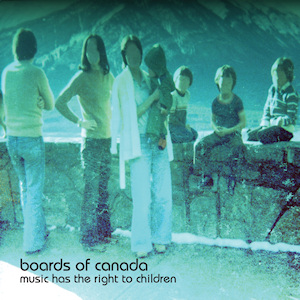
Concert: Byron Wallen's Boards of Canada

I know Boards of Canada are very famous but their music largely passed me by and I am almost completely unaware of what it sounds like. This concert was meant to be jazz trumpeter's tribute to their famous album Music Has A Right To Have Children, but not the kind of tribute where he slavishly reproduces the tunes. He also had some gamelan players in his line-up, which was what pushed me over the line up into picking up a ticket for this National Concert Hall event.

But first the support act. These were local outfit the Glasshouse Ensemble and they were performing the music of the Aphex Twin. Their core seemed to be a small string section, but they also had a drummer and someone doing stuff with electronics. They were reproducing tunes by the Aphex Twin, which for me made the presence of the synther problematic: creating a simulacrum of electronic music on acoustic analogue instruments (plus drums) is impressive, but if you are also using electronics I am not going to be quite so impressed. Still, it never felt like the synth was doing the main work here, with the concert coming across pretty much like it was an arrangement of the Twin's work for strings. Most of the tunes seemed to be from the Selected Ambient Works albums but I think they also threw in one or two from Drukqs. The drummer put in great service reproducing the beats from the records, to the extent that I had to keep reminding myself that they had not just sampled the Twin's programmed drumming. And they finished with "Windowlicker", impressively realised on the strings.

As noted above, Byron Wallen's Gayen Gamelan Ensemble included some gamelan musicians, playing on the National Concert Hall's own set. His gamelan group was relatively small, however, and they did not play prominently on all of the tracks (and they skipped a few entirely). It was also quite striking that Wallen himself abandoned his trumpet and took to playing one of the gamelan instruments on the pieces that were the most gamelan-heavy. The gamelan stuff was the highlight of this for me, both the Javan piece and the couple of new compositions. What I liked about the new compositions was the way they served up what I most like about gamelan (lots of people playing at once in unison), when it often happens that when I see people playing new western pieces on gamelan they go all experimental and just have one or two guys dicking around instead of playing to the instruments' strengths.

Wallen himself comes across as an amiable gent, which is half the battle, and I also enjoyed his jazz parpings. I must get a copy of Music Has A Right To Have Children now, and indeed explore Byron Wallen's own work.

images:

Music Has the Right to Have Children (Wikipedia)

Byron Wallen's Gayan Gamelan Ensemble (Trinity Centre, Bristol: "Byron Wallen's Gayan Gamelan Ensemble")

Monday, May 11, 2009

ERGODOS Day 3: Prism

This was again in a back room at the National Concert Hall, and again featured the Gamelan Sekar Petak orchestra. I think this was billed as Prism because one of the pieces performed (a composition by Francis Heery) had that name. There were a couple of Gamelan pieces today, but most of the pieces either used a very stripped down set of Gamelan instruments or different instruments entirely. The Gamelan pieces enveloped the show, both traditional pieces that used vocals in an evocative manner. One good thing about tonight was that I was sitting near enough to the front to be able to see the stage properly (the non-tiered nature of the seating and the musicians sitting on the floor made the players rather invisible to those seated further back). With live Gamelan, I love the way the musicians look like clockwork automatons as they bang away at their instruments, their movements forming odd visual patterns.

The other pieces included three by Salil Sachdev – two in which the percussion genius performed solo on a miniature metal flying saucer and then a metal mixing bowl. He mentioned that he had discovered the musical properties of the latter after eating popcorn out of it while watching a film at home with his family. I thus found myself wondering what having Mr Sachdev round for dinner would be like – would every inanimate object in your home be tested for conversion into a percussive instrument? Just to show that he is not solely about the percussion, Salil Sachdev also wrote a piece for clarinettist Jonathan Sage to perform at the festival.

The other pieces included some an original and a composed piece (by Johanne Heraty) for the shakuhachi, a flute-like Japanese played tonight by Joe Browning. The instrument's sound reminded me a bit of the pan-pipes from Aguirre, Wrath of God, so when I closed my eyes I almost found myself on an raft with Klaus Kinski and a load of squirrel monkeys. The various pieces for the redux Gamelan orchestra were in and of themselves fine, but godammit, if you have brought a full Gamelan orchestra over to Dublin you would think you would want to get a lot of full Gamelan music out of them.

One final thing deserving of mention: in the foyer area, they had this astonishing looking contraption, which seemed to be emitting a load droning noise. It had bits hanging off it, and if you poked at them they made a noise, something very vaguely like that of a harpsichord. This turned out to be an installation by Jonathan Nangle. As well as making the harpsichord-esque noises, moving the device's appendages also affected the way the central drone sound developed, so as a musical instrument the device's output was dependent on how passers by interacted with it. One day every home will have one of these contraptions.


Prismic Panda

Sunday, May 10, 2009

ERGODOS Day 2: Gamelan Sekar Petak

As you know, Gamelan is this type of music from Indonesia that involves people banging away at bamboo xylophones and what look suspiciously like upturned pots and pans. The various instruments meld together to create an overall sound that sounds almost electronic, despite being played on acoustic instruments. While we use Gamelan to describe this type of music, and also the type of ensemble that makes it, I have the idea that out in Indonesia the term actually just denotes one of the instruments.

One of Gamelan's special features is that it is the only non-Western music to transmit serious influences into classical music. This might say more about the nature of Western classical music than about the intrinsic worth of Gamelan. Some other non-Western forms of music have the kind of structure and complexity than makes them akin to classical music, but they are heavily based on improvisation by solo performers (I am thinking here of Indian or Arabic music). This makes them unappealing to those weaned on our classical music's traditions of one person composing for others to play. With Gamelan, ensembles play pre-existing pieces of music, with relatively little scope for improvisation, so it is that bit more conceptually familiar.

Tonight Ergodos was giving us Gamelan based music, and had brought over the Gamelan Sekar Petak orchestra from York to play it for us. Unlike the Caoimhín Ó Raghallaigh concert, this was in a backroom of the National Concert Hall (something that looked suspiciously like a small UCD lecture room). The programme started with a stroke of genius, a conceptual piece called 'Anyone Can Play', credited to Jody Diamond. One of the festival organisers invited random members of the audience to come onstage and play with the crazy Gamelan instruments in any way they could. This led to a veritable stampede of music students, the survivors of which got to bang away in a manner that evoked the Langley Schools Music Project, until a member of the orchestra came up behind them, tapped them on the shoulder and said "Thank you". Once the impostors had all been disposed of, the orchestra launched into a Javanese Gamelan piece about the joys of fishing.

After that, the orchestra played a number of pieces composed for Gamelan by various composers. These were all enjoyable, but a fundamental problem emerged. Basically, the best music for Gamelan seems to be traditional Indonesian compositions, and the modern compositions tended to be most interesting when they were most closely aping the sound of traditional Gamelan. The Javan pieces sound like nothing else in the world, while crazy modern compositions played by a Gamelan orchestra sound not that different to crazy modern compositions played by the more usual Western ensembles. This led me to think that a concert where a Gamelan orchestra played loads of Javanese tunes (with a couple of Balinese ones thrown in for the weirdos who prefer that school of Gamelan) would be far more enjoyable than one based on new compositions by Whitey.

One of the modern pieces I did especially like, however, was Jody Diamond's 'In the Bright World'. This was partly an arrangement of the American folk tune 'Wayfaring Stranger', and it featured beautiful vocals from local mezzo-soprano Michelle O'Rourke. It also went into a Gamelan workout towards the end that sounded very like one of the pieces from the Nonesuch Explorer series record The Jasmine Isle: Gamelan Music.


Gamelan Panda