:quality(70)/cloudfront-eu-central-1.images.arcpublishing.com/irishtimes/WLGNJRI2TZCXLDOVVVK6L65BPA.jpg) Directed by Andrew Legge, this is an Irish-made found footage film combining material shot on 16mm film with digitally manipulated archive footage. It follows Mars and Thom, two sisters who in the late 1930s develop a machine that can receive radio and TV signals from the future (the first signal they receive is David Bowie performing "Space Oddity"). When the Second World War starts they use the machine (christened LOLA) to help the British war effort. At first LOLA provides the British with such an edge that they look increasingly invincible, but then things start to go wrong.
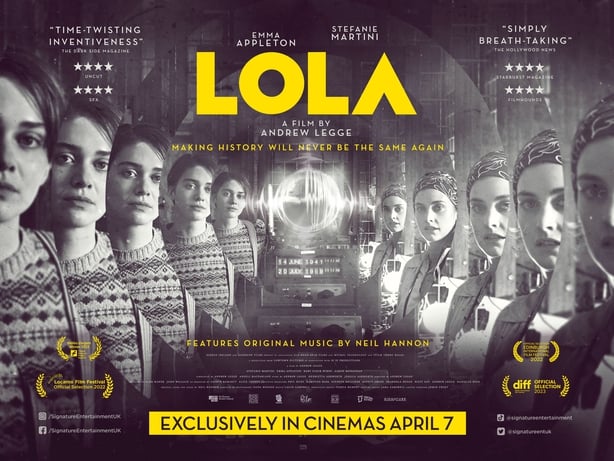
Directed by Andrew Legge, this is an Irish-made found footage film combining material shot on 16mm film with digitally manipulated archive footage. It follows Mars and Thom, two sisters who in the late 1930s develop a machine that can receive radio and TV signals from the future (the first signal they receive is David Bowie performing "Space Oddity"). When the Second World War starts they use the machine (christened LOLA) to help the British war effort. At first LOLA provides the British with such an edge that they look increasingly invincible, but then things start to go wrong.
I think it is staple of time manipulation stories that foreknowledge becomes a curse. Either people discover that the future has a terrible fate in store for them and in attempting to escape it they cause their doom to happen, or their acting on information from the future causes that future to change. LOLA goes down the second of these roads, and the moment when the sisters realise that things are going wrong is a very striking one. The film is drenched in music, with it initially being the crazy sounds of future pop that attracts the sisters to exploring the future. There is an amazing sequence in which they introduce the Kinks' "You Really Got Me" to the 1940s, with the song becoming a massive hit and a kind of anthem for the British war effort. But then, after another use of LOLA-derived information to thwart a German attack, Mars tunes LOLA into the mid-1970s, expecting to hear and see David Bowie. Instead she gets some other guy singing a song about how he loves the sound of marching feet, with a TV announcer mentioning his other big hit, "To the Gallows", about how he loves seeing traitors being brought to the gallows. Part of the weird unease these songs engender derives from how Bowie-esque they sound. Viewers will of course be aware of Bowie's own mid-1970s flirtation with far right thinking, something that adds a certain frisson to the catchy tunes. Credit must go to the Divine Comedy's Neil Hannon for creating the Nazi pop tunes, and it is shame that their problematic but appropriate (in context) lyrics means they are unlikely to be released as singles.
While this is a film that touches on big themes, it was made during the pandemic with a pretty small cast, so it feels almost like a chamber piece. Stefanie Martini and Emma Appleton are great as the sisters, evoking well the hermetic world of young women who have grown up alone together after the death of their parents. Extra praise is due to Martini for doubling up as a camera operator, for she shot much of the film's 16mm material, for reasons relating to the story (the footage is meant to have been shot by her character) and to the pandemic and perhaps budget (one less person on set). Rory Fleck Byrne is solid as their liaison with military intelligence, the only other character in the film with significant screen time. But what stops the film being a couple of people sitting in a room is the use of doctored archival footage, which goes into overdrive when we have the Nazis invading England and Hitler leading a victory parade through London. Credit is also due to whoever designed the LOLA machine itself, as it is an amazing piece of retro-futurist technology. Nevertheless the film retains its human scale and feels like something of a cross between low-budget time travel film Primer and the disturbing but relatively obscure Nazi Britain picture It Happened Here. It does not get lost in its alternative history narrative, instead focussing on the sisters' attempt to undo the horror unleashed by their faustian pact with LOLA.
images:
Emma Appleton & Stefanie Martini with LOLA (Irish Times: "Lola: Impressive debut film from Irish director destined for cult status")
Lost in time (RTÉ: "LOLA is a uniquely strange alternative history tale")

