All You Need Is Death (2023)
This is Paul Duane's odd folk horror about these two song collectors who head up to Enniskillen because they hear there is a crazy lady (played by Olwen Fouéré, obv.) who knows a song that is indescribably ancient but has never been recorded or transcribed. Aspects of the film are deliberately enigmatic, like the early scene where the song collectors meet a client in a car park like they are conducting a shady drug deal rather than engaging in an entirely legal activity. And some of it is pretty funny, like when they meet an old singer (played by Brendan Gleeson), whose daughter makes sure they hand over any money for his songs to her and not to her alcoholic dad.
The soundtrack is by Ian Lynch. He is one of the Lankum people, so you probably have a bit of a sense of what the music sounds like: droney, trad adjacent, etc. He doesn't noticeably lend his vocals to proceedings, with the soundtrack mostly instrumental apart from a couple of points where we have characters on screen singing: the aforementioned Brendan Gleeson (who as well as being an actor has some interest in the world of traditional music), one of the song collectors (played by Simone Collins, who has a background in musical theatre), and then Olwen Fouéré herself singing "Old God Rising". That's the ancient tune the plot revolves around, a song in the language people spoke in Ireland before there was Irish, a song passed through the female line that no man is ever meant to hear. It is deliberately harsh and unnerving, sounding as much like a curse being called down as anything approximating to music.
But is the film any good? One of my friends said that she admired it more than liked it, and I see what she is getting at. You could argue that it is does well at first with the tension building as the song collectors move towards Enniskillen but that it becomes less coherent once the film has to deal with the complicated results of finding the song as opposed to the more focussed quest for it. And the film also has to roll with the limitations of its modest budget as it tries to portray the horrors unleashed by the cursed song. There might also be a sense that the film accelerates a bit too much in the last half or third, with perhaps a bit too much exposition left out in the interests of keeping things moving forward. Perhaps so, but I still like its enigmatic atmospherics and find myself interested in the idea of seeing it again. It is on IFI Home so Irish readers can check it out in the comfort of their homes.
Soundtrack available here.
PNYC: Portishead - Roseland New York (1997)
A film of a live performance by Portishead in New York some time after they released their second album. It made me think of a few things. Firstly, there is Portishead's second album, which manages to sound broadly like the first album except not as good, despite being recorded in a rather different manner: instead of the music being mostly put together from samples it was created by weaving together pieces of original music. The other thing I found myself reflecting on is that while Beth Gibbons is great on record she is less brilliant at fronting a live band: there is something very draining about her way of hanging onto the microphone for dear life while singing every song, with a never changing look on her face suggesting she is dying of the anguish.
The Colour of Pomegranates (1969)
There is music in Sergei Parajanov's enigmatic telling of the life of 18th century Armenian poet and troubadour Sayat-Nova but really the film is all about the visuals. It is a stunningly beautiful work that repays trips to the cinema whenever it is shown while also being the kind of film that would annoy plot-oriented people. I have developed a theory that this film is a major influence on Wes Anderson, particularly the more recent of his works that did not trouble themselves too much with narrative. As well as going beyond narrative, Wes Anderson films share a commitment to making things look great and might even have recourse to a similar colour palette.
Lone Star (1996)
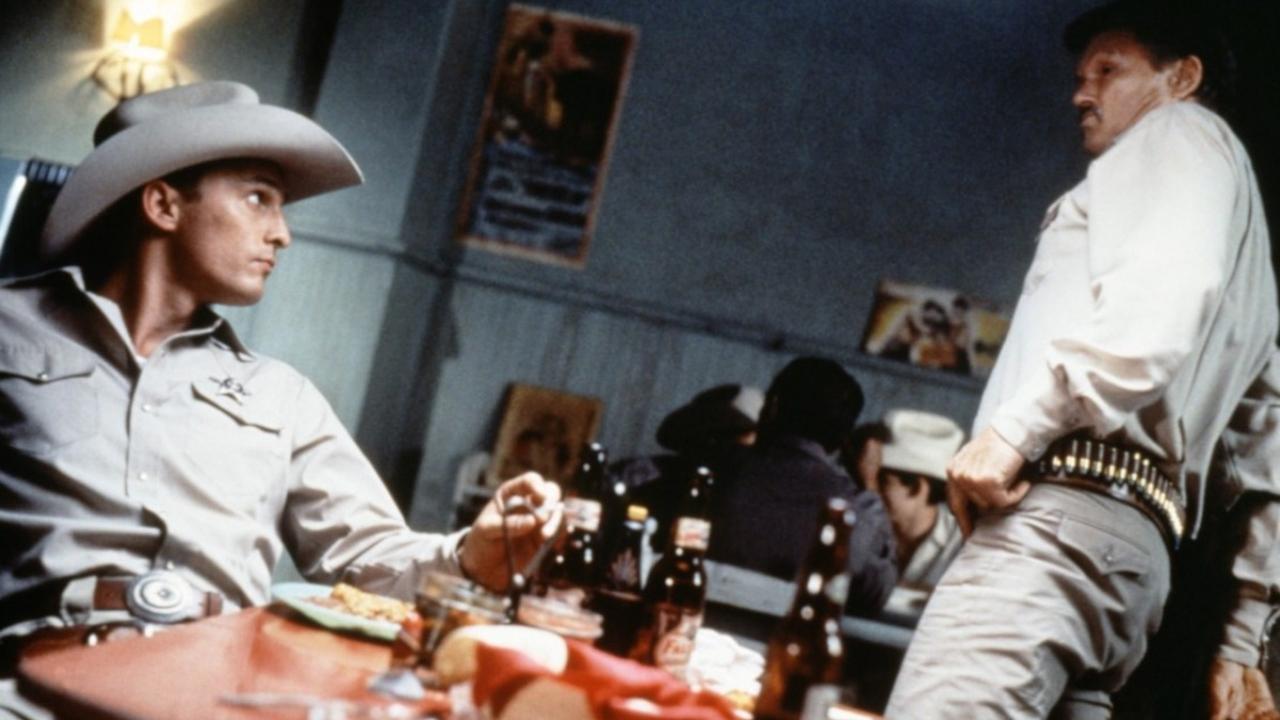
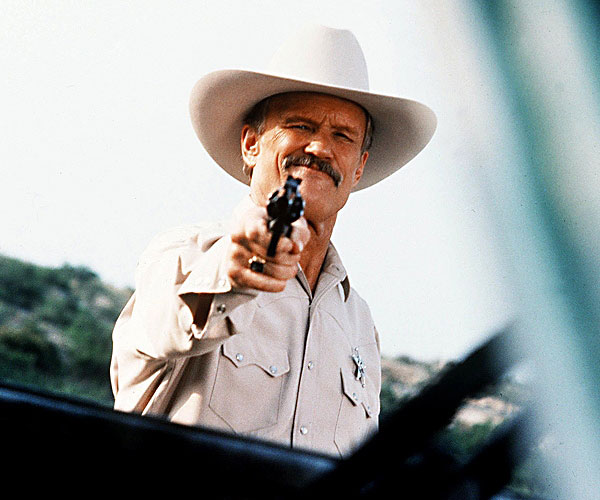
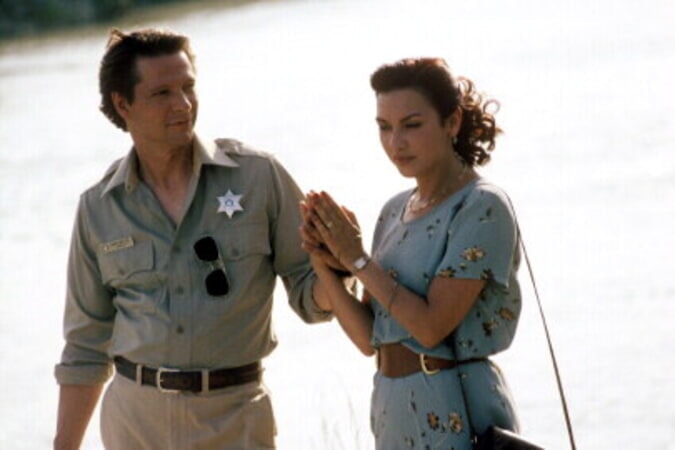
John Sayles directed this greatest of films, which features a star turn in flashback sequences by Kris Kristofferson as Charlie Wade, the terrifying sheriff of a Texan border community, with the rest of the film set in the then present day after the body of the long vanished Wade is discovered, triggering a murder investigation for which the current sheriff's late father and former sheriff is the prime suspect (there are a lot of sheriffs in this film). A big thing is the way buried secrets of the past don't always stay buried, while the film also interrogates the history of border communities in parts of the United States that used to be in other countries. I really can't recommend this film enough: I think it is one of the five best films I have ever seen.
Music isn't a big presence in the film but there is a bit of Tex-Mex-Mariachi style stuff going on, which fits the whole Mex-American theme.
Eno (2024)
Gary Hustwit made this film about the popular producer, but I think Eno himself had input into the film's central gimmick: that it is different every time it is shown. I only saw it once so I don't know how different it is each time or whether the film has some stuff it always covers with the variation being in how much of it appears, or if the film sometimes leaves out entire sections of Eno's career. What I saw was broadly chronological, interspersed with present day stuff in which Eno yapped away about stuff (either past stuff he had been doing or his curious eating regimen). There was little-to-nothing about Roxy Music but quite a bit about his time working with U2, which was actually very interesting (and possibly would be even to people who are not that pushed about the popular Dublin band). They had quite a bit of footage of Eno and U2 in the studio ("That's great Bono - now could you do it again with a bit more passion") and I was fascinated by how they interacted. I got the sense that one of Eno's strengths as a producer might be a natural aptitude for plámásing people and avoiding confrontation while still pushing them in particular directions. You also got the sense that the members of U2 (who were all still pretty young at this stage) were in awe of Eno as someone who had worked with Bowie and Roxy as well as releasing cool albums of his own.
Eno generally came across as someone who has worked out how to live.
image:
All You Need Is Death (FilmGrab)