Thursday, August 29, 2013

Film: "Beware of Mister Baker" [2012]

This is a documentary film about the drummer Ginger Baker. The title comes from a sign by the gate of his compound in South Africa. It begins with a bit of a conversation between the film director and Mr Baker, who is now pretty old and walks with a stick. The conversation turns into a disagreement, whereupon Baker starts laying into the director with his walking stick. That sets up the film's view of Ginger Baker as an ornery character prone to sudden and irrational rages, a man inclined to alienate people who might help him. The film itself then goes on to largely present the other side of the story - Baker as the musical genius, possibly the greatest rock drummer of all time. But the film keeps nodding to Baker's self-destructive side - not just his cantankerous rage, but his problems with drug addiction and unwise business decisions.

The film is very well made, an impressive mix of archive footage and interview material, both with Baker himself (a surprisingly engaging interviewee, for all his grumpiness) and then with various other figures - family members and past musical collaborators (pretty much all of whom have fairly problematic relationships with Baker), with good use of animation for sequences that would otherwise just be a visually unappealing montage of talking heads. But there was a slight problem with the film that had me doubting its veracity and wondering how accurate its portrayal of Baker was. Basically, any time we had the director providing narration or asking Baker questions, I found that he (the director, one Mr Jay Bulger) came across a bit of dick. If I was being asked questions continuously by this guy I would probably have got a bit annoyed over time and I could imagine finally cracking and laying into him, for all that I am not a man known for his violent tendencies (any of those people I have hospitalised in fights will testify that they started it). Still, I feel bad saying that, because for all that I found Bulger's manner irritating, it's not like I know him or anything, and he has made a great film.

The film as a whole follows Baker's career from his early years and rise to prominence as drummer with Cream. After that we get a succession of bands, wives and countries, as things do not work out for Baker somewhere and he has to hightail it somewhere else. Financial travails remain an ongoing theme. At one point during the discussion on Cream it is mentioned that all the Cream song-writing money goes to Jack Bruce and some other guy who wrote the lyrics, with the result that Eric Clapton and Ginger Baker have made relatively little money out of that popular bands' recordings. This is presented as a terrible injustice and a reflection of how unfairly the music industry is biased against drummers and in favour of melody writers (a point reinforced by Stewart Copeland of the Police, who pops in to have an implicit moan about his band's melody writer). But two things struck me. Firstly, a more astute player would have negotiated a deal before Cream was formed that songwriting credits would be split three ways. Secondly, even if Baker had made loads of money on Cream he would probably have blown it all. Later in the film he plays in a Cream reunion concert, pocketing some $5,000,000 for his trouble; this money is all gone a couple of months later.

With many music documentaries, the recurring plot is about the musician who ruined themselves with drøgs. Baker did have his problems in that area (notably a long addiction to heroin), but what seems to really have ruined him was a love of horses. While living in Nigeria (he was mates with Fela Kuti) he somehow developed an interest in polo, joining the local polo club and then starting to buy and breed horses for the sport. This basically was a disaster for him - hanging out with the polo set alienated him from the more radical associates of Fela Kuti, while horse-breeding proved to be a money-pit into which Baker spends the rest of the film throwing away his cash. Don't do horses, kids.

Still, for all Bakers' grumpiness, problematic relationships with family members, business travails and so on, it is really the music that will stick in my mind from this. Before seeing this, I only really knew Baker as the drummer with Cream and as someone who played with Hawkwind for a short period (an episode not mentioned in the film, apparently because Bulger does not like Hawkwind - see, I told you he was a gobshite). The film uses a lot of footage of Baker playing to bring home what a great player he is. So we see him in action with Cream, but also in Nigeria, playing in the States with jazz drummers (in drummer face-offs, clearly the best thing ever if you like two drummer action), with his son (another drummer), and so on. Possibly the most intriguing music in the film for me was that of Ginger Baker's Air Force, a large ensemble he formed after Cream and Blind Faith broke up. Although I do not think he had made contact with Fela Kuti at that point, there seemed to be a real Afro-Beat vibe to this, with its brass and poly-rhythms, and I found myself thinking I would like to hear more of it.

One final oddity. I reckon the only interviewee in the film who unproblematically has good things to say about Ginger Baker is… John Lydon, who talks about him as an inspirational figure and someone who was great to work with. But then the film says nothing whatsoever about their musical collaboration. Further research revealed that he did indeed play drums for a couple of tracks on Album (now available as Download?), though apparently he never actually met Lydon during the recording process.


image source

An inuit panda production

Wednesday, August 28, 2013

More analogue photography

I took some more pictures with my wonky Holga camera. Some of them are of cats, feral and domesticated.

Eager cats

Furtive cat

Bruiser

Others were of things seen on the streets of Dublin.

Fence doll

Street art

As is traditional with cheap film cameras, I accidentally exposed one frame twice.

Double Exposure!

And I clipped the top of an object I was photographing.

head cut off

More

An inuit panda production

Tuesday, August 27, 2013

When Museums Expand

Jewish Museum exterior
The Portobello area in Dublin was once the centre of the city's Jewish community. With the passage of time, that community has moved away from the area, leaving two relics of its presence behind. One is the Bretzel bakery, which continued to obtain kosher accreditation for its products long after it came into non-Jewish ownership. The other is the Irish Jewish Museum, located on Walworth Road, a quiet residential street.
"No to the un-neighbourly over-development"
There are plans afoot to expand the Jewish Museum. They seem to be meeting opposition from some people in Portobello. Walking around the area, one can see posters opposing the expansion stuck to trees and lampposts. They are also visible in the windows of many houses, including houses beside and across from the museum on Walworth Road itself.
Beside the Museum
It is hard to know what to make of all this. On the one hand, the posters do suggest a certain petty-minded nimbyism. Yet they are right to say that Portobello is a quiet neighbourhood, and having lived next door to a building site myself once I know how disrupting a large construction project can be. But there is still something a bit disturbing about the posters. Ireland is a country with planning rules and procedures, so if people have legitimate concerns about the expansion project there are channels through which they can contest the process. The anonymous posters seem a bit creepy. They call to mind the less enlightened past when members of the Jewish community had to endure persecution and hostility from their non-Jewish neighbours. In this conext, I wonder if it is significant that the various posters keep referring to the "Walworth Road Museum", never mentioning its Jewish character.
"No to the un-neighbourly expansion"
For all that, I am myself ambivalent about the expansion of the museum. As it stands, the museum is one of Dublin's little gems and my fear would be that any expansion would remove its appealing character. From one report in the media, it seems that the original synagogue inside the museum is to be demolished and reconstructed, which arguably would affect the site's authenticity. I would also have concerns that the general expansion could sterilise a museum that currently is a direct relic of the community that once lived around it. But I have not studied the expansion plans and so cannot say whether these concerns are justified. In any case, if there is to an Irish Jewish Museum anywhere, expanded or not, Portobello is the place for it.
"Save our neighbourhood"
Links:

Residents appeal against redevelopment of Irish Jewish Museum in Dublin (Irish Times)

Proposed expansion to Irish Jewish Museum (from the Come Here To Me blog about Dublin life and culture)

In Dublin’s Little Jerusalem, Museum Begins Expansion (Irish America)

Irish Jewish Museum website

An inuit panda production
Residents to appeal decision

Monday, August 26, 2013

E is for 'Ebeneezer Goode'

This is a track by The Shamen. It was released as a single in September 1992 and also appears on their album Boss Drum. The Shamen were on a bit of an upswing at the time. Partly the world had caught up with their electronic dance music sound, but I think also they had managed to craft their work into something sufficiently polished to attract daytime radio play.

By this point Will Sin, one of the classic Shamen duo, had died in a drowning accent in the Canaries. The reconstituted Shamen comprised Colin Angus (the other one of the duo) on music and one Mr C on rapping, with various other musicians and singers on bits and bobs. I think I saw this line-up, pre-'Ebeneezer Goode' at Glastonbury in 1992, and I did not like it. My recollection is that Mr C was annoying and that their "raved up" music attracted a rather unruly element to hear them play.

But 'Ebeneezer Goode' changed my tune. The track is a euphoric up-tempo dance tune, but what really makes it is the contribution of Mr C. He raps the tale of some shifty promoter from the early days of rave, the eponymous Mr Goode, but to anyone with half a brain this promoter is more than that - he is a human stand in for the popular dance drøg Ecstasy. Mr C raps about how this Mr Goode character is responsible for all the good times on the dance scene, that he is perhaps a bit edgy and must always be respected for all that he is the main geezer and a real crowd pleaser. And the chorus, where even the especially hard of thinking must have started wondering if there was something else going on:

"Eezer Goode! Eezer Goode!
He's Ebeneezer Goode!"

In the ponderous words of Wikipedia, "the first part […] is audibly identical to, "E's are good" – 'E' being common slang for the drug ecstasy". Despite this, the song went to number one, was played on the radio and the Shamen even got to perform it on Top of the Pops (it is said that Mr C told the BBC that his cries of "Underlay! Underlay!" were not a nod to Speedy Gonzales and amphetamine use but rather a "gratuitous rug reference").

I suppose this was the moment when all this crazy dance music started being semi-respectable and impressionable young people started thinking that it might be worth engaging with, and perhaps, just perhaps, this mysterious death drøg Ecstasy might itself be worth giving a go.

Wikipedia

An inuit panda production

Friday, August 23, 2013

I went to Cork

Cork is Ireland's second largest city. It has everything Dublin has, and more. I went there and took some pictures.

Found.. is being well looked after
Someone found a dog. It is being well looked after.

I also went up Shandon Hill. This is a mysterious old neighbourhood to the north of the city centre.

Mother Jones
I saw a plaque to Mother Jones, the American labour activist. She was born in Cork.

Fishy Church
Shandon is famous for the church at the top of the hill, over which there is a weathervane in the shape of a fish. I have long suspected that the church serves a congregation of Deep One hybrids.

Flegs
There were loads of flags flying from ropes connected to the church.

Flags
Loads of flags.

Silhouette
I did not photograph anywhere else in Cork.

More

An inuit panda production

Thursday, August 22, 2013

Film: "A Field in England" (2013)

This is the latest film from that Ben Wheatley guy, who made Kill List, which I have yet to see.

This one is set during the English Civil War (actually during the Second Civil War, history fans, as there is a reference at one point to the Engagers; see dull historical note below), which made it essential viewing for me as that is one of my most beloved periods of history. It focuses on four guys pegging it from a battle (battle not shown for budgetary reasons). Three of them are soldiers and the other is something else - some kind of scholarly servant of someone who has had things taken from him. Quite what he is doing in the battle in the first place is not adequately explained, like much of what happens in the rest of the film.

The four guys tramp across some fields looking for a pub one of them reckons is in the vicinity, but then a series of transitions occurs. One of the four is not what he seems. A fifth character appears, one with his own sinister agenda. There is a wonderfully horrible scene in which he takes the scholar into a tent and does something to him, something that makes him scream while the others stand outside looking horrified. Then the stranger brings out the scholar who seems physically unharmed, yet somehow transformed.


The film is notable for its strange logical leaps and discontinuities. The characters are doing one thing - and then they are doing something else. Some events occur that do not seem to make any sense at all (like the rope they are all pulling on at one point, what was that all about?) And there are a series of odd tableaux in which they seem to be posing like characters in a painting for the camera (of which some feature in the clip above). In these regards it reminds me more of a continental European arthouse film of the 1970s more than anything else being made around now.

What it does have is a great visual look. It is filmed in black and white, which suits the odd and surreal nature of the film (though lurid colour probably would have done the same). The baggy 17th century costumes are wonderfully realised and did have me thinking that it would be great if people started dressing like that again. And there is a fantastic representation of the effects of imbibing magic mushrooms (it is that kind of film).

The sound is also intriguing. There is some old English folk music, sung by the character themselves. The overall soundtrack mixes in folky motifs with orchestral and electronic sounds to create a generally disconcerting aural environment, mirroring the fear and confusion of the characters. The soundtrack is mostly by Benjamin Power, but a pre-existing piece by Blanck Mass called 'Chernobyll' also makes an appearance.

Overall, this is an intriguing if perplexing film. I think it is one best appreciated by people who enjoy the feel and atmosphere of films rather than their simple plots.


Dull Historical Note

The First English Civil War is the famous one in which the armies of the King and Parliament laid into each other at such battles as Edgehill, Marson Moor and Naseby. Parliament allied with the Scots and eventually overwhelmed the King. He surrendered to the Scots and they handed him over to Parliamentary forces.

The Second Civil War was an attempt by the King's party to reverse the results of the first. English Royalists staged a number of uprisings. The imprisoned King also reached a secret alliance (known as the Engagement) with some of the Scots. This Scottish faction, known as the Engagers, sent an army into England. However the Parliamentary armies were able to crush the Engagers and the English Royalists, after which the King was put on trial and executed.

None of this historical information is needed to enjoy the film; I have merely posted it to show how clever I am.

An inuit panda production

Monday, August 19, 2013

The shortest way with unruly children

Burying beetles are one of those insect species where mothers take an interest in the early lives of their offspring, bringing their larva tasty treats to eat. Hungry larvae pester their mothers for food, as is the case with many other species. Scientists have discovered, however, that exasperated burying beetle mothers have a direct punishment for any of their young who beg too much for food - they eat the greedy little bastards.

"It's the only language they understand", commented a burying beetle mother, whose young are careful to only beg for food when they are very very hungry.

Scientists have cautioned against a similar approach being applied to human offspring.

More

An inuit panda production

My Life in Music

In the pages of Frank's APA I somehow found myself reminiscing on music and my early life. Read on to join me in a trip down memory lane.

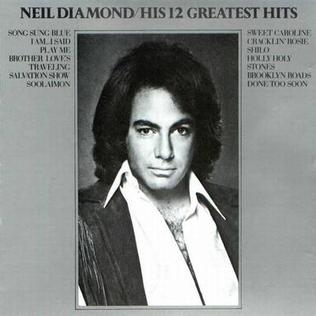
My recollection is that my parents did not listen to music that much when I was young, though the things they did listen to they listened to a lot. So I remember my dad having a Neil Diamond compilation that he played all the time. My dad had - and has - a fondness for extreme heat, so I associate the Neil Diamond record with sitting in a stifling hot front room on a Saturday evening. My dad also had some tapes of music by Planxty that would get played in the car. I remember being a bit scandalised by some of the risqué lyrics.


My parents had some older vinyl records, which we would listen to on a Dansette that was given to my sister and I when my dad got himself a more advanced sound system. I think these included a couple of musical soundtracks, with a cast recording from a stage production of The Sound of Music particularly sticking in my head.


At some point I started developing my own interest in music and mastered the art of taping songs off the radio. However, I was only able to do this for a while, as before too long the taping facility of my dad's sound system packed in. If those tapes still existed and were playable they might be an interesting record of my own pop tastes back in the early 1980s.

What might be especially fascinating would be the tracks I taped from when one of the pirates counted down through the songs its listeners had voted as their favourites, a concept that was entirely new to me at the time. I was very excited by this and expected that it would reveal the official greatest songs ever. I can still remember some of the songs in the top ten, and they were a pretty sorry bunch of late 1970s softy rock - 'Lying Eyes' by The Eagles, 'Follow You Follow Me' by Genesis, shite like that. But the number one track was 'Stairway to Heaven', and I think this would have been the first time I heard it.


The first record I ever bought with my own money was a cassette of Adam and the Ants' Prince Charming. But more iconic for me is my first vinyl album, a second hand copy of Geoff Love and His Orchestra's Star Wars and Other Space Themes (officially the first record I bought with my own money, though a cassette copy of Prince Charming by Adam And The Ants may actually have that honour). This is an odd record. Geoff Love (and his orchestra) play a number of themes to science fiction films and TV programmes. In several cases, they rearrange the tracks into disco tunes. At the time, this rather annoyed me, but now it is a key part of why this record has remained in my collection. The cover is also amusing; the record company clearly did not have permission to reproduce identifiable material from the various films and programmes, so the cover shows things that look similar to but not too like recognisable space ships and characters.

In secondary school I did not really hang out with the kewl kids who liked kewl music, so I did not pick up anything from them. Most of my friends were largely indifferent to music although one of them was a bit more seriously into it, though his tastes failed to rub off on me. As I grew older I remember getting a number of records as Christmas presents, because I asked for them - the likes of U2's Unforgettable Fire, The Very Best of Christ de Burgh (pre-'Lady in Red'), Kate Bush's The Whole Story, Dire Straits' Brothers In Arms and, on cassette, Talking Heads' Little Creatures. A copy of Tchaikovsky's Romeo & Juliet had also come into my life. I remember also having a strong interest in musicals around this time, largely through being in them at the time and having naïve aspirations towards writing them with a more musically talented schoolmate.

Time passed, I went to college, and I met the people who became more formed influences on my musical taste. For some reason it was only at this point that I registered the existence of the music press. Not too long after leaving college I joined Frank's APA, a collective of people who have remained the biggest shaper of my musical interests.

Neil Diamond His 12 Greatest Hits

The Very Best of Chris de Burgh

An inuit panda production

Saturday, August 17, 2013

Neil Young and Crazy Horse - Live at the RDS

EXECUTIVE SUMMARY: Neil Young & Crazy Horse played a lot of feedback heavy electric tunes. This annoyed members of the audience who were hoping for non-stop acoustic Neil action, but it pleased more forward thinking members of the audience. Towards the end of the concert a man sitting a bit away from me did something funny.

I went to see Neil Young & Crazy Horse playing in the open-air bit of the RDS, one of the few Dublin venues I had not previously been to. I went with some foreboding - the RDS has a reputation for dreadful sound, and I would also have to go on my own, with all the risks of terrifying social alienation that involves. But I resolved to give it a go anyway, partly driven by a listen or two to the likes of Rust Never Sleeps.

I missed the first act on the bill, some local act who would have played to a near empty arena after the gates opened. I did catch some of Los Lobos, who were playing as I arrived and acclimatised myself to sitting up in the stands and reflecting on how far away the stage was. So I found their set slightly alienating.

Initially they seemed to be not that great, serving up what seemed like an unexciting stew of old school rock 'n' roll of a kind you can hear from any rock standards covers outfit. But as their set progressed I liked them more. Maybe I was just overcoming that stadium rock alienation, but their playing some Tex-Mex numbers finally brought forth their unique selling point. They also played a Johnny Thunders cover and finished with a storming version of 'La Bamba', dealing with the one-famous-song problem by basically singing the lyrics to an entirely different tune, in this case 'Like a Rolling Stone'. The latter part of their set also featured a red-haired woman in a red dress and boots dancing below on the pitch, more or less alone. This will be one of the abiding visual memories of the event for me.

After that I got talking to another person attending on his own who was stuck in beside me in Billy No Mates corner (the event had reserved seating). I initially thought he was a bit odd (no sane man goes to a stadium concert alone), but then discovered him to be an interesting enough character, someone who liked music a lot, albeit music very different to what I go for myself. I tend to think of stadium rock attendees as being people who go to one or two gigs a year, but he seemed to go to loads and would travel to catch favourite bands who were not playing Ireland. And he had basically come to see Neil Young & Crazy Horse on spec, not really knowing their music that well but wanting to cross a legend off the list.

The Waterboys were the main draw for my neighbour, being one of his favourite bands, and they were on next. I was not excited about seeing them but I liked them a lot more than I expected to. They had an impressive stage presence and appeared to have successfully integrated traddy elements into a big rock sound, with Steve Wickham's fiddle taking the place of lead guitar in several of the songs. And they also reminded me of how many catchy tunes they have - aside from bunjo anthem 'Whole of the Moon', there were such toe-tapper sing-a-longers as 'Fisherman's Blues', 'A Girl Called Johnny' and 'Don't Bang the Drum'. They also had a few songs that saw Yeats poems set to new bluesy music, which I found surprisingly un-embarrassing.

All in all I was impressed by the Waterboys and found myself (gasp) contemplating the vague possibility of listening to them on record.

And then Neil Young & Crazy Horse. For the benefit of people who live under a stone, Neil Young is a Canadian musician who sings and plays guitar, and Crazy Horse are his sometime collaborators, associated with Young's more hard rockin' musical efforts. When they all came onstage I was so far away that it took some time to work out which of the people onstage was Mr Young (it was the guy in black). And from the word go, it was clear that this would be would be be a no-frills show. I had already seen that there would be no big screens, but there was also no big light show (perhaps because it was still bright when they started). It was just some old guys on stage, rocking hard.

They opened with something from Ragged Glory, from the get-go opting for a rough and distorted sound (helped by the sonic problems for which the RDS is famous). I somewhat think of Ragged Glory as being only alright rather than awesome, but the tracks from it worked well live, being very suitable for a Crazy Horse chugathon.

Over the whole concert they did not play that many individual songs, with each tune being stretched out by soloing and/or false-endings that led into prolonged feedbacky messing. Some people liked this, some people did not. I loved it, obv., and the two mad for it older women in front of me seemed to be enjoying the rocking out, but quite a few attendees felt the lack of the nicey acoustic songs from the likes of Harvest.

Things became seriously hairy with a song the Internet suggests is the currently unrecorded 'Hole in the Sky'. As the song came to what would normally have been its end, the band launched into what became some ten minutes of feedback and tuneless guitar noise. I thought this was the best thing ever, but quite a few members of the audience actively hated it, with some slow hand claps and the like coming from further up the stands behind me. Other people were just a bit bored - you could hear the kind of crowd noise you get when people lose interest and start talking to their mates.

What this all reminded me of was something like the first time My Bloody Valentine did The Holocaust, before it was something expected, when it was still something that would have audiences reacting with confusion and awkwardness. Both then, and with Neil Young & Crazy Horse, there must have been people thinking "Holy Jesus, are they going to keep doing this for the rest of the night?" (to which I would have said, "Bring it on!").

Eventually that stopped and almost as a concession to the hostiles Young switched into solo acoustic mode, doing one of his own nicey songs and then treating us to a cover of 'Blowin' in the Wind'. The nod to Dylan may have been meant to remind more astute attendees of how Bob had once upset his fans by going electric. Either way it settled the more contrary members of the audience. "Now that's proper Neil Young!" commented a previously disgruntled character sitting near me.

This acoustic interlude provided a perfect opportunity for me to avail of the facilities. On returning, I found that Crazy Horse were back onstage and the concert was electric once more. There was no repeat of the extended messy feedback outro from before the break, but it all remained rather ragged. The disgruntled character mentioned above became disgruntled once more and took to booing at the end of every song, though he was drowned out by others' applause.

One great thing was a performance of 'Fucking Up' from Ragged Glory, which featured this big long bridge where it all went surprisingly funky on us (or as funky as a load of old white rockers can be, you dig?). My sense is that the crowd generally loved it, but the grumpy guy was not having it. As the song ended and people were applauding he booed a bit and then called out to like-minded souls, "Am I missing something? It's not just me, is it?" His wife was embarrassed.

After a storming version of 'Hey Hey, My My' the band went off and then came back for an encore. By now, a lot of the lightweights had left, realising that they were not going to be getting 'Heart of Gold' or 'Only Love Can Break Your Heart'. Mr Grumpy himself got bored with his booing and made his way to the exits as the opening chords of 'Cortez the Killer' started to waft through the stadium… only to suddenly appear back at his seat after the vocals had started.

"It's my favourite song!" he exclaimed.

And that, pretty much, was that. I had a ball, enjoying both the music and the confrontational nature of the performance.

As a treat for anyone who has made it this far, here is a live recording of 'Hey Hey, My My', apparently made on the Ragged Glory tour in 1991; it features the most rock and roll audience reaction shots ever filmed:


An inuit panda production

Friday, August 16, 2013

The Lion-Dog of China

Visitors to a Louhe city zoo in China's Henan province were looking into the cage labelled "African lion", perhaps thinking the beast inside was smaller than expected, when the animal astonished them by making a noise. However, instead of making a majestic roar, the cage's occupant let out a bark. Investigations revealed that it was not actually a lion, but a Tibetan mastiff, a large and hairy breed of dog, whose head hair could perhaps be mistaken for a lion's mane if you had only ever read descriptions of that fearsome feline's proud coiffure. The zoo's lion had been taken away to a breeding facility and the mastiff placed in its cage because of "safety concerns".

Elsewhere in the zoo, another dog was in an enclosure labelled as a wolf, while a leopard's cage was found to contain a fox.

For all that this is basically being presented as a comedy story, the grim-looking cage shown in the picture, coupled with the falling apart sign, suggests to me that this is one of those zoos based on earning a quick buck from animal cruelty. I hope it is shut down and its inmates moved somewhere nicer, released back into the wild (where appropriate), or else humanely killed.

More

An inuit panda production