These releases come from Hive Mind Records, a Brighton-based label I recently became aware of thanks to a successful piece of targeted advertising that revealed they were having a pay-what-you-like sale, which runs until Friday 6 February. I could obviously have downloaded their entire catalogue and paid them nuppence but I opted instead to take a punt on these four albums that touched various of my buttons and chuck them a fiver each for them. How much do you hand over for blind purchases of pay-what-you-like records?
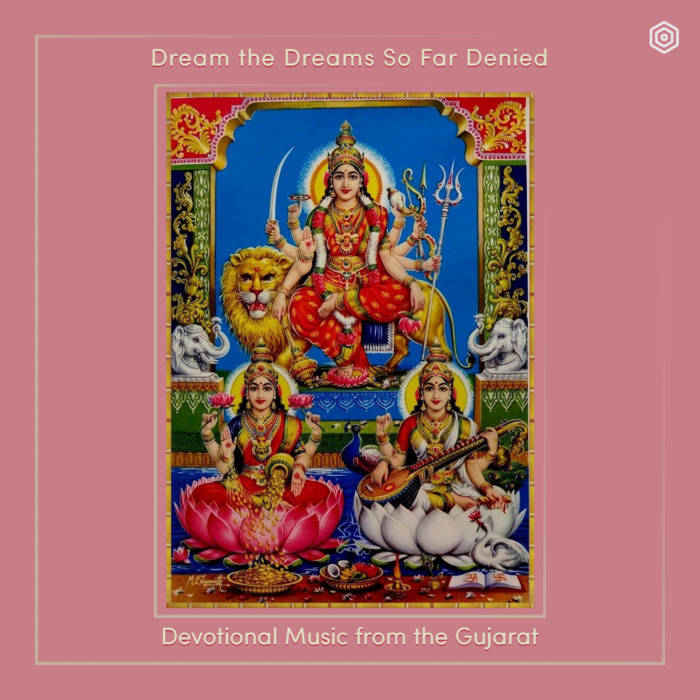 The Hive Mind roster is eclectic. It tacks towards world music but does appear to also include contemporary original releases from people who are not from the world. I lent towards the world end of their offerings in picking my four downloads, for reasons. And the first one is Dream the Dreams So Far Denied: Devotional Music from the Gujarat, which is a mix of music from cassettes. There's no artist information or tracklisting, because the record label people can't read the native lingo and didn't go looking for anyone who could. And it's great, a mix of hypnotic instrumental and vocal music that merges together seamlessly and makes for a great accompaniment to pretty much any activity.
You may have concerns about a UK record label selling other people's music like this. Perhaps to allay such qualms, Hive Mind report that any money given to them for this mix is donated to a COVID appeal for India, although given the passage of time since the mix was released I am unclear as to whether the appeal is still active or relevant.
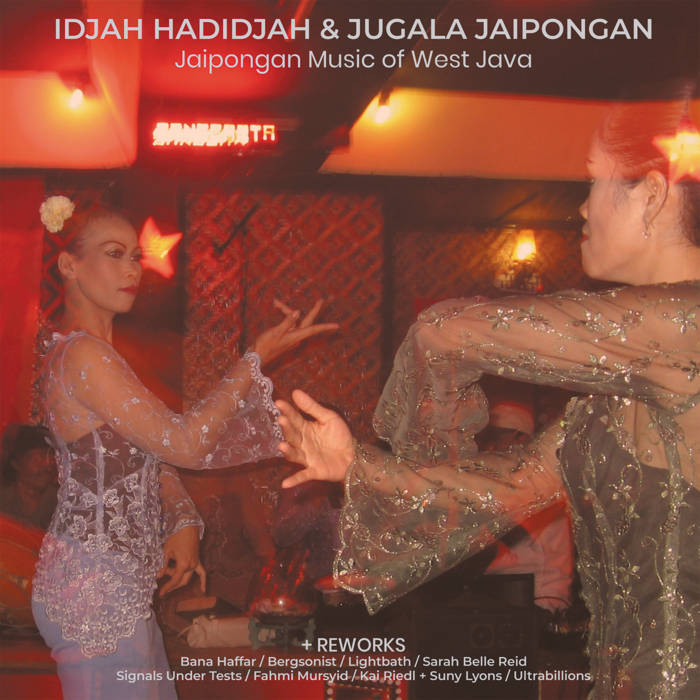 Jaipongan Music of West Java is a 2020 release, which I picked up out of curiosity regarding non-gamelan music from Java, although it turns out that there is a lot of gamelan here, just not the gamelan I am used to. The notes and perusal of the Wikipedia page for jaipongan reveal this to be music from something of a manufactured tradition. In 1961 Sukarno, Indonesia's then leader, banned western music in an effort to promote indigenous and traditional culture. In response the composer Gugum Gumbira added gamelan instruments to a separate folk tradition that had seen female singers and dancers performing over accompaniment from percussion instruments and rebab (a stringed instrument). Most of the recordings here are from the ensemble based in his Jugala studio, with vocals from Idjah Hadjijah. The music is a good bit more frenetic than the gamelan of central Java I am used to, and for all that there are gamelan instruments being played here they don't come across as the main focus. Instead we get a lot of the singer, which for someone like me is pretty mysterious as the vocals are in Indonesian or Javan and could be about anything.
The second half of the record consists of reworkings of jaipongan pieces by electronic musicians working with samples and stuff. As music the reworkings are quite pleasant, but they are so different from the original jaipongan pieces that I think they might have been better released on a separate record. They could also have done with including more information on the people doing the reworkings. From their names they seem to be a mix of Indonesians and Westerners (including the record's compilers).
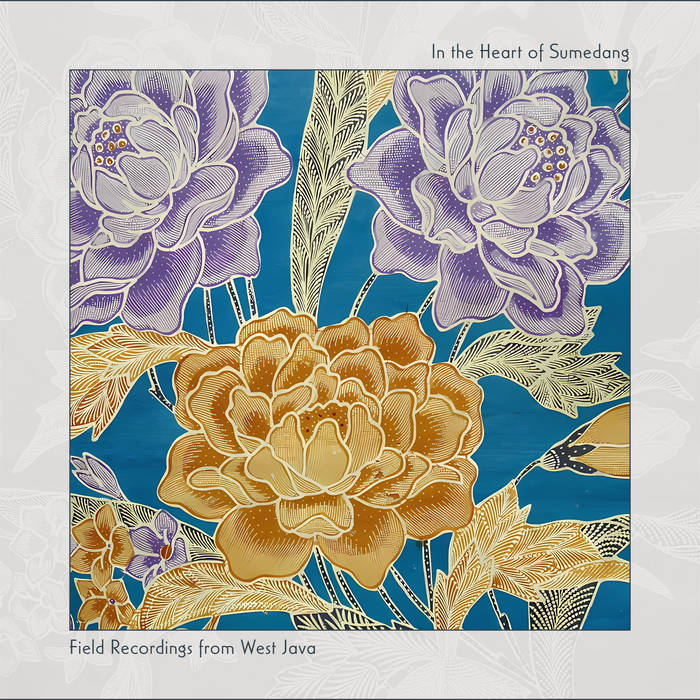 In the Heart of Sumedang: Field Recordings from West Java is another recording of Indonesian music, this one released in 2024 from recordings made in 2023. Three of the five tracks are tarawangsa trance music, but the album is book-ended with two long pieces from the Panca Buana Reak Group, whose music is pretty raucous and features a lot of percussion, rattles, hints of gamelan, mysterious vocals and whatever you're having yourself. This kind of thing apparently appeals to young people interested in Indonesian punk and metal. The tarawangsa pieces are a different kettle of fish, with each featuring one person playing the tarawangsa (a two stringed fiddle) and the other a kacapi, which could be absolutely anything (confusingly, the notes say that tarawangsa trance music is played by two musicians, one on the tarawangsa and the other on a jentreng, which is a zither-like thing, but each piece is credited to a tarawangsa and kacapi player). These pieces are very subtle, sounding initially like they are just repeating the same lines but then revealing delicate variations that put me in mind of minimalism. The notes say this type of music might encourage listeners and/or dancers to drift into a trance-like state and commune with their ancestors or entities from the spirit world. Yeah I can see it. The combination of the two different types of piece on the record works surprisingly well, offering up different kinds of opportunities for hypnotic trancing.
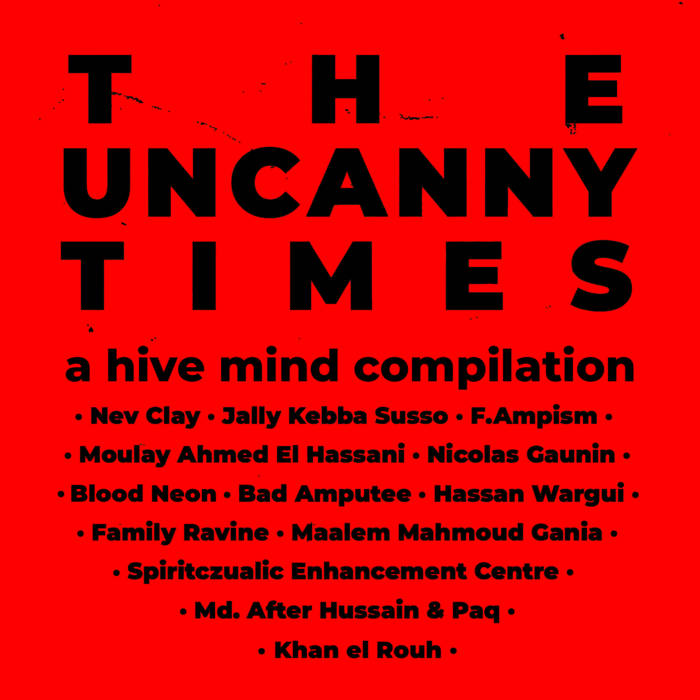 The Uncanny Times is an eclectic 2020 compilation. Here's who appears on it:
- Nev Clay: Northumberland folk-adjacent artist. I thought the name sounded familiar and it turns out he was on the bill of a concert I was at last year, playing support to Poor Creature, except I missed him by going to the wrong venue.
- Jally Kebba Susso: Gambian and not just a kora player but an Afro-Futurist kora player.
- F.Ampism: he is actually paul wilson, who can't afford upper case letters, and he makes electronic music of the wibbly wibbly variety.
- Moulay Ahmed El Hassani: there are vocals from more than one person (a man and a woman) as well as guitar and some kind of percussive accompaniment. He is from Morocco and sounds like he is from the same world of music as that Group Doueh guy even though he is from Western Sahara, which I consider a separate country (the Sahrawi Arab Democratic Republic).
- Nicolas Gaunin: an Italian weirdo music guy who makes outsider rock incorporating a lot of percussion and some electronics.
- Blood Neon: electronic, mysterious.
- Bad Amputee: the most guitar-bass-drums-vocals of any outfit so far. They are a three-piece from Newcastle. Interesting.
- Hassan Wargui: he is a songwriter and banjo player from the Issafen region of Morocco whose music marries modern technology and 1970s Berber music. The track has vocals and a percussive accompaniment that may have programmed elements.
- Family Ravine: this appears to be a vehicle for Kevin Cahill, a Toronto-based musician with an Irish background. The track is instrumental and acoustic guitar focussed.
- Spiritczualic Enhancement Center: "an outernational movement" offering "awe inspiring, lysergic telepathic shamanic jams guaranteed to transport you far from home".
- Maalem Mahmoud Gania: another Moroccan outfit, and this time one from Essaouira playing more of that gnawa music. So call and response vocals, percussion, a stringed instrument, etc. The kind of thing that makes you convert to Sufi Islam, so be careful.
- Md. After Hussain & Paq: this is a collaboration between a Bengali singer and musician from the trancey mystical Baul tradition (also linked in to Sufi Islam) and an Italian electronic music guy. It seems to work.
- Khan El Rouh: mysterious, Syrian-born, and Sweden-based. The track is short, minimal, electronic, and intriguing.
The Hive Mind pay-what-you-like sale runs until 6 February, so don't delay. You can check out these and other Hive Mind records here.